Elsevier

Neuroscience Applied Template

Write in a clean editor, then format for Neuroscience Applied in one click — DocuGuru applies the official Elsevier template with numbered references and exports a submission-ready PDF plus the editable LaTeX source. Free to start.

About the Neuroscience Applied format

Neuroscience Applied is a peer-reviewed journal published by Elsevier, covering Schizophrenia research and treatment, Treatment of Major Depression, Tryptophan and brain disorders.

PublisherElsevier
Reference styleNumbered (Elsevier)
Numbered — [1], [2] in the text
[1] A. Smith, B. Jones, C. Lee, A representative article title, Neuroscience Applied 12 (2023) 45–58.

Formats any DOI in Neuroscience Applied style. No sign-up.

Publishes research inSchizophrenia research and treatment Treatment of Major Depression Tryptophan and brain disorders Bipolar Disorder and Treatment Stress Responses and Cortisol
ISSN2772-4085
Citation impact (2-yr)0.2
h-index15
i10-index28
Total citations1,224
Article processing charge$2,000
Open accessYes
Top institutions publishing hereCentro de Investigación Biomédica en Red de Salud Mental
Journal websitewww.journals.elsevier.com
You getA submission-ready PDF and the editable LaTeX source — ready to submit.

Papers published in Neuroscience Applied per year

993
2022
1.4K
2023
1.5K
2024
126
2025

Citation impact of Neuroscience Applied by publication year

259
2022
329
2023
488
2024
70
2025

Citations each year’s papers have accumulated so far — the most recent years are still building up.

Most-cited papers in Neuroscience Applied

Methodological challenges in psychedelic drug trials: Efficacy and safety of psilocybin in treatment-resistant major depression (EPIsoDE) – Rationale and study design

Lea J. Mertens, Michael Koslowski, Felix Betzler et al. · 1 Jan 2022

Psychedelics such as psilocybin have recently gained remarkable interest in both the specialist literature and the lay press because studies suggest that these substances may have great therapeutic potential in various psychiatric disorders, including major depression. However, clinical trials with psychedelic drugs pose particular methodological challenges to researchers, some of which differ considerably from those…

Recommendations, guidelines, and best practice for the use of human induced pluripotent stem cells for neuropharmacological studies of neuropsychiatric disorders

Lucia Dutan Polit, Ilse Eidhof, Rhiannon V. McNeill et al. · 1 Jan 2023

The number of individuals suffering from neuropsychiatric disorders (NPDs) has increased worldwide, with 3 million disability-adjusted life-years calculated in 2019. Though research using various approaches including genetics, imaging, clinical and animal models has advanced our knowledge regarding NPDs, we still lack basic knowledge regarding the underlying pathophysiological mechanisms. Moreover, there is an urgent need for…

Translational models of stress and resilience: An applied neuroscience methodology review

Zeynep Seda Albayrak, Andreia Vaz, Joeri Bordes et al. · 1 Jan 2024

Stress, encompassing psychological, physical, and physiological challenges, is an important factor affecting an individual's well-being and potentially leading to psychiatric, neurodegenerative, immune, and metabolic disorders. However, not everyone exposed to stress develops these conditions, highlighting the concept of resilience. Resilience is a dynamic process categorized into four dimensions: pre-existing resilience capacity, ongoing resilience processes, post-stress…

GLP-1 receptor agonist semaglutide reduces appetite while increasing dopamine reward signaling

Karlijn L. Kooij, Derek IJsbrand Koster, E. Eeltink et al. · 22 Nov 2023

Semaglutide, a glucagon-like peptide-1 receptor agonist, is an effective drug reducing body weight and decreasing motivation for palatable food. The mechanisms underlying its effects on food reward remain unclear. We aimed to determine the impact of semaglutide on food reward collection and dopamine-neuron activity in the ventral tegmental area (VTA) upon exposure to a cue-induced…

Virtual Reality exposure therapy in the treatment of public speaking anxiety and social anxiety disorder

Patrik D. Seuling, Nathaly S. Czernin, Miriam A. Schiele · 1 Jan 2024

Virtual Reality (VR) has emerged as a promising tool in the treatment of anxiety disorders, particularly for exposure-based interventions. This literature review summarizes recent research on the efficacy of Virtual Reality Exposure Therapy (VRET) for addressing public speaking anxiety (PSA) and Social Anxiety Disorder (SAD). VRET demonstrates comparable efficacy to traditional in vivo exposure. While…

Neuroscience Applied template — frequently asked questions

How do I write a paper in the Neuroscience Applied format?
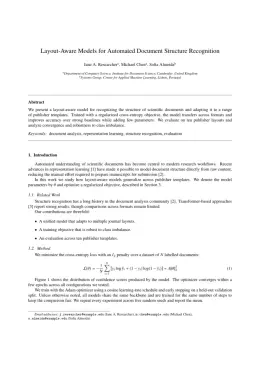
In DocuGuru you write your manuscript in a normal editor — no LaTeX setup required — and select the Neuroscience Applied template. When you export, DocuGuru compiles the paper into the official Elsevier format and hands you a submission-ready PDF along with the editable LaTeX source.
What reference style does Neuroscience Applied use?
Neuroscience Applied uses Numbered (Elsevier) references, shown as numbered [1], [2] markers in the text. DocuGuru formats every in-text citation and the reference list in this exact style automatically. A reference appears like this: [1] A. Smith, B. Jones, C. Lee, A representative article title, Neuroscience Applied 12 (2023) 45–58.
Do I need to know LaTeX to submit to Neuroscience Applied?
No. DocuGuru generates the elsarticle LaTeX class and compiles the PDF for you in the background, so you get a Elsevier-ready Neuroscience Applied document without writing any LaTeX. If you do want it, the LaTeX source is included in the export.
Can I import an existing draft into the Neuroscience Applied template?
Yes. Paste or upload your current manuscript — Word, LaTeX, Markdown, or plain text — and DocuGuru reflows it into the Neuroscience Applied format with correct headings, figures, tables, and numbered citations.
Who publishes Neuroscience Applied?
Neuroscience Applied is a multidisciplinary journal published by Elsevier. DocuGuru's Neuroscience Applied template matches Elsevier's official submission format.
Can I export a submission-ready Neuroscience Applied PDF?
Yes — DocuGuru produces a PDF built with the official Neuroscience Applied template (the elsarticle class) that is ready to submit to Elsevier, together with the matching LaTeX source files.
How much does the Neuroscience Applied template cost?
You can start writing in the Neuroscience Applied template for free. Exporting the final submission-ready Neuroscience Applied PDF and LaTeX source is part of DocuGuru's paid plans — see the app for current pricing.
Use the Neuroscience Applied template