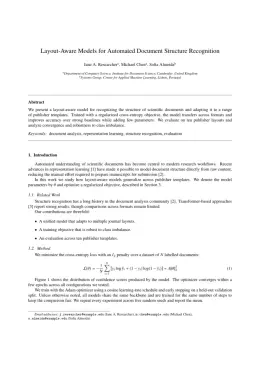
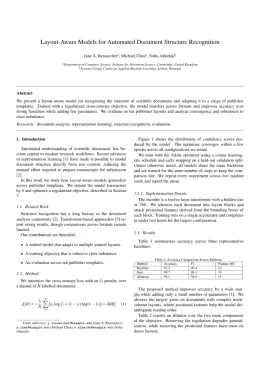
Elsevier

NeuroImage Clinical Template

Write in a clean editor, then format for NeuroImage Clinical in one click — DocuGuru applies the official Elsevier template with author–year references and exports a submission-ready PDF plus the editable LaTeX source. Free to start.

About the NeuroImage Clinical format

NeuroImage Clinical is a peer-reviewed journal published by Elsevier, covering Functional Brain Connectivity Studies, Advanced Neuroimaging Techniques and Applications, Advanced MRI Techniques and Applications.

PublisherElsevier
Reference styleAuthor–year (Harvard)
Author–year — (Smith, 2023) in the text
Smith, A., Jones, B. and Lee, C. (2023) 'A representative article title', NeuroImage Clinical, 12(3), pp. 45–58.

Formats any DOI in NeuroImage Clinical style. No sign-up.

Publishes research inFunctional Brain Connectivity Studies Advanced Neuroimaging Techniques and Applications Advanced MRI Techniques and Applications Dementia and Cognitive Impairment Research Neurological disorders and treatments
ISSN2213-1582
Citation impact (2-yr)3.36
h-index133
i10-index3,136
Total citations153,557
Article processing charge$3,150
Open accessYes
Top institutions publishing hereHarvard University
Journal websitewww.journals.elsevier.com
You getA submission-ready PDF and the editable LaTeX source — ready to submit.

Papers published in NeuroImage Clinical per year

214
2014
228
2015
267
2016
344
2017
398
2018
521
2019
404
2020
376
2021
377
2022
248
2023
167
2024
212
2025

Citation impact of NeuroImage Clinical by publication year

16.7K
2014
13.8K
2015
14.1K
2016
21.3K
2017
18.8K
2018
19.4K
2019
12.5K
2020
8.9K
2021
6.7K
2022
3.4K
2023
1K
2024
436
2025

Citations each year’s papers have accumulated so far — the most recent years are still building up.

Most-cited papers in NeuroImage Clinical

Dynamic functional connectivity analysis reveals transient states of dysconnectivity in schizophrenia

Eswar Damaraju, Elena A. Allen, Ayşenil Belger et al. · 1 Jan 2014

Schizophrenia is a psychotic disorder characterized by functional dysconnectivity or abnormal integration between distant brain regions. Recent functional imaging studies have implicated large-scale thalamo-cortical connectivity as being disrupted in patients. However, observed connectivity differences in schizophrenia have been inconsistent between studies, with reports of hyperconnectivity and hypoconnectivity between the same brain regions. Using resting state…

1,146 citations Cite SaveGo to paper →
Identification of autism spectrum disorder using deep learning and the ABIDE dataset

Anibal Sólon Heinsfeld, Alexandre R. Franco, R. Cameron Craddock et al. · 31 Aug 2017

The goal of the present study was to apply deep learning algorithms to identify autism spectrum disorder (ASD) patients from large brain imaging dataset, based solely on the patients brain activation patterns. We investigated ASD patients brain imaging data from a world-wide multi-site database known as ABIDE (Autism Brain Imaging Data Exchange). ASD is a…

1,006 citations Cite SaveGo to paper →
Automated classification of Alzheimer's disease and mild cognitive impairment using a single MRI and deep neural networks

Silvia Basaia, Federica Agosta, Luca Wagner et al. · 18 Dec 2018

We built and validated a deep learning algorithm predicting the individual diagnosis of Alzheimer's disease (AD) and mild cognitive impairment who will convert to AD (c-MCI) based on a single cross-sectional brain structural MRI scan. Convolutional neural networks (CNNs) were applied on 3D T1-weighted images from ADNI and subjects recruited at our Institute (407 healthy…

Neuroimaging after mild traumatic brain injury: Review and meta-analysis

Cyrus Eierud, R. Cameron Craddock, Sean A. Fletcher et al. · 1 Jan 2014

This paper broadly reviews the study of mild traumatic brain injury (mTBI), across the spectrum of neuroimaging modalities. Among the range of imaging methods, however, magnetic resonance imaging (MRI) is unique in its applicability to studying both structure and function. Thus we additionally performed meta-analyses of MRI results to examine 1) the issue of anatomical…

NeuroMark: An automated and adaptive ICA based pipeline to identify reproducible fMRI markers of brain disorders

Yuhui Du, Zening Fu, Jing Sui (Beijing Normal University), my correct affiliation is beijing normal university, not Qingdao University of Science and Technology, please correct the current affiliation. Thank you et al. · 1 Jan 2020

Many mental illnesses share overlapping or similar clinical symptoms, confounding the diagnosis. It is important to systematically characterize the degree to which unique and similar changing patterns are reflective of brain disorders. Increasing sharing initiatives on neuroimaging data have provided unprecedented opportunities to study brain disorders. However, it is still an open question on replicating…

NeuroImage Clinical template — frequently asked questions

How do I write a paper in the NeuroImage Clinical format?
In DocuGuru you write your manuscript in a normal editor — no LaTeX setup required — and select the NeuroImage Clinical template. When you export, DocuGuru compiles the paper into the official Elsevier format and hands you a submission-ready PDF along with the editable LaTeX source.
What reference style does NeuroImage Clinical use?
NeuroImage Clinical uses Author–year (Harvard) references, shown as author–year markers such as (Smith, 2023) in the text. DocuGuru formats every in-text citation and the reference list in this exact style automatically. A reference appears like this: Smith, A., Jones, B. and Lee, C. (2023) 'A representative article title', NeuroImage Clinical, 12(3), pp. 45–58.
Do I need to know LaTeX to submit to NeuroImage Clinical?
No. DocuGuru generates the elsarticle LaTeX class and compiles the PDF for you in the background, so you get a Elsevier-ready NeuroImage Clinical document without writing any LaTeX. If you do want it, the LaTeX source is included in the export.
Can I import an existing draft into the NeuroImage Clinical template?
Yes. Paste or upload your current manuscript — Word, LaTeX, Markdown, or plain text — and DocuGuru reflows it into the NeuroImage Clinical format with correct headings, figures, tables, and author–year citations.
Who publishes NeuroImage Clinical?
NeuroImage Clinical is a multidisciplinary journal published by Elsevier. DocuGuru's NeuroImage Clinical template matches Elsevier's official submission format.
Can I export a submission-ready NeuroImage Clinical PDF?
Yes — DocuGuru produces a PDF built with the official NeuroImage Clinical template (the elsarticle class) that is ready to submit to Elsevier, together with the matching LaTeX source files.
How much does the NeuroImage Clinical template cost?
You can start writing in the NeuroImage Clinical template for free. Exporting the final submission-ready NeuroImage Clinical PDF and LaTeX source is part of DocuGuru's paid plans — see the app for current pricing.

Use the NeuroImage Clinical template