Elsevier

Molecular Therapy — Oncolytics Template

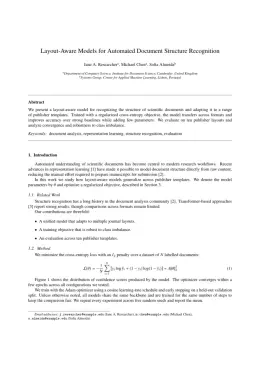
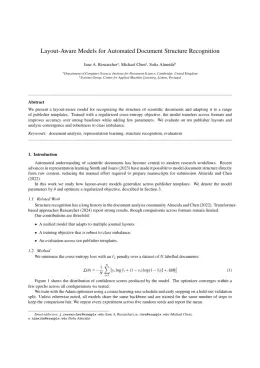
Write in a clean editor, then format for Molecular Therapy — Oncolytics in one click — DocuGuru applies the official Elsevier template with numbered references and exports a submission-ready PDF plus the editable LaTeX source. Free to start.

About the Molecular Therapy — Oncolytics format

Molecular Therapy — Oncolytics is a peer-reviewed journal published by Elsevier, covering Virus-based gene therapy research, CAR-T cell therapy research, Immunotherapy and Immune Responses.

PublisherElsevier
Reference styleNumbered (Elsevier)
Numbered — [1], [2] in the text
[1] A. Smith, B. Jones, C. Lee, A representative article title, Molecular Therapy — Oncolytics 12 (2023) 45–58.

Formats any DOI in Molecular Therapy — Oncolytics style. No sign-up.

Publishes research inVirus-based gene therapy research CAR-T cell therapy research Immunotherapy and Immune Responses Cancer-related molecular mechanisms research MicroRNA in disease regulation
ISSN2372-7705
h-index67
i10-index669
Total citations27,160
Article processing charge$3,200
Open accessYes
Top institutions publishing hereSun Yat-sen University
Journal websitewww.journals.elsevier.com
You getA submission-ready PDF and the editable LaTeX source — ready to submit.

Papers published in Molecular Therapy — Oncolytics per year

2
2010
1
2012
10
2014
18
2015
44
2016
32
2017
41
2018
83
2019
170
2020
189
2021
140
2022
93
2023

Citation impact of Molecular Therapy — Oncolytics by publication year

1
2010
3
2012
226
2014
583
2015
3.4K
2016
1.3K
2017
2K
2018
3.7K
2019
5.5K
2020
5.8K
2021
3.4K
2022
1.1K
2023

Citations each year’s papers have accumulated so far — the most recent years are still building up.

Most-cited papers in Molecular Therapy — Oncolytics

Toxicity and management in CAR T-cell therapy

Challice L. Bonifant, Hollie J. Jackson, Renier J. Brentjens et al. · 1 Jan 2016

T cells can be genetically modified to target tumors through the expression of a chimeric antigen receptor (CAR). Most notably, CAR T cells have demonstrated clinical efficacy in hematologic malignancies with more modest responses when targeting solid tumors. However, CAR T cells also have the capacity to elicit expected and unexpected toxicities including: cytokine release…

Clinical manufacturing of CAR T cells: foundation of a promising therapy

Xiuyan Wang, Isabelle Rivière · 1 Jan 2016

The treatment of cancer patients with autologous T cells expressing a chimeric antigen receptor (CAR) is one of the most promising adoptive cellular therapy approaches. Reproducible manufacturing of high-quality, clinical-grade CAR-T cell products is a prerequisite for the wide application of this technology. Product quality needs to be built-in within every step of the manufacturing…

Oncolytic Viruses for Cancer Therapy: Barriers and Recent Advances

Meijun Zheng, Jianhan Huang, Aiping Tong et al. · 3 Nov 2019

Oncolytic viruses (OVs) are powerful new therapeutic agents in cancer therapy. With the first OV (talimogene laherparepvec [T-vec]) obtaining US Food and Drug Administration approval, interest in OVs has been boosted greatly. Nevertheless, despite extensive research, oncolytic virotherapy has shown limited efficacy against solid tumors. Recent advances in viral retargeting, genetic editing, viral delivery platforms,…

Preclinical Development of Bivalent Chimeric Antigen Receptors Targeting Both CD19 and CD22

Haiying Qin, Sneha Ramakrishna, Sang M. Nguyen et al. · 5 Nov 2018

Despite high remission rates following CAR-T cell therapy in B-ALL, relapse due to loss of the targeted antigen is increasingly recognized as a mechanism of immune escape. We hypothesized that simultaneous targeting of CD19 and CD22 may reduce the likelihood of antigen loss, thus improving sustained remission rates. A systematic approach to the generation of…

CAR T cell therapy and the tumor microenvironment: Current challenges and opportunities

Lionel Aurelien Kankeu Fonkoua, Olivia Sirpilla, Reona Sakemura et al. · 19 Mar 2022

Chimeric antigen receptor (CAR) T cell therapy has demonstrated remarkable outcomes in individuals with hematological malignancies, but its success has been hindered by barriers intrinsic to the tumor microenvironment (TME), particularly for solid tumors, where it has yet to make its mark. In this article, we provide an updated review and future perspectives on features…

Molecular Therapy — Oncolytics template — frequently asked questions

How do I write a paper in the Molecular Therapy — Oncolytics format?
In DocuGuru you write your manuscript in a normal editor — no LaTeX setup required — and select the Molecular Therapy — Oncolytics template. When you export, DocuGuru compiles the paper into the official Elsevier format and hands you a submission-ready PDF along with the editable LaTeX source.
What reference style does Molecular Therapy — Oncolytics use?
Molecular Therapy — Oncolytics uses Numbered (Elsevier) references, shown as numbered [1], [2] markers in the text. DocuGuru formats every in-text citation and the reference list in this exact style automatically. A reference appears like this: [1] A. Smith, B. Jones, C. Lee, A representative article title, Molecular Therapy — Oncolytics 12 (2023) 45–58.
Do I need to know LaTeX to submit to Molecular Therapy — Oncolytics?
No. DocuGuru generates the elsarticle LaTeX class and compiles the PDF for you in the background, so you get a Elsevier-ready Molecular Therapy — Oncolytics document without writing any LaTeX. If you do want it, the LaTeX source is included in the export.
Can I import an existing draft into the Molecular Therapy — Oncolytics template?
Yes. Paste or upload your current manuscript — Word, LaTeX, Markdown, or plain text — and DocuGuru reflows it into the Molecular Therapy — Oncolytics format with correct headings, figures, tables, and numbered citations.
Who publishes Molecular Therapy — Oncolytics?
Molecular Therapy — Oncolytics is a multidisciplinary journal published by Elsevier. DocuGuru's Molecular Therapy — Oncolytics template matches Elsevier's official submission format.
Can I export a submission-ready Molecular Therapy — Oncolytics PDF?
Yes — DocuGuru produces a PDF built with the official Molecular Therapy — Oncolytics template (the elsarticle class) that is ready to submit to Elsevier, together with the matching LaTeX source files.
How much does the Molecular Therapy — Oncolytics template cost?
You can start writing in the Molecular Therapy — Oncolytics template for free. Exporting the final submission-ready Molecular Therapy — Oncolytics PDF and LaTeX source is part of DocuGuru's paid plans — see the app for current pricing.
Use the Molecular Therapy — Oncolytics template