Elsevier

MethodsX Template

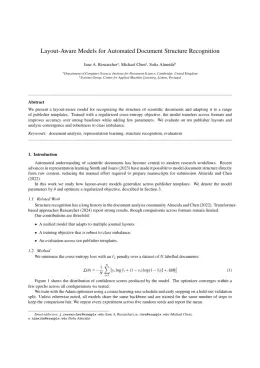
Write in a clean editor, then format for MethodsX in one click — DocuGuru applies the official Elsevier template with numbered references and exports a submission-ready PDF plus the editable LaTeX source. Free to start.

About the MethodsX format

MethodsX is a peer-reviewed journal published by Elsevier, covering Microplastics and Plastic Pollution, Analytical chemistry methods development, Recycling and Waste Management Techniques.

PublisherElsevier
Reference styleNumbered (Elsevier)
Numbered — [1], [2] in the text
[1] A. Smith, B. Jones, C. Lee, A representative article title, MethodsX 12 (2023) 45–58.

Formats any DOI in MethodsX style. No sign-up.

Publishes research inMicroplastics and Plastic Pollution Analytical chemistry methods development Recycling and Waste Management Techniques Land Use and Ecosystem Services Advanced Chemical Sensor Technologies
ISSN2215-0161
Citation impact (2-yr)3.83
h-index75
i10-index1,092
Total citations44,801
Article processing charge$500
Open accessYes
Top institutions publishing hereSymbiosis International University
Journal websitewww.journals.elsevier.com
You getA submission-ready PDF and the editable LaTeX source — ready to submit.

Papers published in MethodsX per year

53
2014
65
2015
66
2016
57
2017
195
2018
337
2019
446
2020
406
2021
362
2022
543
2023
600
2024
635
2025

Citation impact of MethodsX by publication year

1.7K
2014
2.3K
2015
1.4K
2016
1.3K
2017
4.1K
2018
8.3K
2019
5.9K
2020
5.1K
2021
3.6K
2022
5K
2023
3.7K
2024
1.7K
2025

Citations each year’s papers have accumulated so far — the most recent years are still building up.

Most-cited papers in MethodsX

Preparing, conducting, and analyzing Delphi surveys: Cross-disciplinary practices, new directions, and advancements

Daniel Beiderbeck, Nicolas Frevel, Heiko A. von der Gracht et al. · 1 Jan 2021

Delphi is a scientific method to organize and structure an expert discussion aiming to generate insights on controversial topics with limited information. The technique has seen a rise in publication frequency in various disciplines, especially over the past decades. In April 2021, the term Delphi method yielded 28,200 search hits in Google Scholar for the…

Carcinogenic and non-carcinogenic health risk assessment of heavy metals in drinking water of Khorramabad, Iran

Ali Akbar Mohammadi, Ahmad Zarei, Saba Majidi et al. · 1 Jan 2019

The continuous urbanization and industrialization in many parts of the world and Iran has led to high levels of heavy metal contamination in the soil and then on the surface and groundwater. In this study, the concentrations of 8 heavy metals were determined in forty water samples along distribution drinking water of Khorramabad, Iran. The…

A method for analyzing text using VOSviewer

Umar Ali Bukar, Md Shohel Sayeed, Abdul Razak et al. · 22 Aug 2023

The need for technical support for data handling and visualization solutions has increased in tandem with the complexity of today's data and information, that is of multiple sources, huge in size and of different formats. This study focuses on handling and analyzing text-based data. Despite many available text analysis tools, there is a high demand…

Step-by-step quantitative analysis of focal adhesions

Utku Horzum, Berrin Özdil, Devrim Pesen‐Okvur · 1 Jan 2014

Focal adhesions (FAs) are specialized adhesive structures which serve as cellular communication units between cells and the surrounding extracellular matrix. FAs are involved in signal transduction and actin cytoskeleton organization. FAs mediate cell adhesion, which is a critical phenomenon in cancer research. Since cells can form many and micrometer scale FAs, their quantitative analysis demands…

A critical review of RNN and LSTM variants in hydrological time series predictions

Muhammad Waqas, Usa Wannasingha Humphries · 12 Sep 2024

The rapid advancement in Artificial Intelligence (AI) and big data has developed significance in the water sector, particularly in hydrological time-series predictions. Recurrent Neural Networks (RNNs) and Long Short-Term Memory (LSTM) networks have become research focal points due to their effectiveness in modeling non-linear, time-variant hydrological systems. This review explores the different architectures of RNNs,…

MethodsX template — frequently asked questions

How do I write a paper in the MethodsX format?
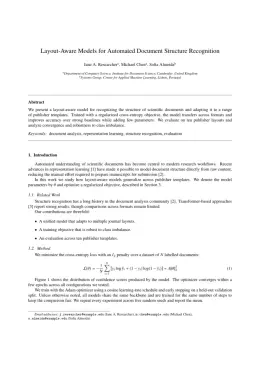
In DocuGuru you write your manuscript in a normal editor — no LaTeX setup required — and select the MethodsX template. When you export, DocuGuru compiles the paper into the official Elsevier format and hands you a submission-ready PDF along with the editable LaTeX source.
What reference style does MethodsX use?
MethodsX uses Numbered (Elsevier) references, shown as numbered [1], [2] markers in the text. DocuGuru formats every in-text citation and the reference list in this exact style automatically. A reference appears like this: [1] A. Smith, B. Jones, C. Lee, A representative article title, MethodsX 12 (2023) 45–58.
Do I need to know LaTeX to submit to MethodsX?
No. DocuGuru generates the elsarticle LaTeX class and compiles the PDF for you in the background, so you get a Elsevier-ready MethodsX document without writing any LaTeX. If you do want it, the LaTeX source is included in the export.
Can I import an existing draft into the MethodsX template?
Yes. Paste or upload your current manuscript — Word, LaTeX, Markdown, or plain text — and DocuGuru reflows it into the MethodsX format with correct headings, figures, tables, and numbered citations.
Who publishes MethodsX?
MethodsX is a multidisciplinary journal published by Elsevier. DocuGuru's MethodsX template matches Elsevier's official submission format.
Can I export a submission-ready MethodsX PDF?
Yes — DocuGuru produces a PDF built with the official MethodsX template (the elsarticle class) that is ready to submit to Elsevier, together with the matching LaTeX source files.
How much does the MethodsX template cost?
You can start writing in the MethodsX template for free. Exporting the final submission-ready MethodsX PDF and LaTeX source is part of DocuGuru's paid plans — see the app for current pricing.
Use the MethodsX template