Elsevier

Materials Letters X Template

Write in a clean editor, then format for Materials Letters X in one click — DocuGuru applies the official Elsevier template with numbered references and exports a submission-ready PDF plus the editable LaTeX source. Free to start.

About the Materials Letters X format

Materials Letters X is a peer-reviewed journal published by Elsevier, covering Diverse Scientific and Economic Studies, Human auditory perception and evaluation, Educational Robotics and Engineering.

PublisherElsevier
Reference styleNumbered (Elsevier)
Numbered — [1], [2] in the text
[1] A. Smith, B. Jones, C. Lee, A representative article title, Materials Letters X 12 (2023) 45–58.

Formats any DOI in Materials Letters X style. No sign-up.

Publishes research inDiverse Scientific and Economic Studies Human auditory perception and evaluation Educational Robotics and Engineering Luminescence Properties of Advanced Materials Gas Sensing Nanomaterials and Sensors
ISSN2590-1508
Citation impact (2-yr)0.22
h-index18
i10-index49
Total citations1,381
Article processing charge$1,470
Open accessYes
Top institutions publishing hereRashtrasant Tukadoji Maharaj Nagpur University
Journal websitewww.journals.elsevier.com
You getA submission-ready PDF and the editable LaTeX source — ready to submit.

Papers published in Materials Letters X per year

1
2018
30
2019
15
2020
52
2021
56
2022
42
2023
8
2024
24
2025

Citation impact of Materials Letters X by publication year

0
2018
255
2019
54
2020
404
2021
422
2022
220
2023
7
2024
4
2025

Citations each year’s papers have accumulated so far — the most recent years are still building up.

Most-cited papers in Materials Letters X

Synthesis and characterization of zinc oxide nanoparticles via oxalate co-precipitation method

Natheer B. Mahmood, Farqad R. Saeed, Kadhim R. Gbashi et al. · 25 Jan 2022

Zinc Oxide nanoparticles (ZnO NPs) were synthesized as a powder using the oxalate co-precipitation method after calcination at 700 °C. Zine sulfate was used as a zinc soluble source, and oxalic acid was used as a Catalyst. The reaction was carried out at room temperature condition. The resulted powder was characterized by XRD analysis before…

Structural and optical characteristics of cobalt ferrite nanoparticles

B. Jeevanantham, Youngseok Song, Heeman Choe et al. · 15 Oct 2021

Numerous researchers are fascinated by magnetic spinel ferrites because they are promising candidates for many application fields. The spinel cobalt ferrite (CoFe2O4) has unique features because it exhibits various redox states, excellent permeability, and superior electrochemical stability. In this study, cobalt ferrite nanoparticles were synthesized via sol–gel combustion. The average crystallite size was 43 and…

Comparative characterization of eucalyptus fibers and softwood fibers for tissue papers applications

Flávia P. Morais, Raquel Bértolo, Joana M. R. Curto et al. · 28 Oct 2019

Significative growth and demanding for premium tissue products, in which softness and absorbency are key consumer requests, pointed out the need for the establishment of relations between fiber properties and tissue paper properties. For this purpose, an experimental plan was designed using a representative group of pulp fibers, six hardwood, and six softwood, for the…

Dry reforming of methane over Ni-based catalysts: Effect of ZrO2 and MgO addition as support

Rose Diyanah binti Rosdin, Mohammad Yusuf, Bawadi Abdullah · 30 Aug 2021

The increasing content of greenhouse gases (GHG’s) in earth’s atmosphere is the main reason for global warming. Dry reforming of methane (DRM) is an encouraging technique to utilize the two main GHG’s (i.e., CO2 and CH4). Three different Ni based nano-catalysts i.e., Ni/Al2O3, Ni/Al2O3-ZrO2 and Ni/Al2O3-MgO were synthesized by wet-impregnation method and tested for DRM.…

Hydrogen storage behavior of TiFe alloy activated by different methods

Fangqin Guo, Katsuya Namba, Hiroki Miyaoka et al. · 7 Feb 2021

TiFe activation for hydrogen uptake was conducted through different methods and ball milling with ethanol proved to be the most effective one. TiFe alloy after activation could absorb 1.2 wt% hydrogen at room temperature with absorption and desorption plateaus of 0.5 MPa and 0.2 MPa respectively. Investigation on microstructure and chemical state of TiFe sample…

Materials Letters X template — frequently asked questions

How do I write a paper in the Materials Letters X format?
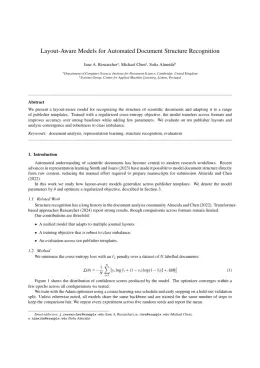
In DocuGuru you write your manuscript in a normal editor — no LaTeX setup required — and select the Materials Letters X template. When you export, DocuGuru compiles the paper into the official Elsevier format and hands you a submission-ready PDF along with the editable LaTeX source.
What reference style does Materials Letters X use?
Materials Letters X uses Numbered (Elsevier) references, shown as numbered [1], [2] markers in the text. DocuGuru formats every in-text citation and the reference list in this exact style automatically. A reference appears like this: [1] A. Smith, B. Jones, C. Lee, A representative article title, Materials Letters X 12 (2023) 45–58.
Do I need to know LaTeX to submit to Materials Letters X?
No. DocuGuru generates the elsarticle LaTeX class and compiles the PDF for you in the background, so you get a Elsevier-ready Materials Letters X document without writing any LaTeX. If you do want it, the LaTeX source is included in the export.
Can I import an existing draft into the Materials Letters X template?
Yes. Paste or upload your current manuscript — Word, LaTeX, Markdown, or plain text — and DocuGuru reflows it into the Materials Letters X format with correct headings, figures, tables, and numbered citations.
Who publishes Materials Letters X?
Materials Letters X is a multidisciplinary journal published by Elsevier. DocuGuru's Materials Letters X template matches Elsevier's official submission format.
Can I export a submission-ready Materials Letters X PDF?
Yes — DocuGuru produces a PDF built with the official Materials Letters X template (the elsarticle class) that is ready to submit to Elsevier, together with the matching LaTeX source files.
How much does the Materials Letters X template cost?
You can start writing in the Materials Letters X template for free. Exporting the final submission-ready Materials Letters X PDF and LaTeX source is part of DocuGuru's paid plans — see the app for current pricing.
Use the Materials Letters X template