Elsevier

Journal of Pharmacological Sciences Template

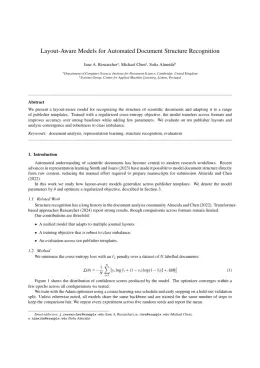
Write in a clean editor, then format for Journal of Pharmacological Sciences in one click — DocuGuru applies the official Elsevier template with numbered references and exports a submission-ready PDF plus the editable LaTeX source. Free to start.

About the Journal of Pharmacological Sciences format

Journal of Pharmacological Sciences is a peer-reviewed journal published by Elsevier, covering Neuroscience and Neuropharmacology Research, Ion channel regulation and function, Receptor Mechanisms and Signaling.

PublisherElsevier
Reference styleNumbered (Elsevier)
Numbered — [1], [2] in the text
[1] A. Smith, B. Jones, C. Lee, A representative article title, Journal of Pharmacological Sciences 12 (2023) 45–58.

Formats any DOI in Journal of Pharmacological Sciences style. No sign-up.

Publishes research inNeuroscience and Neuropharmacology Research Ion channel regulation and function Receptor Mechanisms and Signaling Cardiac electrophysiology and arrhythmias Nitric Oxide and Endothelin Effects
ISSN1347-8613
Citation impact (2-yr)2.69
h-index105
i10-index2,382
Total citations94,874
Article processing charge$753
Open accessYes
Top institutions publishing hereToho University
Journal websitewww.journals.elsevier.com
You getA submission-ready PDF and the editable LaTeX source — ready to submit.

Papers published in Journal of Pharmacological Sciences per year

201
2014
137
2015
120
2016
132
2017
158
2018
137
2019
127
2020
122
2021
96
2022
77
2023
83
2024
117
2025

Citation impact of Journal of Pharmacological Sciences by publication year

5.2K
2014
3.8K
2015
2.9K
2016
2.8K
2017
3.7K
2018
2.9K
2019
2.7K
2020
2.1K
2021
1K
2022
623
2023
379
2024
227
2025

Citations each year’s papers have accumulated so far — the most recent years are still building up.

Most-cited papers in Journal of Pharmacological Sciences

Anti-inflammatory Plant Flavonoids and Cellular Action Mechanisms

Hyun Pyo Kim, Kun Ho Son, Hyeun Wook Chang et al. · 1 Jan 2004

Plant flavonoids show anti-inflammatory activity in vitro and in vivo. Although not fully understood, several action mechanisms are proposed to explain in vivo anti-inflammatory action. One of the important mechanisms is an inhibition of eicosanoid generating enzymes including phospholipase A2, cyclooxygenases, and lipoxygenases, thereby reducing the concentrations of prostanoids and leukotrienes. Recent studies have also…

1,001 citations Cite SaveGo to paper →
Vascular nitric oxide: Beyond eNOS

Yingzi Zhao, Paul M. Vanhoutte, Susan W.S. Leung · 29 Sep 2015

As the first discovered gaseous signaling molecule, nitric oxide (NO) affects a number of cellular processes, including those involving vascular cells. This brief review summarizes the contribution of NO to the regulation of vascular tone and its sources in the blood vessel wall. NO regulates the degree of contraction of vascular smooth muscle cells mainly…

Brain-Derived Neurotrophic Factor/TrkB Signaling in Memory Processes

Kiyofumi Yamada, Toshitaka Nabeshima · 1 Jan 2003

Activity-dependent changes in synaptic strength are considered mechanisms underlying learning and memory. Brain-derived neurotrophic factor (BDNF) plays an important role in activity-dependent synaptic plasticity such as long-term potentiation. Recent experimental evidence supports the role of BDNF in memory processes: Memory acquisition and consolidation are associated with an increase in BDNF mRNA expression and the activation…

The Kallikrein-Kinin System: Current and Future Pharmacological Targets

Marie Eve Moreau, Nancy Garbacki, Giuseppe A. Molinaro et al. · 1 Jan 2005

The kallikrein-kinin system is an endogenous metabolic cascade, triggering of which results in the release of vasoactive kinins (bradykinin-related peptides). This complex system includes the precursors of kinins known as kininogens and mainly tissue and plasma kallikreins. The pharmacologically active kinins, which are often considered as either proinflammatory or cardioprotective, are implicated in many physiological…

The Potential of Amniotic Membrane/Amnion-Derived Cells for Regeneration of Various Tissues

Ayaka Toda, Motonori Okabe, Toshiko Yoshida et al. · 1 Jan 2007

Regenerative medicine is a new field based on the use of stem cells to generate biological substitutes and improve tissue functions, restoring damaged tissue with high proliferability and differentiability. It is of interest as a potential alternative to complicated tissue/organ transplantation. Recently, amnion-derived cells have been reported to have multipotent differentiation ability, and these cells…

Journal of Pharmacological Sciences template — frequently asked questions

How do I write a paper in the Journal of Pharmacological Sciences format?
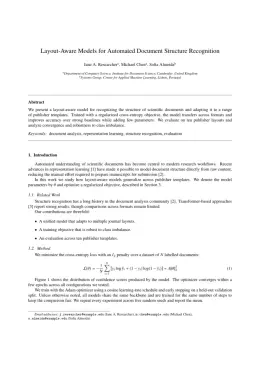
In DocuGuru you write your manuscript in a normal editor — no LaTeX setup required — and select the Journal of Pharmacological Sciences template. When you export, DocuGuru compiles the paper into the official Elsevier format and hands you a submission-ready PDF along with the editable LaTeX source.
What reference style does Journal of Pharmacological Sciences use?
Journal of Pharmacological Sciences uses Numbered (Elsevier) references, shown as numbered [1], [2] markers in the text. DocuGuru formats every in-text citation and the reference list in this exact style automatically. A reference appears like this: [1] A. Smith, B. Jones, C. Lee, A representative article title, Journal of Pharmacological Sciences 12 (2023) 45–58.
Do I need to know LaTeX to submit to Journal of Pharmacological Sciences?
No. DocuGuru generates the elsarticle LaTeX class and compiles the PDF for you in the background, so you get a Elsevier-ready Journal of Pharmacological Sciences document without writing any LaTeX. If you do want it, the LaTeX source is included in the export.
Can I import an existing draft into the Journal of Pharmacological Sciences template?
Yes. Paste or upload your current manuscript — Word, LaTeX, Markdown, or plain text — and DocuGuru reflows it into the Journal of Pharmacological Sciences format with correct headings, figures, tables, and numbered citations.
Who publishes Journal of Pharmacological Sciences?
Journal of Pharmacological Sciences is a multidisciplinary journal published by Elsevier. DocuGuru's Journal of Pharmacological Sciences template matches Elsevier's official submission format.
Can I export a submission-ready Journal of Pharmacological Sciences PDF?
Yes — DocuGuru produces a PDF built with the official Journal of Pharmacological Sciences template (the elsarticle class) that is ready to submit to Elsevier, together with the matching LaTeX source files.
How much does the Journal of Pharmacological Sciences template cost?
You can start writing in the Journal of Pharmacological Sciences template for free. Exporting the final submission-ready Journal of Pharmacological Sciences PDF and LaTeX source is part of DocuGuru's paid plans — see the app for current pricing.
Use the Journal of Pharmacological Sciences template