Elsevier

Invention Disclosure Template

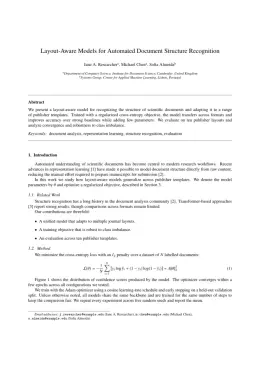
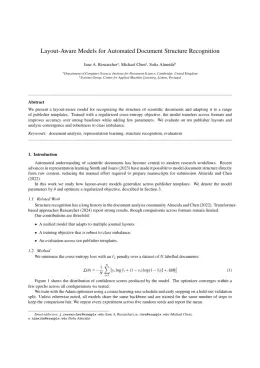
Write in a clean editor, then format for Invention Disclosure in one click — DocuGuru applies the official Elsevier template with numbered references and exports a submission-ready PDF plus the editable LaTeX source. Free to start.

About the Invention Disclosure format

Invention Disclosure is a peer-reviewed journal published by Elsevier, covering Carbon Dioxide Capture Technologies, Advancements in Battery Materials, Advanced Battery Materials and Technologies.

PublisherElsevier
Reference styleNumbered (Elsevier)
Numbered — [1], [2] in the text
[1] A. Smith, B. Jones, C. Lee, A representative article title, Invention Disclosure 12 (2023) 45–58.

Formats any DOI in Invention Disclosure style. No sign-up.

Publishes research inCarbon Dioxide Capture Technologies Advancements in Battery Materials Advanced Battery Materials and Technologies Advanced Battery Technologies Research Graphene research and applications
ISSN2772-4441
Citation impact (2-yr)0.76
h-index4
i10-index1
Total citations75
Article processing charge$800
Open accessYes
Top institutions publishing hereGeorge Washington University
Journal websitewww.journals.elsevier.com
You getA submission-ready PDF and the editable LaTeX source — ready to submit.

Papers published in Invention Disclosure per year

2
2021
6
2022
9
2023
17
2024
12
2025

Citation impact of Invention Disclosure by publication year

3
2021
15
2022
24
2023
24
2024
7
2025

Citations each year’s papers have accumulated so far — the most recent years are still building up.

Most-cited papers in Invention Disclosure

The grey-based Taguchi method was used to enhance the TIG-MIG hybrid welding process parameters for mild steel

Fasil Kebede Tesfaye, Ayitenew Mogninet Getaneh · 27 Oct 2023

Metal Industry and Machine Technology Development Enterprise is Ethiopia's leading manufacturing industry, producing a diverse range of industrial machinery and products. The main welding process used to join the products is MIG welding, which has several flaws, including low weld-metal toughness, spatter formation, undercut formation, and finally poor tensile strength and toughness. The company also…

A versatile modular plant for converting biogas into advanced biofuels

Francesco Negri, Matteo Fedeli, Massimo Barbieri et al. · 1 Jan 2022

The patented technology is a novel, portable, non-invasive, and flexible technical solution for converting biogas into valuable chemical compounds, such as bio-methanol and bio-dimethyl ether (bio-DME). It consists of compact modules, connected to each other through a flange-valve-flange system, to be installed downstream an existing traditional biogas plant. The two main sections of the module…

Upcycling waste snail shells into high-performance nanocatalyst for optimized biodiesel production: A sustainable approach

Shikhasmita Das, Jasha Momo H. Anãl, Pranjal Kalita et al. · 1 Jan 2024

The transesterification of soybean oil (SO) to biodiesel utilizing a basic CaO nanocatalyst derived from waste snail shells has been reported in this work. The steady rise in greenhouse gas emissions contributes to environmental pollution, posing a significant threat to human life due to the escalating rates of petroleum consumption worldwide. Thus, biodiesel appears as…

Geogrid-type geotextile made from Typha domingensis fibers with high tensile strength for erosion control

Luiz Diego Vidal Santos, Francisco Sandro Rodrigues Holanda, Alceu Pedrotti et al. · 1 Jan 2024

The present invention relates to a geotextile of the geogrid type manufactured with fibers from the Typha domingensis plant, known as cumbungi, recognized for its remarkable tensile strength. This geotextile is developed to mitigate erosive processes and is produced from natural fibers arranged in a mat configuration. This product fit in with the technical fields…

Invention Disclosure template — frequently asked questions

How do I write a paper in the Invention Disclosure format?
In DocuGuru you write your manuscript in a normal editor — no LaTeX setup required — and select the Invention Disclosure template. When you export, DocuGuru compiles the paper into the official Elsevier format and hands you a submission-ready PDF along with the editable LaTeX source.
What reference style does Invention Disclosure use?
Invention Disclosure uses Numbered (Elsevier) references, shown as numbered [1], [2] markers in the text. DocuGuru formats every in-text citation and the reference list in this exact style automatically. A reference appears like this: [1] A. Smith, B. Jones, C. Lee, A representative article title, Invention Disclosure 12 (2023) 45–58.
Do I need to know LaTeX to submit to Invention Disclosure?
No. DocuGuru generates the elsarticle LaTeX class and compiles the PDF for you in the background, so you get a Elsevier-ready Invention Disclosure document without writing any LaTeX. If you do want it, the LaTeX source is included in the export.
Can I import an existing draft into the Invention Disclosure template?
Yes. Paste or upload your current manuscript — Word, LaTeX, Markdown, or plain text — and DocuGuru reflows it into the Invention Disclosure format with correct headings, figures, tables, and numbered citations.
Who publishes Invention Disclosure?
Invention Disclosure is a multidisciplinary journal published by Elsevier. DocuGuru's Invention Disclosure template matches Elsevier's official submission format.
Can I export a submission-ready Invention Disclosure PDF?
Yes — DocuGuru produces a PDF built with the official Invention Disclosure template (the elsarticle class) that is ready to submit to Elsevier, together with the matching LaTeX source files.
How much does the Invention Disclosure template cost?
You can start writing in the Invention Disclosure template for free. Exporting the final submission-ready Invention Disclosure PDF and LaTeX source is part of DocuGuru's paid plans — see the app for current pricing.
Use the Invention Disclosure template