Elsevier

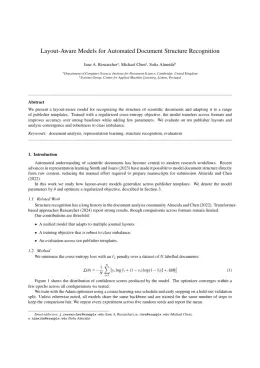
iGIE Template

Write in a clean editor, then format for iGIE in one click — DocuGuru applies the official Elsevier template with numbered references and exports a submission-ready PDF plus the editable LaTeX source. Free to start.

About the iGIE format

iGIE is a peer-reviewed journal published by Elsevier, covering Esophageal and GI Pathology, Colorectal Cancer Screening and Detection, Gallbladder and Bile Duct Disorders.

PublisherElsevier
Reference styleNumbered (Elsevier)
Numbered — [1], [2] in the text
[1] A. Smith, B. Jones, C. Lee, A representative article title, iGIE 12 (2023) 45–58.

Formats any DOI in iGIE style. No sign-up.

Publishes research inEsophageal and GI Pathology Colorectal Cancer Screening and Detection Gallbladder and Bile Duct Disorders Gastric Cancer Management and Outcomes Gastrointestinal Bleeding Diagnosis and Treatment
ISSN2949-7086
Citation impact (2-yr)0.51
h-index9
i10-index7
Total citations482
Open accessYes
Top institutions publishing hereBrigham and Women's Hospital
You getA submission-ready PDF and the editable LaTeX source — ready to submit.

Papers published in iGIE per year

17
2022
112
2023
96
2024
127
2025

Citation impact of iGIE by publication year

25
2022
281
2023
116
2024
40
2025

Citations each year’s papers have accumulated so far — the most recent years are still building up.

Most-cited papers in iGIE

Development of an artificial intelligence tool for detecting colorectal lesions in inflammatory bowel disease

Daniela Guerrero Vinsard, Jeffrey Fetzer, Upasana Agrawal et al. · 26 Apr 2023

Background and Aims: Artificial intelligence has the potential to enhance the endoscopist's ability to detect polypoid and nonpolypoid dysplasia, which could result in decreased rates of colorectal cancer in patients with inflammatory bowel disease (IBD). We aimed to develop the first known model for computer-aided detection (CADe) of colorectal lesions in patients with IBD. Methods:…

Evaluating the performance of ChatGPT in responding to questions about endoscopic procedures for patients

Hassam Ali, Pratik Patel, Itegbemie Obaitan et al. · 10 Oct 2023

Background and Aims: We evaluated the precision, medical accuracy, superfluous content, and consistency of ChatGPT's responses to commonly asked questions about endoscopic procedures and its capability to provide emotional support, comparing its performance with the generative pretrained transformer 4 (GPT-4) model. Methods: A set of 113 questions related to EGD, colonoscopy, EUS, and ERCP was…

Novel artificial intelligence–enabled deep learning system to enhance adenoma detection: a prospective randomized controlled study

Jesse Lachter, Simon Christopher Schlachter, Robert Scooter Plowman et al. · 1 Mar 2023

Background and Aims: ), using Fuji 7000 series colonoscopes (Fujifilm, Singapore). Methods: was trained and validated only on white-light imaging, excluding the use of continuous digital chromoendoscopy. Results: < .01). The false alert rate (mean, 4 per examination) was lower than the mean of >20 false alerts reported for other computer-aided detection systems. Withdrawal times…

Endoscopic vacuum therapy

Samuel Han, Mohit Girotra, Maaza Abdi et al. · 1 Sep 2024

Endoscopic vacuum therapy (EVT) is a rapidly evolving novel technology increasingly used in the GI tract for management of endoscopic and surgical adverse events such as perforations, leaks, and fistulae. Initially recognized by plastic surgeons as a management option for chronically infected and ischemic wounds, vacuum therapy has experienced rapid adoption into other specialties, including…

Deep sight: enhancing periprocedural adverse event recording in endoscopy by structuring text documentation with privacy-preserving large language models

Isabella C. Wiest, Dyke Ferber, Stefan Wittlinger et al. · 23 Aug 2024

Background and Aims: The assessment of adverse events from endoscopic procedures is essential for successful interventions, ensuring accurate follow-up, adverse event management, and processing for quality control. Despite the critical need for structured documentation, the current practice often relies on free-text recordings, which poses challenges for scalable intervention analysis; however, the introduction of large language…

iGIE template — frequently asked questions

How do I write a paper in the iGIE format?
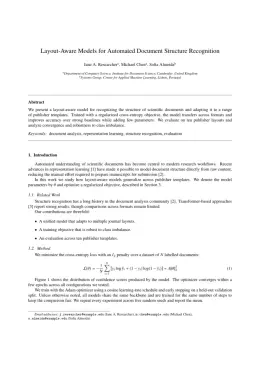
In DocuGuru you write your manuscript in a normal editor — no LaTeX setup required — and select the iGIE template. When you export, DocuGuru compiles the paper into the official Elsevier format and hands you a submission-ready PDF along with the editable LaTeX source.
What reference style does iGIE use?
iGIE uses Numbered (Elsevier) references, shown as numbered [1], [2] markers in the text. DocuGuru formats every in-text citation and the reference list in this exact style automatically. A reference appears like this: [1] A. Smith, B. Jones, C. Lee, A representative article title, iGIE 12 (2023) 45–58.
Do I need to know LaTeX to submit to iGIE?
No. DocuGuru generates the elsarticle LaTeX class and compiles the PDF for you in the background, so you get a Elsevier-ready iGIE document without writing any LaTeX. If you do want it, the LaTeX source is included in the export.
Can I import an existing draft into the iGIE template?
Yes. Paste or upload your current manuscript — Word, LaTeX, Markdown, or plain text — and DocuGuru reflows it into the iGIE format with correct headings, figures, tables, and numbered citations.
Who publishes iGIE?
iGIE is a multidisciplinary journal published by Elsevier. DocuGuru's iGIE template matches Elsevier's official submission format.
Can I export a submission-ready iGIE PDF?
Yes — DocuGuru produces a PDF built with the official iGIE template (the elsarticle class) that is ready to submit to Elsevier, together with the matching LaTeX source files.
How much does the iGIE template cost?
You can start writing in the iGIE template for free. Exporting the final submission-ready iGIE PDF and LaTeX source is part of DocuGuru's paid plans — see the app for current pricing.
Use the iGIE template