Elsevier

Human Genetics and Genomics Advances Template

Write in a clean editor, then format for Human Genetics and Genomics Advances in one click — DocuGuru applies the official Elsevier template with numbered references and exports a submission-ready PDF plus the editable LaTeX source. Free to start.

About the Human Genetics and Genomics Advances format

Human Genetics and Genomics Advances is a peer-reviewed journal published by Elsevier, covering Genomics and Rare Diseases, Genetic Associations and Epidemiology, Genomic variations and chromosomal abnormalities.

PublisherElsevier
Reference styleNumbered (Elsevier)
Numbered — [1], [2] in the text
[1] A. Smith, B. Jones, C. Lee, A representative article title, Human Genetics and Genomics Advances 12 (2023) 45–58.

Formats any DOI in Human Genetics and Genomics Advances style. No sign-up.

Publishes research inGenomics and Rare Diseases Genetic Associations and Epidemiology Genomic variations and chromosomal abnormalities BRCA gene mutations in cancer RNA modifications and cancer
ISSN2666-2477
Citation impact (2-yr)2.02
h-index27
i10-index124
Total citations3,957
Article processing charge$3,000
Open accessYes
Top institutions publishing hereUniversity of Washington
Journal websitewww.sciencedirect.com
You getA submission-ready PDF and the editable LaTeX source — ready to submit.

Papers published in Human Genetics and Genomics Advances per year

11
2020
55
2021
70
2022
67
2023
110
2024
141
2025

Citation impact of Human Genetics and Genomics Advances by publication year

278
2020
1.3K
2021
1.1K
2022
600
2023
469
2024
145
2025

Citations each year’s papers have accumulated so far — the most recent years are still building up.

Most-cited papers in Human Genetics and Genomics Advances

Novel diagnostic DNA methylation episignatures expand and refine the epigenetic landscapes of Mendelian disorders

Michael A. Levy, Haley McConkey, Jennifer Kerkhof et al. · 3 Dec 2021

Overlapping clinical phenotypes and an expanding breadth and complexity of genomic associations are a growing challenge in the diagnosis and clinical management of Mendelian disorders. The functional consequences and clinical impacts of genomic variation may involve unique, disorder-specific, genomic DNA methylation episignatures. In this study, we describe 19 novel episignature disorders and compare the findings…

Inclusion of variants discovered from diverse populations improves polygenic risk score transferability

Taylor B. Cavazos, John S. Witte · 1 Dec 2020

The majority of polygenic risk scores (PRSs) have been developed and optimized in individuals of European ancestry and may have limited generalizability across other ancestral populations. Understanding aspects of PRSs that contribute to this issue and determining solutions is complicated by disease-specific genetic architecture and limited knowledge of sharing of causal variants and effect sizes…

Genotype and defects in microtubule-based motility correlate with clinical severity in KIF1A-associated neurological disorder

Lia Boyle, Lu Rao, Simranpreet Kaur et al. · 30 Jan 2021

KIF1A-associated neurological disorder (KAND) encompasses a group of rare neurodegenerative conditions caused by variants in KIF1A, a gene that encodes an anterograde neuronal microtubule (MT) motor protein. Here we characterize the natural history of KAND in 117 individuals using a combination of caregiver or self-reported medical history, a standardized measure of adaptive behavior, clinical records,…

Identifying and correcting for misspecifications in GWAS summary statistics and polygenic scores

Florian Privé, Julyan Arbel, Hugues Aschard et al. · 18 Aug 2022

Publicly available genome-wide association studies (GWAS) summary statistics exhibit uneven quality, which can impact the validity of follow-up analyses. First, we present an overview of possible misspecifications that come with GWAS summary statistics. Then, in both simulations and real-data analyses, we show that additional information such as imputation INFO scores, allele frequencies, and per-variant sample…

Polygenic risk scores in the clinic: Translating risk into action

Anna Lewis, Robert C. Green, Jason L. Vassy · 28 Jul 2021

Polygenic risk scores (PRSs) are heralded as useful tools for risk stratification and personalized preventive care, but they are clinically useful only if they can be translated into action. The risk information conveyed by a PRS must be contextualized to enable this. Best practices are evolving but are likely to involve integrating a PRS into…

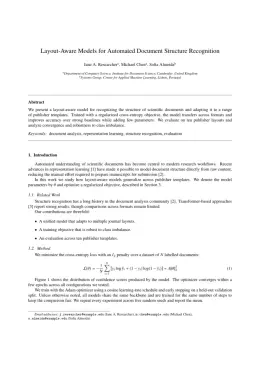
Human Genetics and Genomics Advances template — frequently asked questions

How do I write a paper in the Human Genetics and Genomics Advances format?
In DocuGuru you write your manuscript in a normal editor — no LaTeX setup required — and select the Human Genetics and Genomics Advances template. When you export, DocuGuru compiles the paper into the official Elsevier format and hands you a submission-ready PDF along with the editable LaTeX source.
What reference style does Human Genetics and Genomics Advances use?
Human Genetics and Genomics Advances uses Numbered (Elsevier) references, shown as numbered [1], [2] markers in the text. DocuGuru formats every in-text citation and the reference list in this exact style automatically. A reference appears like this: [1] A. Smith, B. Jones, C. Lee, A representative article title, Human Genetics and Genomics Advances 12 (2023) 45–58.
Do I need to know LaTeX to submit to Human Genetics and Genomics Advances?
No. DocuGuru generates the elsarticle LaTeX class and compiles the PDF for you in the background, so you get a Elsevier-ready Human Genetics and Genomics Advances document without writing any LaTeX. If you do want it, the LaTeX source is included in the export.
Can I import an existing draft into the Human Genetics and Genomics Advances template?
Yes. Paste or upload your current manuscript — Word, LaTeX, Markdown, or plain text — and DocuGuru reflows it into the Human Genetics and Genomics Advances format with correct headings, figures, tables, and numbered citations.
Who publishes Human Genetics and Genomics Advances?
Human Genetics and Genomics Advances is a multidisciplinary journal published by Elsevier. DocuGuru's Human Genetics and Genomics Advances template matches Elsevier's official submission format.
Can I export a submission-ready Human Genetics and Genomics Advances PDF?
Yes — DocuGuru produces a PDF built with the official Human Genetics and Genomics Advances template (the elsarticle class) that is ready to submit to Elsevier, together with the matching LaTeX source files.
How much does the Human Genetics and Genomics Advances template cost?
You can start writing in the Human Genetics and Genomics Advances template for free. Exporting the final submission-ready Human Genetics and Genomics Advances PDF and LaTeX source is part of DocuGuru's paid plans — see the app for current pricing.
Use the Human Genetics and Genomics Advances template