Elsevier

Green Synthesis and Catalysis Template

Write in a clean editor, then format for Green Synthesis and Catalysis in one click — DocuGuru applies the official Elsevier template with numbered references and exports a submission-ready PDF plus the editable LaTeX source. Free to start.

About the Green Synthesis and Catalysis format

Green Synthesis and Catalysis is a peer-reviewed journal published by Elsevier, covering Catalytic C–H Functionalization Methods, Radical Photochemical Reactions, Sulfur-Based Synthesis Techniques.

PublisherElsevier
Reference styleNumbered (Elsevier)
Numbered — [1], [2] in the text
[1] A. Smith, B. Jones, C. Lee, A representative article title, Green Synthesis and Catalysis 12 (2023) 45–58.

Formats any DOI in Green Synthesis and Catalysis style. No sign-up.

Publishes research inCatalytic C–H Functionalization Methods Radical Photochemical Reactions Sulfur-Based Synthesis Techniques Asymmetric Hydrogenation and Catalysis Synthesis and Catalytic Reactions
ISSN2666-5549
Citation impact (2-yr)3.37
h-index38
i10-index169
Total citations6,596
Open accessYes
Top institutions publishing hereFudan University
Journal websitewww.sciencedirect.com
You getA submission-ready PDF and the editable LaTeX source — ready to submit.

Papers published in Green Synthesis and Catalysis per year

27
2020
67
2021
87
2022
55
2023
86
2024
100
2025

Citation impact of Green Synthesis and Catalysis by publication year

1.3K
2020
2.4K
2021
1.6K
2022
470
2023
477
2024
224
2025

Citations each year’s papers have accumulated so far — the most recent years are still building up.

Most-cited papers in Green Synthesis and Catalysis

Perspectives on green synthesis and catalysis

Yiram Kim, Chao‐Jun Li · 1 Jun 2020

Despite their impressive capacity to access diverse functional groups and to synthesize structurally complex molecules, the majority of the organic reactions suffers from harsh conditions, low atom economy, and hazardous waste production. The goal of our research is geared towards developing efficient methods to minimize the adverse environmental impact and contributing to chemical sustainability. Herein,…

Recent advances in visible-light photoredox-catalyzed nitrogen radical cyclization

Peng‐Zi Wang, Quanqing Zhao, Wen‐Jing Xiao et al. · 1 Jun 2020

Visible-light photoredox catalysis is a powerful and attractive strategy for organic molecule activation and new reaction design owing to its environmental-friendly characteristics and unique catalytic mechanisms, and has found wide applications in organic synthesis. This catalytic strategy enables controllable generation of diverse nitrogen-centered radicals (NCRs) under mild conditions, providing access to construction of diverse nitrogen-containing…

Electrochemical generation of nitrogen-centered radicals for organic synthesis

Na Chen, Hai‐Chao Xu · 29 Mar 2021

There is a resurgence of interests in organic electrochemistry, which is generally accepted as a green synthetic tool. In this context, many electrochemical methods have been developed in the past decade to access various nitrogen-centered radicals (NCRs) from readily available precursors in a controlled fashion, enabling the rapid development of many NCR-mediated new reactions for…

Stereoselective construction of atropisomers featuring a C–N chiral axis

Yong‐Jie Wu, Gang Liao, Bing‐Feng Shi · 4 Jan 2022

Atropisomeric C–N compounds belong to an important class of axially chiral compounds. However, whereas the asymmetric synthesis of biaryl atropisomers have been well established, general and efficient strategies to access single enantiomers of C–N atropisomers are still rare. Until recently, innovative methods have been developed, providing new opportunities for the highly stereoselective synthesis of this…

Carbon dioxide cycle via electrocatalysis: Electrochemical carboxylation of CO2 and decarboxylative functionalization of carboxylic acids

Zixin Yang, Yi Yu, Liangchuan Lai et al. · 1 Feb 2021

As one of the most important biogeochemical cycles, the carbon dioxide (CO2) cycle between atmosphere and biosphere has a profound impact on the life on earth. Therefore, the search for sustainable solutions to normalize the currently unbalanced carbon dioxide cycle is the central research topic of many scientific disciplines. The green and sustainable electrocatalysis offers…

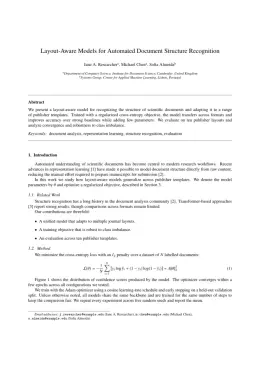
Green Synthesis and Catalysis template — frequently asked questions

How do I write a paper in the Green Synthesis and Catalysis format?
In DocuGuru you write your manuscript in a normal editor — no LaTeX setup required — and select the Green Synthesis and Catalysis template. When you export, DocuGuru compiles the paper into the official Elsevier format and hands you a submission-ready PDF along with the editable LaTeX source.
What reference style does Green Synthesis and Catalysis use?
Green Synthesis and Catalysis uses Numbered (Elsevier) references, shown as numbered [1], [2] markers in the text. DocuGuru formats every in-text citation and the reference list in this exact style automatically. A reference appears like this: [1] A. Smith, B. Jones, C. Lee, A representative article title, Green Synthesis and Catalysis 12 (2023) 45–58.
Do I need to know LaTeX to submit to Green Synthesis and Catalysis?
No. DocuGuru generates the elsarticle LaTeX class and compiles the PDF for you in the background, so you get a Elsevier-ready Green Synthesis and Catalysis document without writing any LaTeX. If you do want it, the LaTeX source is included in the export.
Can I import an existing draft into the Green Synthesis and Catalysis template?
Yes. Paste or upload your current manuscript — Word, LaTeX, Markdown, or plain text — and DocuGuru reflows it into the Green Synthesis and Catalysis format with correct headings, figures, tables, and numbered citations.
Who publishes Green Synthesis and Catalysis?
Green Synthesis and Catalysis is a multidisciplinary journal published by Elsevier. DocuGuru's Green Synthesis and Catalysis template matches Elsevier's official submission format.
Can I export a submission-ready Green Synthesis and Catalysis PDF?
Yes — DocuGuru produces a PDF built with the official Green Synthesis and Catalysis template (the elsarticle class) that is ready to submit to Elsevier, together with the matching LaTeX source files.
How much does the Green Synthesis and Catalysis template cost?
You can start writing in the Green Synthesis and Catalysis template for free. Exporting the final submission-ready Green Synthesis and Catalysis PDF and LaTeX source is part of DocuGuru's paid plans — see the app for current pricing.
Use the Green Synthesis and Catalysis template