About the Cambridge Prisms: Coastal Futures format
Cambridge Prisms: Coastal Futures is a peer-reviewed journal published by Cambridge University Press, covering Coastal and Marine Dynamics, Coastal and Marine Management, Coastal wetland ecosystem dynamics. Over its lifetime it has published 110 papers, which have received 1,736 citations.
| Publisher | Cambridge University Press |
|---|
| Reference style | Numbered Numbered — [1], [2] in the text
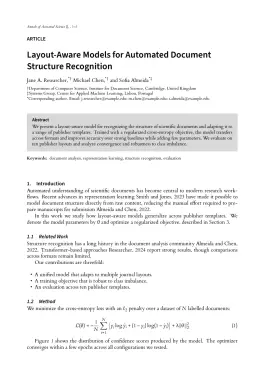
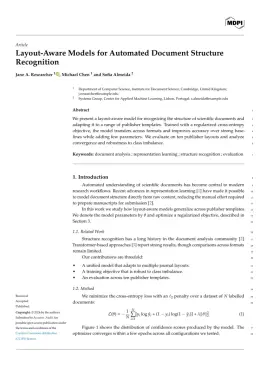
[1] A. Smith, B. Jones, and C. Lee, A representative article title, Cambridge Prisms: Coastal Futures 12 (2023) 45–58.
Formats any DOI in the closest standard style — Cambridge Prisms: Coastal Futures has no published style definition, so this is an approximation. No sign-up.
|
|---|
| Publishes research in | Coastal and Marine Dynamics Coastal and Marine Management Coastal wetland ecosystem dynamics Tropical and Extratropical Cyclones Research Coral and Marine Ecosystems Studies |
|---|
| ISSN | 2754-7205 |
|---|
| Citation impact (2-yr) | 2.66 |
|---|
| h-index | 22 |
|---|
| i10-index | 40 |
|---|
| Open access | Yes — indexed in DOAJ |
|---|
| Top institutions publishing here | University of Wollongong |
|---|
| You get | A submission-ready PDF and the editable LaTeX source — ready to submit. |
|---|
Papers published in Cambridge Prisms: Coastal Futures per year
Citation impact of Cambridge Prisms: Coastal Futures by publication year
Citations each year’s papers have accumulated so far — the most recent years are still building up.
Most-cited papers in Cambridge Prisms: Coastal Futures
Population development as a driver of coastal risk: Current trends and future pathways
Lena Reimann, Athanasios T. Vafeidis, Lars E. Honsel · 1 Jan 2023
Abstract Coastal areas are subject to hazards that can result in severe impacts due to the high concentration of people and assets in exposed locations. While climate-induced sea-level rise will exacerbate these hazards in the course of the 21st century, future dynamics in socioeconomic development will play an important role in driving impacts – as…
Persistent eutrophication and hypoxia in the coastal ocean
Minhan Dai, Yangyang Zhao, Fei Chai et al. · 1 Jan 2023
Abstract Coastal eutrophication and hypoxia remain a persistent environmental crisis despite the great efforts to reduce nutrient loading and mitigate associated environmental damages. Symptoms of this crisis have appeared to spread rapidly, reaching developing countries in Asia with emergences in Southern America and Africa. The pace of changes and the underlying drivers remain not so…
The future of coastal monitoring through satellite remote sensing
Sean Vitousek, Daniel Buscombe, Kilian Vos et al. · 28 Nov 2022
Abstract Satellite remote sensing is transforming coastal science from a “data-poor” field into a “data-rich” field. Sandy beaches are dynamic landscapes that change in response to long-term pressures, short-term pulses, and anthropogenic interventions. Until recently, the rate and breadth of beach change have outpaced our ability to monitor those changes, due to the spatiotemporal limitations…
Morphodynamics of wave-dominated beaches
Bruno Castelle, Gerd Masselink · 23 Aug 2022
Abstract Wave-dominated sandy beaches are highly valued by societies and are amongst the world’s most energetic and dynamic environments. On wave-dominated beaches with unlimited sand supply and limited influence of tide and geology, beach change has long been conceptualised in the morphodynamic framework of Wright and Short (1984). Such framework describes the occurrence of beach…
The evolution of 21st century sea-level projections from IPCC AR5 to AR6 and beyond
Aimée B. A. Slangen, Matthew D. Palmer, Carolina M.L. Camargo et al. · 12 Dec 2022
Abstract Sea-level science has seen many recent developments in observations and modelling of the different contributions and the total mean sea-level change. In this overview, we discuss (1) the evolution of the Intergovernmental Panel on Climate Change (IPCC) projections, (2) how the projections compare to observations and (3) the outlook for further improving projections. We…