BMC (BioMed Central)

Cell Division Template

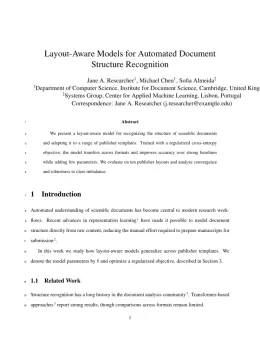
Write in a clean editor, then format for Cell Division in one click — DocuGuru applies the official BMC (BioMed Central) template with numbered references and exports a submission-ready PDF plus the editable LaTeX source. Free to start.

About the Cell Division format

Cell Division is a peer-reviewed journal published by BMC (BioMed Central), covering Microtubule and mitosis dynamics, Cancer-related Molecular Pathways, Ubiquitin and proteasome pathways. Over its lifetime it has published 377 papers, which have received 14,077 citations.

PublisherBMC (BioMed Central)
Reference styleNumbered (Vancouver)
Numbered — [1], [2] in the text
1. Smith A, Jones B, Lee C. A representative article title. Cell Division. 2023;12(3):45–58.

Formats any DOI in Cell Division style. No sign-up.

Publishes research inMicrotubule and mitosis dynamics Cancer-related Molecular Pathways Ubiquitin and proteasome pathways DNA Repair Mechanisms Genomics and Chromatin Dynamics
ISSN1747-1028
Citation impact (2-yr)6.28
h-index65
i10-index236
Article processing charge$2,440
Open accessYes — indexed in DOAJ
Top institutions publishing hereCentre National de la Recherche Scientifique
Journal websitelink.springer.com
You getA submission-ready PDF and the editable LaTeX source — ready to submit.

Papers published in Cell Division per year

6
2014
6
2015
14
2016
7
2017
10
2018
15
2019
10
2020
8
2021
6
2022
22
2023
36
2024
32
2025

Citation impact of Cell Division by publication year

102
2014
679
2015
691
2016
102
2017
793
2018
233
2019
259
2020
100
2021
81
2022
164
2023
428
2024
67
2025

Citations each year’s papers have accumulated so far — the most recent years are still building up.

Most-cited papers in Cell Division

An overview of Cdk1-controlled targets and processes

Jorrit M. Enserink, Richard D. Kolodner · 1 Jan 2010

The cyclin dependent kinase Cdk1 controls the cell cycle, which is best understood in the model organism S. cerevisiae. Research performed during the past decade has significantly improved our understanding of the molecular machinery of the cell cycle. Approximately 75 targets of Cdk1 have been identified that control critical cell cycle events, such as DNA…

The functional diversity of Aurora kinases: a comprehensive review

Estelle Willems, Matthias Dedobbeleer, Marina Digregorio et al. · 19 Sep 2018

Aurora kinases are serine/threonine kinases essential for the onset and progression of mitosis. Aurora members share a similar protein structure and kinase activity, but exhibit distinct cellular and subcellular localization. AurA favors the G2/M transition by promoting centrosome maturation and mitotic spindle assembly. AurB and AurC are chromosome-passenger complex proteins, crucial for chromosome binding to…

Anti cancer effects of curcumin: cycle of life and death

Gaurisankar Sa, Tanya Das · 1 Jan 2008

Increasing knowledge on the cell cycle deregulations in cancers has promoted the introduction of phytochemicals, which can either modulate signaling pathways leading to cell cycle regulation or directly alter cell cycle regulatory molecules, in cancer therapy. Most human malignancies are driven by chromosomal translocations or other genetic alterations that directly affect the function of critical…

Cullin-RING ubiquitin ligases: global regulation and activation cycles

Dimple R Bosu, Edward T. Kipreos · 1 Jan 2008

Cullin-RING ubiquitin ligases (CRLs) comprise the largest known category of ubiquitin ligases. CRLs regulate an extensive number of dynamic cellular processes, including multiple aspects of the cell cycle, transcription, signal transduction, and development. CRLs are multisubunit complexes composed of a cullin, RING H2 finger protein, a variable substrate-recognition subunit (SRS), and for most CRLs, an…

The retinoblastoma family of proteins and their regulatory functions in the mammalian cell division cycle

Shauna A. Henley, Frederick A. Dick · 1 Jan 2012

The retinoblastoma (RB) family of proteins are found in organisms as distantly related as humans, plants, and insects. These proteins play a key role in regulating advancement of the cell division cycle from the G1 to S-phases. This is achieved through negative regulation of two important positive regulators of cell cycle entry, E2F transcription factors…


Cell Division template — frequently asked questions

How do I write a paper in the Cell Division format?
In DocuGuru you write your manuscript in a normal editor — no LaTeX setup required — and select the Cell Division template. When you export, DocuGuru compiles the paper into the official BMC (BioMed Central) format and hands you a submission-ready PDF along with the editable LaTeX source.
What reference style does Cell Division use?
Cell Division uses Numbered (Vancouver) references, shown as numbered [1], [2] markers in the text. DocuGuru formats every in-text citation and the reference list in this exact style automatically. A reference appears like this: 1. Smith A, Jones B, Lee C. A representative article title. Cell Division. 2023;12(3):45–58.
Do I need to know LaTeX to submit to Cell Division?
No. DocuGuru generates the bmcart LaTeX class and compiles the PDF for you in the background, so you get a BMC (BioMed Central)-ready Cell Division document without writing any LaTeX. If you do want it, the LaTeX source is included in the export.
Can I import an existing draft into the Cell Division template?
Yes. Paste or upload your current manuscript — Word, LaTeX, Markdown, or plain text — and DocuGuru reflows it into the Cell Division format with correct headings, figures, tables, and numbered citations.
What is Cell Division?
BMC / BioMed Central journal. It is a life sciences and medicine journal, published by BMC (BioMed Central).
Can I export a submission-ready Cell Division PDF?
Yes — DocuGuru produces a PDF built with the official Cell Division template (the bmcart class) that is ready to submit to BMC (BioMed Central), together with the matching LaTeX source files.
How much does the Cell Division template cost?
You can start writing in the Cell Division template for free. Exporting the final submission-ready Cell Division PDF and LaTeX source is part of DocuGuru's paid plans — see the app for current pricing.
Use the Cell Division template