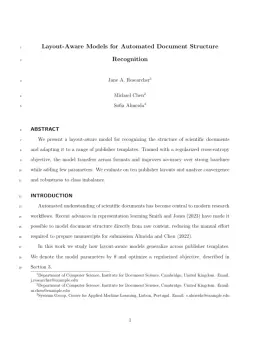
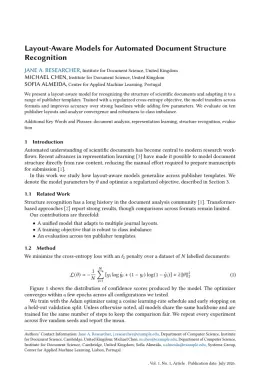
About the Journal of Materials in Civil Engineering format
Journal of Materials in Civil Engineering is a peer-reviewed journal published by ASCE, covering Concrete and Cement Materials Research, Innovative concrete reinforcement materials, Asphalt Pavement Performance Evaluation. Over its lifetime it has published 8,336 papers, which have received 238,094 citations.
| Publisher | ASCE |
|---|
| Reference style | Author–year (ASCE) Author–year — (Smith, 2023) in the text
Smith, A., B. Jones, and C. Lee. (2023). "A representative article title." Journal of Materials in Civil Engineering, 12(3), 45–58.
Formats any DOI in Journal of Materials in Civil Engineering style. No sign-up.
|
|---|
| Publishes research in | Concrete and Cement Materials Research Innovative concrete reinforcement materials Asphalt Pavement Performance Evaluation Infrastructure Maintenance and Monitoring Concrete Corrosion and Durability |
|---|
| ISSN | 0899-1561 |
|---|
| Citation impact (2-yr) | 2.81 |
|---|
| h-index | 174 |
|---|
| i10-index | 4,756 |
|---|
| Top institutions publishing here | ORCID |
|---|
| Journal website | ascelibrary.org |
|---|
| You get | A submission-ready PDF and the editable LaTeX source — ready to submit. |
|---|
Papers published in Journal of Materials in Civil Engineering per year
Citation impact of Journal of Materials in Civil Engineering by publication year
Citations each year’s papers have accumulated so far — the most recent years are still building up.
Most-cited papers in Journal of Materials in Civil Engineering
Stress-Strain Characteristics of Clay Brick Masonry under Uniaxial Compression
Hemant B. Kaushik, Durgesh C. Rai, Sudhir K. Jain · 17 Aug 2007
The uniaxial monotonic compressive stress-strain behavior and other characteristics of unreinforced masonry and its constituents, i.e., solid clay bricks and mortar, have been studied by several laboratory tests. Based on the results and observations of the comprehensive experimental study, nonlinear stress-strain curves have been obtained for bricks, mortar, and masonry and six “control points” have…
Rubber‐Tire Particles as Concrete Aggregate
Neil N. Eldin, Ahmed Senouci · 1 Nov 1993
Accumulations of worn‐out automobile tires create fire and health hazards. As a possible solution to the problem of scrap‐tire disposal, an experimental study was conducted to examine the potential of using tire chips and crumb rubber as aggregate in portland‐cement concrete. This paper examines strength and toughness properties of concrete in which different amounts of…
Rubberized Portland Cement Concrete
Zaher Khatib, Fouad Bayomy · 1 Aug 1999
The use of recycled tire rubber in a portland cement concrete (PCC) mixture is investigated as a possible alternative for nonconventional PCC mixtures. This study is focused on the determination of the practicality of producing such mixes and evaluating their engineering properties. An experimental program was developed to use two types of tire rubber (fine…
Reinforcing Effects of Graphene Oxide on Portland Cement Paste
Kai Gong, Zhu Pan, Asghar Habibnejad Korayem et al. · 16 Jul 2014
In this experimental study, the reinforcing effects of graphene oxide (GO) on portland cement paste are investigated. It is discovered that the introduction of 0.03% by weight GO sheets into the cement paste can increase the compressive strength and tensile strength of the cement composite by more than 40% due to the reduction of the…
Compressive Behavior of Concrete Confined by Carbon Fiber Composite Jackets
Yan Xiao, Haomin Wu · 1 May 2000
This paper describes axial compression test results of 27 concrete cylinders confined by carbon fiber reinforced polymer composite jackets. The experimental parameters include plain concrete compressive strength and the thickness of the composite jacket. It is found that the carbon fiber composite jacketing can significantly increase the compressive strength and ductility of concrete. The test…