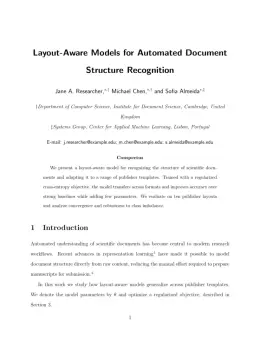
About the ACS Energy Letters format
ACS Energy Letters is a peer-reviewed journal published by American Chemical Society, covering Perovskite Materials and Applications, Advancements in Battery Materials, Advanced Battery Materials and Technologies. Over its lifetime it has published 5,712 papers, which have received 427,209 citations.
| Publisher | American Chemical Society |
|---|
| Reference style | Superscript numbered (ACS) Superscript — small raised numerals in the text
(1) Smith, A.; Jones, B.; Lee, C. A Representative Article Title. ACS Energy Letters 2023, 12, 45–58.
Formats any DOI in ACS Energy Letters style. No sign-up.
|
|---|
| Publishes research in | Perovskite Materials and Applications Advancements in Battery Materials Advanced Battery Materials and Technologies Advanced battery technologies research Advanced Battery Technologies Research |
|---|
| ISSN | 2380-8195 |
|---|
| Citation impact (2-yr) | 15.53 |
|---|
| h-index | 278 |
|---|
| i10-index | 4,257 |
|---|
| Top institutions publishing here | Chinese Academy of Sciences |
|---|
| Journal website | pubs.acs.org |
|---|
| You get | A submission-ready PDF and the editable LaTeX source — ready to submit. |
|---|
Papers published in ACS Energy Letters per year
Citation impact of ACS Energy Letters by publication year
Citations each year’s papers have accumulated so far — the most recent years are still building up.
Most-cited papers in ACS Energy Letters
Recent Advances in Aqueous Zinc-Ion Batteries
Guozhao Fang, Jiang Zhou, Anqiang Pan et al. · 7 Sep 2018
Although current high-energy-density lithium-ion batteries (LIBs) have taken over the commercial rechargeable battery market, increasing concerns about limited lithium resources, high cost, and insecurity of organic electrolyte scale-up limit their further development. Rechargeable aqueous zinc-ion batteries (ZIBs), an alternative battery chemistry, have paved the way not only for realizing environmentally benign and safe energy storage…
Two-Dimensional Molybdenum Carbide (MXene) as an Efficient Electrocatalyst for Hydrogen Evolution
Zhi Wei Seh, Kurt Fredrickson, Babak Anasori et al. · 9 Aug 2016
The hydrogen evolution reaction (HER) is an important energy conversion process that underpins many clean energy technologies including water splitting. Herein, we report for the first time the application of two-dimensional (2D) layered transition metal carbides, MXenes, as electrocatalysts for the HER. Our computational screening study of 2D layered M 2 XT x (M =…
Nickel-Rich Layered Cathode Materials for Automotive Lithium-Ion Batteries: Achievements and Perspectives
Seung‐Taek Myung, Filippo Maglia, Kang-Joon Park et al. · 17 Dec 2016
Future generations of electric vehicles require driving ranges of at least 300 miles to successfully penetrate the mass consumer market. A significant improvement in the energy density of lithium batteries is mandatory while also maintaining similar or improved rate capability, lifetime, cost, and safety. The vast majority of electric vehicles that will appear on the…
Charge-Carrier Mobilities in Metal Halide Perovskites: Fundamental Mechanisms and Limits
Laura M. Herz · 31 May 2017
Perovskite photovoltaic cells have seen a remarkable rise in power conversion efficiencies over a period of only a few years. Much of this performance is underpinned by the favorable chargecarrier mobilities in metal halide perovskites (MHPs), which are remarkably high for materials with such facile and versatile processing routes. This Perspective outlines the mechanisms that…
Recombination in Perovskite Solar Cells: Significance of Grain Boundaries, Interface Traps, and Defect Ions
Tejas S. Sherkar, Cristina Momblona, Lidón Gil‐Escrig et al. · 2 May 2017
High Resolution Image Download MS PowerPoint Slide Trap-assisted recombination, despite being lower as compared with traditional inorganic solar cells, is still the dominant recombination mechanism in perovskite solar cells (PSCs) and limits their efficiency. We investigate the attributes of the primary trap-assisted recombination channels (grain boundaries and interfaces) and their correlation to defect ions in…