American Chemical Society

ACS Infectious Diseases Template

Write in a clean editor, then format for ACS Infectious Diseases in one click — DocuGuru applies the official American Chemical Society template with superscript references and exports a submission-ready PDF plus the editable LaTeX source. Free to start.

About the ACS Infectious Diseases format

ACS Infectious Diseases is a peer-reviewed journal published by American Chemical Society, covering Antibiotic Resistance in Bacteria, Antimicrobial Peptides and Activities, Tuberculosis Research and Epidemiology. Over its lifetime it has published 2,832 papers, which have received 55,991 citations.

PublisherAmerican Chemical Society
Reference styleSuperscript numbered (ACS)
Superscript — small raised numerals in the text
(1) Smith, A.; Jones, B.; Lee, C. A Representative Article Title. ACS Infectious Diseases 2023, 12, 45–58.

Formats any DOI in ACS Infectious Diseases style. No sign-up.

Publishes research inAntibiotic Resistance in Bacteria Antimicrobial Peptides and Activities Tuberculosis Research and Epidemiology Academic Writing and Publishing Bacterial biofilms and quorum sensing
ISSN2373-8227
Citation impact (2-yr)4.34
h-index90
i10-index1,400
Top institutions publishing hereCentre National de la Recherche Scientifique
Journal websitepubs.acs.org
You getA submission-ready PDF and the editable LaTeX source — ready to submit.

Papers published in ACS Infectious Diseases per year

7
2014
98
2015
132
2016
142
2017
210
2018
247
2019
326
2020
285
2021
238
2022
241
2023
363
2024
347
2025

Citation impact of ACS Infectious Diseases by publication year

459
2014
4.9K
2015
5.1K
2016
5.3K
2017
7K
2018
6.4K
2019
9.7K
2020
6.4K
2021
3.7K
2022
2.8K
2023
2.9K
2024
752
2025

Citations each year’s papers have accumulated so far — the most recent years are still building up.

Most-cited papers in ACS Infectious Diseases

Quaternary Ammonium Compounds: An Antimicrobial Mainstay and Platform for Innovation to Address Bacterial Resistance

Megan C. Jennings, Kevin P. C. Minbiole, William M. Wuest · 12 May 2015

Quaternary ammonium compounds (QACs) have represented one of the most visible and effective classes of disinfectants for nearly a century. With simple preparation, wide structural variety, and versatile incorporation into consumer products, there have been manifold developments and applications of these structures. Generally operating via disruption of one of the most fundamental structures in bacteria-the…

Permeability Barrier of Gram-Negative Cell Envelopes and Approaches To Bypass It

Helen I. Zgurskaya, César A. López, S. Gnanakaran · 18 Sep 2015

Gram-negative bacteria are intrinsically resistant to many antibiotics. Species that have acquired multidrug resistance and cause infections that are effectively untreatable present a serious threat to public health. The problem is broadly recognized and tackled at both the fundamental and applied levels. This paper summarizes current advances in understanding the molecular bases of the low…

Therapeutic Potential of Spirooxindoles as Antiviral Agents

Na Ye, Haiying Chen, Eric A. Wold et al. · 27 Apr 2016

Antiviral therapeutics with profiles of high potency, low resistance, panserotype, and low toxicity remain challenging, and obtaining such agents continues to be an active area of therapeutic development. Due to their unique three-dimensional structural features, spirooxindoles have been identified as privileged chemotypes for antiviral drug development. Among them, spiro-pyrazolopyridone oxindoles have been recently reported as…

Broad Spectrum Antiviral Agent Niclosamide and Its Therapeutic Potential

Jimin Xu, Pei‐Yong Shi, Hongmin Li et al. · 3 Mar 2020

The recent outbreak of coronavirus disease 2019 (COVID-19) highlights an urgent need for therapeutics. Through a series of drug repurposing screening campaigns, niclosamide, an FDA-approved anthelminthic drug, was found to be effective against various viral infections with nanomolar to micromolar potency such as SARS-CoV, MERS-CoV, ZIKV, HCV, and human adenovirus, indicating its potential as an…

Immunodominant SARS Coronavirus Epitopes in Humans Elicited both Enhancing and Neutralizing Effects on Infection in Non-human Primates

Qidi Wang, Lianfeng Zhang, K. Kuwahara et al. · 30 Mar 2016

Severe acute respiratory syndrome (SARS) is caused by a coronavirus (SARS-CoV) and has the potential to threaten global public health and socioeconomic stability. Evidence of antibody-dependent enhancement (ADE) of SARS-CoV infection in vitro and in non-human primates clouds the prospects for a safe vaccine. Using antibodies from SARS patients, we identified and characterized SARS-CoV B-cell…

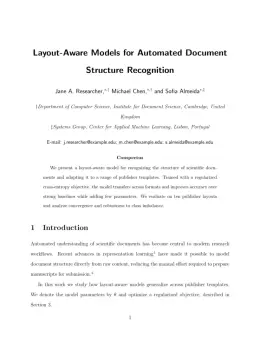
ACS Infectious Diseases template — frequently asked questions

How do I write a paper in the ACS Infectious Diseases format?
In DocuGuru you write your manuscript in a normal editor — no LaTeX setup required — and select the ACS Infectious Diseases template. When you export, DocuGuru compiles the paper into the official American Chemical Society format and hands you a submission-ready PDF along with the editable LaTeX source.
What reference style does ACS Infectious Diseases use?
ACS Infectious Diseases uses Superscript numbered (ACS) references, shown as superscript numerals in the text. DocuGuru formats every in-text citation and the reference list in this exact style automatically. A reference appears like this: (1) Smith, A.; Jones, B.; Lee, C. A Representative Article Title. ACS Infectious Diseases 2023, 12, 45–58.
Do I need to know LaTeX to submit to ACS Infectious Diseases?
No. DocuGuru generates the achemso LaTeX class and compiles the PDF for you in the background, so you get a American Chemical Society-ready ACS Infectious Diseases document without writing any LaTeX. If you do want it, the LaTeX source is included in the export.
Can I import an existing draft into the ACS Infectious Diseases template?
Yes. Paste or upload your current manuscript — Word, LaTeX, Markdown, or plain text — and DocuGuru reflows it into the ACS Infectious Diseases format with correct headings, figures, tables, and superscript citations.
What is ACS Infectious Diseases?
ACS journal (achemso). It is a chemistry journal, published by American Chemical Society.
Can I export a submission-ready ACS Infectious Diseases PDF?
Yes — DocuGuru produces a PDF built with the official ACS Infectious Diseases template (the achemso class) that is ready to submit to American Chemical Society, together with the matching LaTeX source files.
How much does the ACS Infectious Diseases template cost?
You can start writing in the ACS Infectious Diseases template for free. Exporting the final submission-ready ACS Infectious Diseases PDF and LaTeX source is part of DocuGuru's paid plans — see the app for current pricing.
Use the ACS Infectious Diseases template