Wiley

Current Protocols in Toxicology Template

Write in a clean editor, then format for Current Protocols in Toxicology in one click — DocuGuru applies the official Wiley template with author–year references and exports a submission-ready PDF plus the editable LaTeX source. Free to start.

About the Current Protocols in Toxicology format

Current Protocols in Toxicology is a peer-reviewed journal published by Wiley, covering Animal testing and alternatives, Carcinogens and Genotoxicity Assessment, Sulfur Compounds in Biology.

PublisherWiley
Reference styleAuthor–year (Chicago)
Author–year — (Smith, 2023) in the text
Smith, Ada, Ben Jones, and Cara Lee. 2023. "A Representative Article Title." Current Protocols in Toxicology 12 (3): 45–58.

Formats any DOI in Current Protocols in Toxicology style. No sign-up.

Publishes research inAnimal testing and alternatives Carcinogens and Genotoxicity Assessment Sulfur Compounds in Biology Immunotoxicology and immune responses Mitochondrial Function and Pathology
ISSN1934-9254
h-index45
i10-index184
Total citations7,729
Article processing charge$5,050
Top institutions publishing hereUniversity of Washington
Journal websitecurrentprotocols.onlinelibrary.wiley.com
You getA submission-ready PDF and the editable LaTeX source — ready to submit.

Papers published in Current Protocols in Toxicology per year

31
2009
27
2010
33
2011
22
2012
19
2013
16
2014
22
2015
17
2016
28
2017
29
2018
29
2019
16
2020

Citation impact of Current Protocols in Toxicology by publication year

358
2009
187
2010
523
2011
202
2012
219
2013
490
2014
471
2015
582
2016
589
2017
403
2018
180
2019
60
2020

Citations each year’s papers have accumulated so far — the most recent years are still building up.

Most-cited papers in Current Protocols in Toxicology

Quantification of Lactate Dehydrogenase for Cell Viability Testing Using Cell Lines and Primary Cultured Astrocytes

Simon Kaja, Andrew J. Payne, Yuliya Naumchuk et al. · 1 May 2017

Abstract Drug discovery heavily relies on cell viability studies to assess the potential toxicity of drug candidates. L ‐Lactate dehydrogenase (LDH) is a cytoplasmic enzyme that catalyzes the concomitant interconversions of pyruvate to L ‐lactate and NADH to NAD + during glycolysis, and the reverse reactions during the Cori cycle. In response to cellular damage,…

Caco‐2 Cells as a Model for Intestinal Absorption

Isabella De Angelis, L. Turco · 1 Feb 2011

The Caco-2 cell system, a well characterized intestinal in vitro model, makes it possible to evaluate the ability of chemicals to cross the intestinal barrier, as well as to study their transport mechanisms. Permeability values estimated with this model correlate well with human in vivo absorption data for many drugs and chemicals. As a consequence,…

Measurement of Thioredoxin and Thioredoxin Reductase

Elias S.J. Arnér, Arne Holmgren · 9 Jun 2004

The thioredoxin system is ubiquitous, providing reducing equivalents to essential biosynthetic enzymes like ribonucleotide reductase. It is essential for cellular redox regulation, control of oxidative stress, and protection against oxidative damage. This unit includes protocols for measuring thioredoxin or thioredoxin reductase in biological preparations or as purified enzymes.

Measurement of Lipid Peroxidation

Christopher A. Reilly, Steven D. Aust · 1 May 1999

There is currently considerable interest in what is termed "oxidative stress," or the oxidation of biological macromolecules, with emphasis on its involvement in various diseases and toxicities and methods to limit either its occurrence or effects. This unit describes traditional methods to measure the extent or rate of lipid peroxidations, including assays for conjugated dienes,…

Measurement of Heme Concentration

Peter R. Sinclair, Nadia Gorman, Judith M. Jacobs · 1 May 1999

Heme (iron protoporphyrin IX) is a prosthetic group for a number of hemoproteins in different tissues (e.g., hemoglobin, myoglobin, cytochrome P-450s, mitochondrial cytochromes, catalases, and peroxidases). Mutations in the biosynthetic pathway can affect the synthesis and/or degradation of heme. Several assays are provided in this unit for quantifying heme: a spectrophotometric assay based on the…

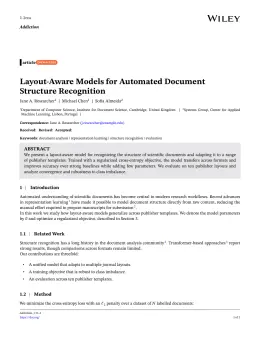
Current Protocols in Toxicology template — frequently asked questions

How do I write a paper in the Current Protocols in Toxicology format?
In DocuGuru you write your manuscript in a normal editor — no LaTeX setup required — and select the Current Protocols in Toxicology template. When you export, DocuGuru compiles the paper into the official Wiley format and hands you a submission-ready PDF along with the editable LaTeX source.
What reference style does Current Protocols in Toxicology use?
Current Protocols in Toxicology uses Author–year (Chicago) references, shown as author–year markers such as (Smith, 2023) in the text. DocuGuru formats every in-text citation and the reference list in this exact style automatically. A reference appears like this: Smith, Ada, Ben Jones, and Cara Lee. 2023. "A Representative Article Title." Current Protocols in Toxicology 12 (3): 45–58.
Do I need to know LaTeX to submit to Current Protocols in Toxicology?
No. DocuGuru generates the USG LaTeX class and compiles the PDF for you in the background, so you get a Wiley-ready Current Protocols in Toxicology document without writing any LaTeX. If you do want it, the LaTeX source is included in the export.
Can I import an existing draft into the Current Protocols in Toxicology template?
Yes. Paste or upload your current manuscript — Word, LaTeX, Markdown, or plain text — and DocuGuru reflows it into the Current Protocols in Toxicology format with correct headings, figures, tables, and author–year citations.
Who publishes Current Protocols in Toxicology?
Current Protocols in Toxicology is a multidisciplinary journal published by Wiley. DocuGuru's Current Protocols in Toxicology template matches Wiley's official submission format.
Can I export a submission-ready Current Protocols in Toxicology PDF?
Yes — DocuGuru produces a PDF built with the official Current Protocols in Toxicology template (the USG class) that is ready to submit to Wiley, together with the matching LaTeX source files.
How much does the Current Protocols in Toxicology template cost?
You can start writing in the Current Protocols in Toxicology template for free. Exporting the final submission-ready Current Protocols in Toxicology PDF and LaTeX source is part of DocuGuru's paid plans — see the app for current pricing.
Use the Current Protocols in Toxicology template