Taylor & Francis

Zoology in the Middle East Template

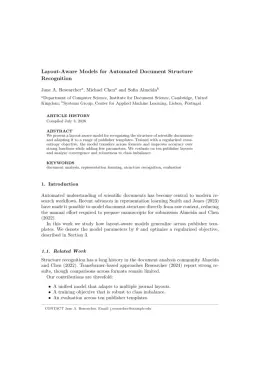
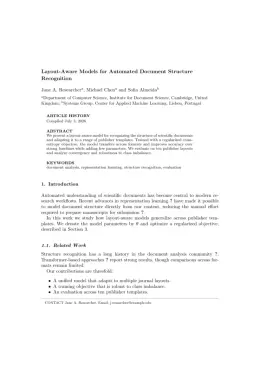
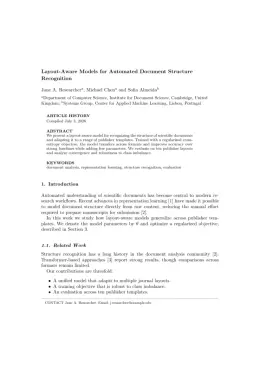
Write in a clean editor, then format for Zoology in the Middle East in one click — DocuGuru applies the official Taylor & Francis template with author–year references and exports a submission-ready PDF plus the editable LaTeX source. Free to start.

About the Zoology in the Middle East format

Zoology in the Middle East is a peer-reviewed journal published by Taylor & Francis, covering Fish Biology and Ecology Studies, Lepidoptera: Biology and Taxonomy, Amphibian and Reptile Biology.

PublisherTaylor & Francis
Reference styleAuthor–year (Chicago, T&F)
Author–year — (Smith, 2023) in the text
Smith, Ada, Ben Jones, and Cara Lee. 2023. "A Representative Article Title." Zoology in the Middle East 12 (3): 45–58.

Formats any DOI in Zoology in the Middle East style. No sign-up.

Publishes research inFish Biology and Ecology Studies Lepidoptera: Biology and Taxonomy Amphibian and Reptile Biology Wildlife Ecology and Conservation Plant and animal studies
ISSN0939-7140
Citation impact (2-yr)0.52
h-index30
i10-index381
Total citations11,519
Top institutions publishing hereEge University
Journal websitewww.tandfonline.com
You getA submission-ready PDF and the editable LaTeX source — ready to submit.

Papers published in Zoology in the Middle East per year

72
2014
51
2015
70
2016
63
2017
54
2018
36
2019
47
2020
41
2021
45
2022
43
2023
44
2024
54
2025

Citation impact of Zoology in the Middle East by publication year

564
2014
241
2015
438
2016
345
2017
285
2018
196
2019
196
2020
141
2021
112
2022
74
2023
38
2024
19
2025

Citations each year’s papers have accumulated so far — the most recent years are still building up.

Most-cited papers in Zoology in the Middle East

Status of the fish fauna in the South Caspian Basin of Iran

Bahram H. Kiabi, Asghar Abdoli, Mehdi Naderi · 1 Jan 1999

Abstract 80 taxa of fish have been recorded in the Iranian South Caspian Basin (both inland and coastal waters), belonging to 17 families and 53 genera. The two most diverse families are Cyprinidae with 39.7% of all species, followed by Gobiidae with 13.2%. Seven families have only one genus and one species. Alien species with…

Population and nesting ecology of the Green Turtle,<i>Chelonia mydas</i>, and the Loggerhead Turtle,<i>Caretta caretta</i>, in northern Cyprus

Annette C. Broderick, Brendan J. Godley · 1 Jan 1996

Abstract The reproductive ecology of marine turtles in northern Cyprus, during the nesting seasons of 1992–1995, is described. Nesting was monitored on 88 beaches. Caretta caretta was found to be more widely distributed, nesting on 84 beaches, compared to the 56 on which Chelonia mydas nested. Up to 461 C. mydas and 519 C. caretta…

Past and present human impacts on the biodiversity of Socotra Island (Yemen): implications for future conservation

Kay Van Damme, Lisa Banfield · 1 Jan 2011

Abstract The Socotra Archipelago (Yemen) is globally recognized for its outstanding biodiversity and endemism, designated on this basis a UNESCO World Heritage Site in 2008. The island underwent long geological and political isolation, ensuring preservation of unique ecosystems until the start of the new millennium. Now, Socotra Island is undergoing rapid development, out of balance…

Nesting of the Green Turtle,<i>Chelonia mydas</i>, in the Mediterranean: a review of status and conservation needs

Max Kasparek, Brendan J. Godley, Annette C. Broderick · 1 Jan 2001

Abstract The status of the Green Turtle, Chelonia mydas, nesting population in the Mediterranean is reviewed on the basis of literature records and unpublished data. It is estimated that 350 to 1750 clutches are laid per year, from which an annual nesting population of 115 to 580 females can be estimated. 99% of all recorded…

Zoology in the Middle East template — frequently asked questions

How do I write a paper in the Zoology in the Middle East format?
In DocuGuru you write your manuscript in a normal editor — no LaTeX setup required — and select the Zoology in the Middle East template. When you export, DocuGuru compiles the paper into the official Taylor & Francis format and hands you a submission-ready PDF along with the editable LaTeX source.
What reference style does Zoology in the Middle East use?
Zoology in the Middle East uses Author–year (Chicago, T&F) references, shown as author–year markers such as (Smith, 2023) in the text. DocuGuru formats every in-text citation and the reference list in this exact style automatically. A reference appears like this: Smith, Ada, Ben Jones, and Cara Lee. 2023. "A Representative Article Title." Zoology in the Middle East 12 (3): 45–58.
Do I need to know LaTeX to submit to Zoology in the Middle East?
No. DocuGuru generates the interact LaTeX class and compiles the PDF for you in the background, so you get a Taylor & Francis-ready Zoology in the Middle East document without writing any LaTeX. If you do want it, the LaTeX source is included in the export.
Can I import an existing draft into the Zoology in the Middle East template?
Yes. Paste or upload your current manuscript — Word, LaTeX, Markdown, or plain text — and DocuGuru reflows it into the Zoology in the Middle East format with correct headings, figures, tables, and author–year citations.
Who publishes Zoology in the Middle East?
Zoology in the Middle East is a multidisciplinary journal published by Taylor & Francis. DocuGuru's Zoology in the Middle East template matches Taylor & Francis's official submission format.
Can I export a submission-ready Zoology in the Middle East PDF?
Yes — DocuGuru produces a PDF built with the official Zoology in the Middle East template (the interact class) that is ready to submit to Taylor & Francis, together with the matching LaTeX source files.
How much does the Zoology in the Middle East template cost?
You can start writing in the Zoology in the Middle East template for free. Exporting the final submission-ready Zoology in the Middle East PDF and LaTeX source is part of DocuGuru's paid plans — see the app for current pricing.

Use the Zoology in the Middle East template