
318 citations
Cite
SaveGo to paper →
Taylor & Francis
Word & Image Template
Write in a clean editor, then format for Word & Image in one click — DocuGuru applies the official Taylor & Francis template with author–year references and exports a submission-ready PDF plus the editable LaTeX source. Free to start.
About the Word & Image format
Word & Image is a peer-reviewed journal published by Taylor & Francis, covering Visual Culture and Art Theory, Historical Art and Culture Studies, Historical and Religious Studies of Rome.
| Publisher | Taylor & Francis |
|---|---|
| Reference style | Author–year (Chicago, T&F) Author–year — (Smith, 2023) in the text Smith, Ada, Ben Jones, and Cara Lee. 2023. "A Representative Article Title." Word & Image 12 (3): 45–58.
Formats any DOI in Word & Image style. No sign-up. |
| Publishes research in | Visual Culture and Art Theory Historical Art and Culture Studies Historical and Religious Studies of Rome Historical and Literary Studies Renaissance and Early Modern Studies |
| ISSN | 0266-6286 |
| Citation impact (2-yr) | 0.52 |
| h-index | 33 |
| i10-index | 130 |
| Total citations | 5,943 |
| Top institutions publishing here | University of East Anglia |
| Journal website | www.tandfonline.com |
| You get | A submission-ready PDF and the editable LaTeX source — ready to submit. |
Papers published in Word & Image per year
Citation impact of Word & Image by publication year
Citations each year’s papers have accumulated so far — the most recent years are still building up.
Most-cited papers in Word & Image
Abstract Pictures are used in churches so that those who are ignorant of letters may at least read by seeing on the walls what they cannot read in books (codicibus). What writing (scriptura) does for the literate, a picture does for the illiterate looking at it, because the ignorant see in it what they ought…
247 citations
Cite
SaveGo to paper →
Abstract Abstract Analyses of medieval art-theory often assert, correctly, that one of the preeminent doctrines of the artistic image's role in western Christendom during the Middle Ages was the notion that pictures are valuable since they function as do books, and thereby help to teach the illiterate.1 The first decisive, western statements to this effect…
233 citations
Cite
SaveGo to paper →
The earliest ekphrastic poetry describes what doesn't exist, save in the poetry's own fiction. What Jean Hagstrum called the "iconic" poem (he reserved the term "ecphrastic" for a sort of dramatic monologue in which the picture or sculpture is itself made to speak) (1) has a long history which I need hardly recite in detail…
186 citations
Cite
SaveGo to paper →
The Homeric description of the shield of Achilles (Iliad 18.478–608) is Western literature's earliest and most influential attempt to evoke images in words. This article examines the passage anew, demonstrating not only its paradigmatic concern with the collaborative and competing resources of word and picture, but also its significance in forging ideas about ekphrasis in…
169 citations
Cite
SaveGo to paper →
Related journal templates
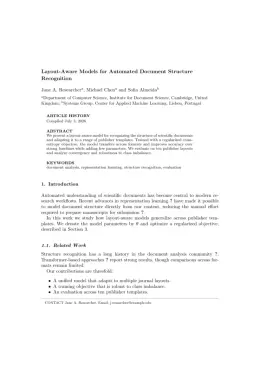
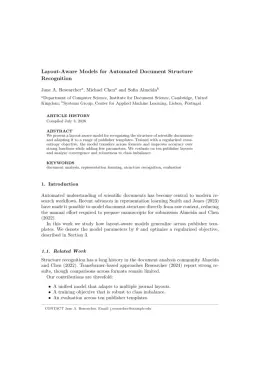
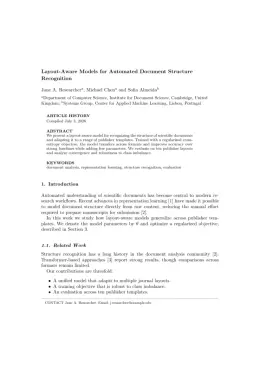
Word & Image template — frequently asked questions
How do I write a paper in the Word & Image format?
In DocuGuru you write your manuscript in a normal editor — no LaTeX setup required — and select the Word & Image template. When you export, DocuGuru compiles the paper into the official Taylor & Francis format and hands you a submission-ready PDF along with the editable LaTeX source.
What reference style does Word & Image use?
Word & Image uses Author–year (Chicago, T&F) references, shown as author–year markers such as (Smith, 2023) in the text. DocuGuru formats every in-text citation and the reference list in this exact style automatically. A reference appears like this: Smith, Ada, Ben Jones, and Cara Lee. 2023. "A Representative Article Title." Word & Image 12 (3): 45–58.
Do I need to know LaTeX to submit to Word & Image?
No. DocuGuru generates the interact LaTeX class and compiles the PDF for you in the background, so you get a Taylor & Francis-ready Word & Image document without writing any LaTeX. If you do want it, the LaTeX source is included in the export.
Can I import an existing draft into the Word & Image template?
Yes. Paste or upload your current manuscript — Word, LaTeX, Markdown, or plain text — and DocuGuru reflows it into the Word & Image format with correct headings, figures, tables, and author–year citations.
Who publishes Word & Image?
Word & Image is a multidisciplinary journal published by Taylor & Francis. DocuGuru's Word & Image template matches Taylor & Francis's official submission format.
Can I export a submission-ready Word & Image PDF?
Yes — DocuGuru produces a PDF built with the official Word & Image template (the interact class) that is ready to submit to Taylor & Francis, together with the matching LaTeX source files.
How much does the Word & Image template cost?
You can start writing in the Word & Image template for free. Exporting the final submission-ready Word & Image PDF and LaTeX source is part of DocuGuru's paid plans — see the app for current pricing.