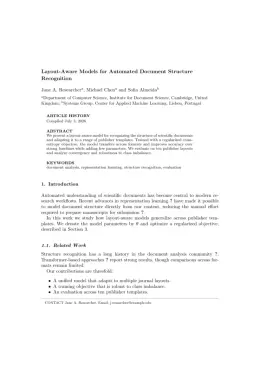
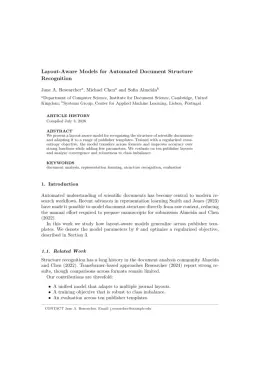
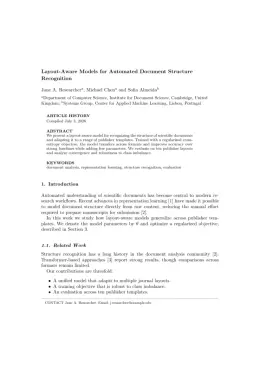
About the Transnational Legal Theory format
Transnational Legal Theory is a peer-reviewed journal published by Taylor & Francis, covering International Law and Human Rights, Judicial and Constitutional Studies, Corporate Law and Human Rights.
| Publisher | Taylor & Francis |
|---|
| Reference style | Author–year (Chicago, T&F) Author–year — (Smith, 2023) in the text
Smith, Ada, Ben Jones, and Cara Lee. 2023. "A Representative Article Title." Transnational Legal Theory 12 (3): 45–58.
Formats any DOI in Transnational Legal Theory style. No sign-up.
|
|---|
| Publishes research in | International Law and Human Rights Judicial and Constitutional Studies Corporate Law and Human Rights International Arbitration and Investment Law Conflict of Laws and Jurisdiction |
|---|
| ISSN | 2041-4005 |
|---|
| Citation impact (2-yr) | 0.69 |
|---|
| h-index | 27 |
|---|
| i10-index | 81 |
|---|
| Total citations | 2,717 |
|---|
| Top institutions publishing here | York University |
|---|
| Journal website | www.tandfonline.com |
|---|
| You get | A submission-ready PDF and the editable LaTeX source — ready to submit. |
|---|
Papers published in Transnational Legal Theory per year
Citation impact of Transnational Legal Theory by publication year
Citations each year’s papers have accumulated so far — the most recent years are still building up.
Most-cited papers in Transnational Legal Theory
Private International Law Beyond the Schism
Horatia Muir Watt · 15 Sep 2011
The aim of this project is to explore the ways in which, in the absence of traditional forms of government in a global setting, the law can discipline the transnational exercise of private power by a variety of market actors (from rating agencies, technical standard-setters and multi-national agribusinesses to vulture funds). Traditionally, the cross-border economic…
Human Rights in the Emerging World Order
Joseph Raz · 1 Mar 2010
Pursuing the so-called political account of human rights, this talk first explains some aspects of the relations between legal and moral rights, and between rights and interests, and then applies the analysis to provide an explanation of human rights. Using the rights to health and to education as examples, it rejects the traditional theory that…
A New Type of Conflicts Law as Constitutional Form in the Postnational Constellation
Christian Joerges, Poul F. Kjær, Tommi Ralli · 1 Jul 2011
The ‘conflicts law approach' reconstructs the potential of primarily, but not exclusively, European law to address—‘to compensate'—the threat to democracy that is posed by the concern that citizens would increasingly be subject to the effects of laws which they themselves had not authored. This structural democratic deficit calls for consideration of ‘foreign' demands. It also…
Constituent Power in National and Transnational Contexts
Alexander Somek · 5 Nov 2012
This paper attempts to make sense of Abbé Sieyès' classical conception of the nation as the constituent power underlying a constitutional system. It then goes on to explore whether it is possible to conceive of such a power under trans- or post-national conditions. What, if anything, might be the power constituting transnational sites of authority,…
#Metoo—has the ‘sisterhood’ finally become global or just another product of neoliberal feminism?
Farnush Ghadery · 3 Apr 2019
The article discusses the #MeToo movement by reflecting on its origins and recent developments to consider its position in feminist theory. On the one hand, the cross-border proliferation of this hashtag revived the question once posed by liberal feminist Robin Morgan: Has the 'sisterhood' finally become global? Others questioned the deeper meaning of the 'me'…