Taylor & Francis

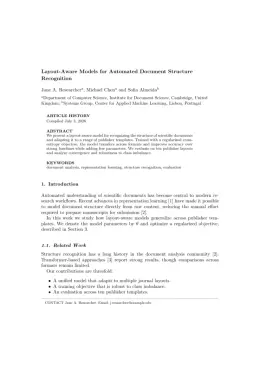
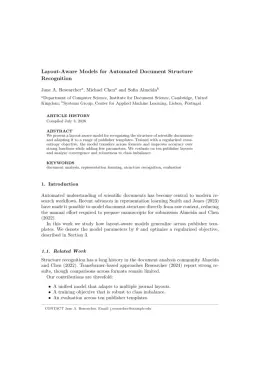
Thinking & Reasoning Template

Write in a clean editor, then format for Thinking & Reasoning in one click — DocuGuru applies the official Taylor & Francis template with author–year references and exports a submission-ready PDF plus the editable LaTeX source. Free to start.

About the Thinking & Reasoning format

Thinking & Reasoning is a peer-reviewed journal published by Taylor & Francis, covering Decision-Making and Behavioral Economics, Child and Animal Learning Development, Psychology of Moral and Emotional Judgment.

PublisherTaylor & Francis
Reference styleAuthor–year (Chicago, T&F)
Author–year — (Smith, 2023) in the text
Smith, Ada, Ben Jones, and Cara Lee. 2023. "A Representative Article Title." Thinking & Reasoning 12 (3): 45–58.

Formats any DOI in Thinking & Reasoning style. No sign-up.

Publishes research inDecision-Making and Behavioral Economics Child and Animal Learning Development Psychology of Moral and Emotional Judgment Experimental Behavioral Economics Studies Bayesian Modeling and Causal Inference
ISSN1354-6783
Citation impact (2-yr)1.7
h-index81
i10-index404
Total citations24,622
Top institutions publishing hereCentre National de la Recherche Scientifique
Journal websitewww.tandfonline.com
You getA submission-ready PDF and the editable LaTeX source — ready to submit.

Papers published in Thinking & Reasoning per year

32
2014
20
2015
16
2016
32
2017
23
2018
27
2019
20
2020
29
2021
26
2022
23
2023
20
2024
25
2025

Citation impact of Thinking & Reasoning by publication year

1.5K
2014
794
2015
483
2016
1.1K
2017
599
2018
995
2019
568
2020
470
2021
336
2022
123
2023
52
2024
32
2025

Citations each year’s papers have accumulated so far — the most recent years are still building up.

Most-cited papers in Thinking & Reasoning

Assessing miserly information processing: An expansion of the Cognitive Reflection Test

Maggie E. Toplak, Richard F. West, Keith E. Stanovich · 28 Oct 2013

The Cognitive Reflection Test (CRT; Frederick, 2005) is designed to measure the tendency to override a prepotent response alternative that is incorrect and to engage in further reflection that leads to the correct response. It is a prime measure of the miserly information processing posited by most dual process theories. The original three-item test may…

Someone is pulling the strings: hypersensitive agency detection and belief in conspiracy theories

Karen M. Douglas, Robbie M. Sutton, Mitchell J. Callan et al. · 18 Aug 2015

We hypothesised that belief in conspiracy theories would be predicted by the general tendency to attribute agency and intentionality where it is unlikely to exist. We further hypothesised that this tendency would explain the relationship between education level and belief in conspiracy theories, where lower levels of education have been found to be associated with…

Rapid responding increases belief bias: Evidence for the dual-process theory of reasoning

Jonathan St. B. T. Evans, Jodie Curtis-Holmes · 1 Sep 2005

In this study, we examine the belief bias effect in syllogistic reasoning under both standard presentation and in a condition where participants are required to respond within 10 seconds. As predicted, the requirement for rapid responding increased the amount of belief bias observed on the task and reduced the number of logically correct decisions, both…

Beyond dual-process models: A categorisation of processes underlying intuitive judgement and decision making

Andreas Glöckner, Cilia Witteman · 30 Nov 2009

Intuitive-automatic processes are crucial for making judgements and decisions. The fascinating complexity of these processes has attracted many decision researchers, prompting them to start investigating intuition empirically and to develop numerous models. Dual-process models assume a clear distinction between intuitive and deliberate processes but provide no further differentiation within both categories. We go beyond these…

On the resolution of conflict in dual process theories of reasoning

Jonathan St. B. T. Evans · 1 Oct 2007

In this paper, I show that the question of how dual process theories of reasoning and judgement account for conflict between System 1 (heuristic) and System 2 (analytic) processes needs to be explicated and addressed in future research work. I demonstrate that a simple additive probability model that describes such conflict can be mapped on…

Thinking & Reasoning template — frequently asked questions

How do I write a paper in the Thinking & Reasoning format?
In DocuGuru you write your manuscript in a normal editor — no LaTeX setup required — and select the Thinking & Reasoning template. When you export, DocuGuru compiles the paper into the official Taylor & Francis format and hands you a submission-ready PDF along with the editable LaTeX source.
What reference style does Thinking & Reasoning use?
Thinking & Reasoning uses Author–year (Chicago, T&F) references, shown as author–year markers such as (Smith, 2023) in the text. DocuGuru formats every in-text citation and the reference list in this exact style automatically. A reference appears like this: Smith, Ada, Ben Jones, and Cara Lee. 2023. "A Representative Article Title." Thinking & Reasoning 12 (3): 45–58.
Do I need to know LaTeX to submit to Thinking & Reasoning?
No. DocuGuru generates the interact LaTeX class and compiles the PDF for you in the background, so you get a Taylor & Francis-ready Thinking & Reasoning document without writing any LaTeX. If you do want it, the LaTeX source is included in the export.
Can I import an existing draft into the Thinking & Reasoning template?
Yes. Paste or upload your current manuscript — Word, LaTeX, Markdown, or plain text — and DocuGuru reflows it into the Thinking & Reasoning format with correct headings, figures, tables, and author–year citations.
Who publishes Thinking & Reasoning?
Thinking & Reasoning is a multidisciplinary journal published by Taylor & Francis. DocuGuru's Thinking & Reasoning template matches Taylor & Francis's official submission format.
Can I export a submission-ready Thinking & Reasoning PDF?
Yes — DocuGuru produces a PDF built with the official Thinking & Reasoning template (the interact class) that is ready to submit to Taylor & Francis, together with the matching LaTeX source files.
How much does the Thinking & Reasoning template cost?
You can start writing in the Thinking & Reasoning template for free. Exporting the final submission-ready Thinking & Reasoning PDF and LaTeX source is part of DocuGuru's paid plans — see the app for current pricing.

Use the Thinking & Reasoning template