Taylor & Francis

Studies on Neotropical Fauna and Environment Template

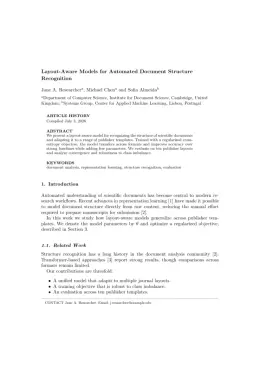
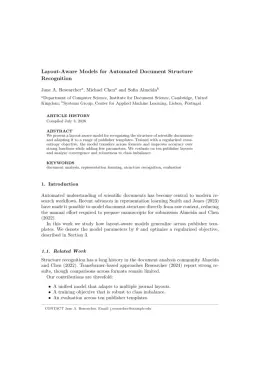
Write in a clean editor, then format for Studies on Neotropical Fauna and Environment in one click — DocuGuru applies the official Taylor & Francis template with author–year references and exports a submission-ready PDF plus the editable LaTeX source. Free to start.

About the Studies on Neotropical Fauna and Environment format

Studies on Neotropical Fauna and Environment is a peer-reviewed journal published by Taylor & Francis, covering Wildlife Ecology and Conservation, Plant and animal studies, Amphibian and Reptile Biology.

PublisherTaylor & Francis
Reference styleAuthor–year (Chicago, T&F)
Author–year — (Smith, 2023) in the text
Smith, Ada, Ben Jones, and Cara Lee. 2023. "A Representative Article Title." Studies on Neotropical Fauna and Environment 12 (3): 45–58.

Formats any DOI in Studies on Neotropical Fauna and Environment style. No sign-up.

Publishes research inWildlife Ecology and Conservation Plant and animal studies Amphibian and Reptile Biology Fish biology, ecology, and behavior Lepidoptera: Biology and Taxonomy
ISSN0165-0521
Citation impact (2-yr)0.58
h-index52
i10-index522
Total citations17,714
Top institutions publishing hereConsejo Nacional de Investigaciones Científicas y Técnicas
Journal websitewww.tandfonline.com
You getA submission-ready PDF and the editable LaTeX source — ready to submit.

Papers published in Studies on Neotropical Fauna and Environment per year

31
2014
25
2015
34
2016
38
2017
20
2018
34
2019
58
2020
63
2021
34
2022
45
2023
68
2024
61
2025

Citation impact of Studies on Neotropical Fauna and Environment by publication year

226
2014
198
2015
317
2016
305
2017
141
2018
220
2019
399
2020
308
2021
121
2022
92
2023
82
2024
18
2025

Citations each year’s papers have accumulated so far — the most recent years are still building up.

Most-cited papers in Studies on Neotropical Fauna and Environment

The use of invertebrate functional groups to characterize ecosystem attributes in selected streams and rivers in south Brazil

Kenneth W. Cummins, Richard W. Merritt, Priscila CN Andrade · 1 Apr 2005

Abstract An analysis conducted at nine stream/river sites in the Atlantic Forest region in the State of Paraná, Brazil used macroinvertebrate functional feeding group (FFG) assessments to evaluate ecological condition of the sites. The FFG approach categorizes qualitative macroinvertebrate collections according to their morphological-behavioral adaptations for food acquisition (e.g. scrapers that harvest non-filamentous, attached algae…

A Biodiversity Assessment of Bats (Chiroptera) in a Tropical Lowland Rainforest of Central Amazonia, Including Methodological and Conservation Considerations

Erica M. Sampaio, Elisabeth K. V. Kalko, Enrico Bernard et al. · 1 Feb 2003

Abstract In our study of bat diversity in the Amazon Basin, we captured bats in undisturbed continuous forest and in forest fragments at the Biological Dynamics of Forest Fragments Project (BDFFP) near Manaus, Brazil, from January 1996 until July 1999. We recorded 72 species of bats in a sample of more than 7700 individuals caught…

Resource Partitioning between Highly Eusocial Bees and Possible Impact of the Introduced Africanized Honey Bee on Native Stingless Bees in the Brazilian Atlantic Rainforest

Wolfgang Wilms, Vera Lúcia Imperatriz-Fonseca, Wolf Engels · 1 Dec 1996

Abstract The highly eusocial bee community of the neotropical Atlantic Rainforest was studied at Boracéia Biological Station in the state of São Paulo, Brazil. In this reserve, 17 species of stingless bees and the introduced Africanized honey bee were found, the latter being the most abundant flower visitor. Of all flowering plants, Asteraceae and Myrtaceae…

Dry season activity periods of some Amazonian mammals

Humberto Gómez, Robert B. Wallace, Guido Ayala et al. · 1 Aug 2005

Abstract Camera trapping efforts at three adjacent sites in Madidi National Park and Natural Area of Integrated Management, Bolivia, revealed dry season activity periods for 15 species of Neotropical forest dwelling mammal. Nasua was strictly diurnal, Atelocynus, Dasyprocta, Pecari and Tayassu mostly diurnal, Eira, Hydrochaeris, Mazama, Panthera and Puma cathemeral, Leopardus, Procyon and Tapirus mostly…

Arthropods from the canopy of inundated and terra firme forests near Manaus, Brazil, with critical considerations on the pyrethrum‐fogging technique*

Joachim Adis, Yael Lubin, G. G. Montgomery · 1 Jan 1984

Samples of arthropods in canopies of selected trees were collected by pyrethrum-fogging during the early part of the 1977 dry season from three types of neotropical forest: várzea and igapó forest which are inundated seasonally by white-water and black-water rivers respectively, and terra firme forest which is not subject to inundation. Sampling areas were within…

Studies on Neotropical Fauna and Environment template — frequently asked questions

How do I write a paper in the Studies on Neotropical Fauna and Environment format?
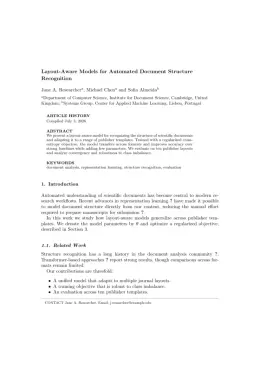
In DocuGuru you write your manuscript in a normal editor — no LaTeX setup required — and select the Studies on Neotropical Fauna and Environment template. When you export, DocuGuru compiles the paper into the official Taylor & Francis format and hands you a submission-ready PDF along with the editable LaTeX source.
What reference style does Studies on Neotropical Fauna and Environment use?
Studies on Neotropical Fauna and Environment uses Author–year (Chicago, T&F) references, shown as author–year markers such as (Smith, 2023) in the text. DocuGuru formats every in-text citation and the reference list in this exact style automatically. A reference appears like this: Smith, Ada, Ben Jones, and Cara Lee. 2023. "A Representative Article Title." Studies on Neotropical Fauna and Environment 12 (3): 45–58.
Do I need to know LaTeX to submit to Studies on Neotropical Fauna and Environment?
No. DocuGuru generates the interact LaTeX class and compiles the PDF for you in the background, so you get a Taylor & Francis-ready Studies on Neotropical Fauna and Environment document without writing any LaTeX. If you do want it, the LaTeX source is included in the export.
Can I import an existing draft into the Studies on Neotropical Fauna and Environment template?
Yes. Paste or upload your current manuscript — Word, LaTeX, Markdown, or plain text — and DocuGuru reflows it into the Studies on Neotropical Fauna and Environment format with correct headings, figures, tables, and author–year citations.
Who publishes Studies on Neotropical Fauna and Environment?
Studies on Neotropical Fauna and Environment is a multidisciplinary journal published by Taylor & Francis. DocuGuru's Studies on Neotropical Fauna and Environment template matches Taylor & Francis's official submission format.
Can I export a submission-ready Studies on Neotropical Fauna and Environment PDF?
Yes — DocuGuru produces a PDF built with the official Studies on Neotropical Fauna and Environment template (the interact class) that is ready to submit to Taylor & Francis, together with the matching LaTeX source files.
How much does the Studies on Neotropical Fauna and Environment template cost?
You can start writing in the Studies on Neotropical Fauna and Environment template for free. Exporting the final submission-ready Studies on Neotropical Fauna and Environment PDF and LaTeX source is part of DocuGuru's paid plans — see the app for current pricing.
Use the Studies on Neotropical Fauna and Environment template