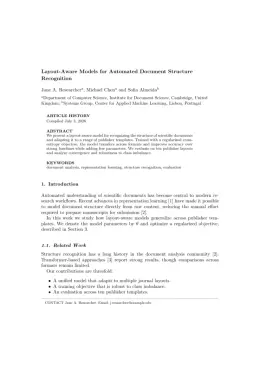
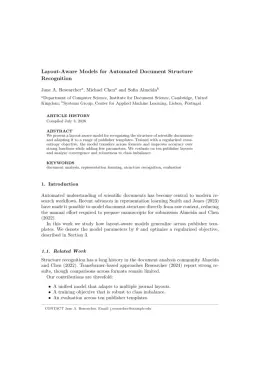
About the Structural Engineering International format
Structural Engineering International is a peer-reviewed journal published by Taylor & Francis, covering Structural Engineering and Vibration Analysis, Civil and Structural Engineering Research, Structural Behavior of Reinforced Concrete.
| Publisher | Taylor & Francis |
|---|
| Reference style | Author–year (Chicago, T&F) Author–year — (Smith, 2023) in the text
Smith, Ada, Ben Jones, and Cara Lee. 2023. "A Representative Article Title." Structural Engineering International 12 (3): 45–58.
Formats any DOI in Structural Engineering International style. No sign-up.
|
|---|
| Publishes research in | Structural Engineering and Vibration Analysis Civil and Structural Engineering Research Structural Behavior of Reinforced Concrete Concrete Corrosion and Durability Structural Load-Bearing Analysis |
|---|
| ISSN | 1016-8664 |
|---|
| Citation impact (2-yr) | 0.62 |
|---|
| h-index | 54 |
|---|
| i10-index | 559 |
|---|
| Total citations | 21,534 |
|---|
| Top institutions publishing here | Tongji University |
|---|
| Journal website | www.tandfonline.com |
|---|
| You get | A submission-ready PDF and the editable LaTeX source — ready to submit. |
|---|
Papers published in Structural Engineering International per year
Citation impact of Structural Engineering International by publication year
Citations each year’s papers have accumulated so far — the most recent years are still building up.
Most-cited papers in Structural Engineering International
Simplified Damage Plasticity Model for Concrete
Milad Hafezolghorani, Farzad Hejazi, Ramin Vaghei et al. · 1 Feb 2017
The past several years have witnessed an increase in research on the nonlinear analysis of the structures made from reinforced concrete. Several mathematical models were created to analyze the behavior of concrete and the reinforcements. Factors including inelasticity, time dependence, cracking and the interactive effects between reinforcement and concrete were considered. The crushing of the…
The Framework of the 2014 American Concrete Institute (ACI) 318 Structural Concrete Building Code
Randall W. Poston, Charles W. Dolan · 30 Apr 2012
The structure of the current ACI Building Code has remained essentially unchanged since 1963 when ultimate strength was added. Knowledge has expanded with time through practice and research. In structural engineering, knowledge is also gained from the behavior of structures in extreme events. The Code reflects changes brought about by the addition of new materials…
Rehabilitation and Strengthening of Concrete Structures Using Ultra-High Performance Fibre Reinforced Concrete
Eugen Brühwiler, Emmanuel Denarié · 1 Nov 2013
ABSTRACT: An original concept is presented for the durable rehabilitation and strengthening of concrete structures. The main idea is to use Ultra-High Performance Fibre Reinforced Concrete (UHPFRC) complemented with steel reinforcing bars to “harden ” and strengthen those zones of the structure that are exposed to severe environmental influences and high mechanical loading. This concept…
Simple Procedure for Seismic Analysis of Liquid-Storage Tanks
Praveen K. Malhotra, Thomas Wenk, Martin Wieland · 1 Aug 2000
This paper provides the theoretical background of a simplified seismic design procedure for cylindrical ground-supported tanks. The procedure takes into account impulsive and convective (sloshing) actions of the liquid in flexible steel or concrete tanks fixed to rigid foundations. Seismic responses - base shear, overturning moment, and sloshing wave height - are calculated by using…
Tension Chord Model for Structural Concrete
Peter Marti, Manuel Álvarez, Walter Kaufmann et al. · 1 Nov 1998
Based on a simple tension chord model, problems of cracking, minimum reinforcement, tension stiffening and deformation capacity of structural concrete members are treated in a unified manner. Key features of the tension chord model and its application are described and several comparisons with results from experiments are made.