Taylor & Francis

Social Neuroscience Template

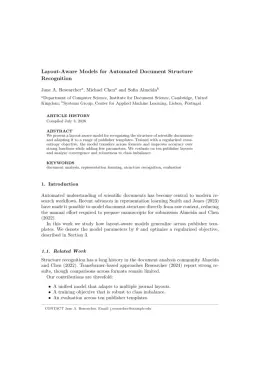
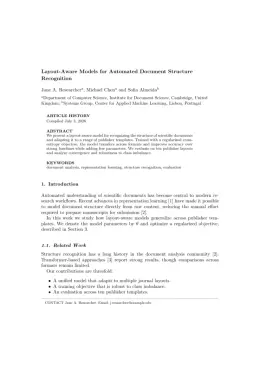
Write in a clean editor, then format for Social Neuroscience in one click — DocuGuru applies the official Taylor & Francis template with author–year references and exports a submission-ready PDF plus the editable LaTeX source. Free to start.

About the Social Neuroscience format

Social Neuroscience is a peer-reviewed journal published by Taylor & Francis, covering Neural and Behavioral Psychology Studies, Action Observation and Synchronization, Face Recognition and Perception.

PublisherTaylor & Francis
Reference styleAuthor–year (Chicago, T&F)
Author–year — (Smith, 2023) in the text
Smith, Ada, Ben Jones, and Cara Lee. 2023. "A Representative Article Title." Social Neuroscience 12 (3): 45–58.

Formats any DOI in Social Neuroscience style. No sign-up.

Publishes research inNeural and Behavioral Psychology Studies Action Observation and Synchronization Face Recognition and Perception Psychology of Moral and Emotional Judgment Neuroendocrine regulation and behavior
ISSN1747-0919
Citation impact (2-yr)1.8
h-index105
i10-index709
Total citations41,891
Top institutions publishing hereYale University
Journal websitewww.psypress.com
You getA submission-ready PDF and the editable LaTeX source — ready to submit.

Papers published in Social Neuroscience per year

75
2014
117
2015
102
2016
57
2017
47
2018
42
2019
38
2020
45
2021
39
2022
31
2023
34
2024
28
2025

Citation impact of Social Neuroscience by publication year

2.9K
2014
3.8K
2015
2.9K
2016
1.3K
2017
879
2018
843
2019
434
2020
386
2021
301
2022
159
2023
102
2024
27
2025

Citations each year’s papers have accumulated so far — the most recent years are still building up.

Most-cited papers in Social Neuroscience

Levels of emotional awareness and autism: An fMRI study

Giorgia Silani, Geoffrey Bird, Rachel Brindley et al. · 12 May 2008

Autism is associated with an inability to identify and distinguish one's own feelings. We assessed this inability using alexithymia and empathy questionnaires, and used fMRI to investigate brain activity while introspecting on emotion. Individuals with high functioning autism/Asperger syndrome (HFA/AS) were compared with matched controls. Participants rated stimuli from the International Affective Picture System twice,…

Face to face: Blocking facial mimicry can selectively impair recognition of emotional expressions

Lindsay M. Oberman, Piotr Winkielman, Vilayanur S. Ramachandran · 26 Jul 2007

People spontaneously mimic a variety of behaviors, including emotional facial expressions. Embodied cognition theories suggest that mimicry reflects internal simulation of perceived emotion in order to facilitate its understanding. If so, blocking facial mimicry should impair recognition of expressions, especially of emotions that are simulated using facial musculature. The current research tested this hypothesis using…

Social coordination dynamics: Measuring human bonding

Olivier Oullier, Gonzalo C. de Guzman, Kelly J. Jantzen et al. · 12 May 2008

Spontaneous social coordination has been extensively described in natural settings but so far no controlled methodological approaches have been employed that systematically advance investigations into the possible self-organized nature of bond formation and dissolution between humans. We hypothesized that, under certain contexts, spontaneous synchrony-a well-described phenomenon in biological and physical settings-could emerge spontaneously between humans…

Fetal testosterone and empathy: Evidence from the Empathy Quotient (EQ) and the “Reading the Mind in the Eyes” Test

Emma Chapman, Simon Baron‐Cohen, Bonnie Auyeung et al. · 1 Jun 2006

Empathy involves an understanding of what others are thinking and feeling, and enables us to interact in the social world. According to the Empathizing-Systemizing (E-S) theory, females on average have a stronger drive to empathize than males. This sex difference may in part reflect developmental differences in brain structure and function, which are themselves under…

Mirror neurons and the social nature of language: The neural exploitation hypothesis

Vittorio Gallese · 12 May 2008

This paper discusses the relevance of the discovery of mirror neurons in monkeys and of the mirror neuron system in humans to a neuroscientific account of primates' social cognition and its evolution. It is proposed that mirror neurons and the functional mechanism they underpin, embodied simulation, can ground within a unitary neurophysiological explanatory framework important…

Social Neuroscience template — frequently asked questions

How do I write a paper in the Social Neuroscience format?
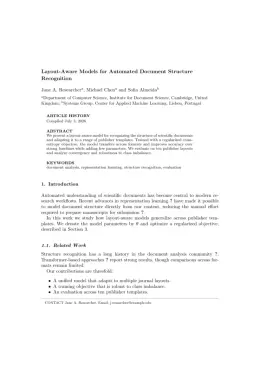
In DocuGuru you write your manuscript in a normal editor — no LaTeX setup required — and select the Social Neuroscience template. When you export, DocuGuru compiles the paper into the official Taylor & Francis format and hands you a submission-ready PDF along with the editable LaTeX source.
What reference style does Social Neuroscience use?
Social Neuroscience uses Author–year (Chicago, T&F) references, shown as author–year markers such as (Smith, 2023) in the text. DocuGuru formats every in-text citation and the reference list in this exact style automatically. A reference appears like this: Smith, Ada, Ben Jones, and Cara Lee. 2023. "A Representative Article Title." Social Neuroscience 12 (3): 45–58.
Do I need to know LaTeX to submit to Social Neuroscience?
No. DocuGuru generates the interact LaTeX class and compiles the PDF for you in the background, so you get a Taylor & Francis-ready Social Neuroscience document without writing any LaTeX. If you do want it, the LaTeX source is included in the export.
Can I import an existing draft into the Social Neuroscience template?
Yes. Paste or upload your current manuscript — Word, LaTeX, Markdown, or plain text — and DocuGuru reflows it into the Social Neuroscience format with correct headings, figures, tables, and author–year citations.
Who publishes Social Neuroscience?
Social Neuroscience is a multidisciplinary journal published by Taylor & Francis. DocuGuru's Social Neuroscience template matches Taylor & Francis's official submission format.
Can I export a submission-ready Social Neuroscience PDF?
Yes — DocuGuru produces a PDF built with the official Social Neuroscience template (the interact class) that is ready to submit to Taylor & Francis, together with the matching LaTeX source files.
How much does the Social Neuroscience template cost?
You can start writing in the Social Neuroscience template for free. Exporting the final submission-ready Social Neuroscience PDF and LaTeX source is part of DocuGuru's paid plans — see the app for current pricing.
Use the Social Neuroscience template