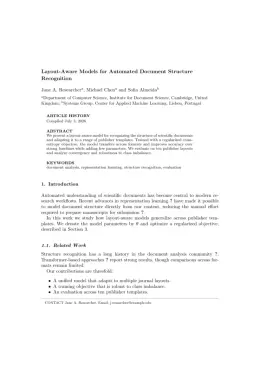
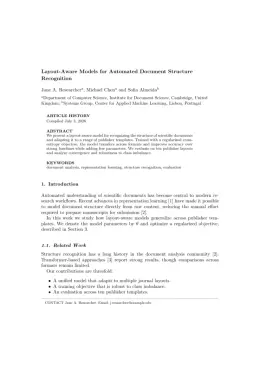
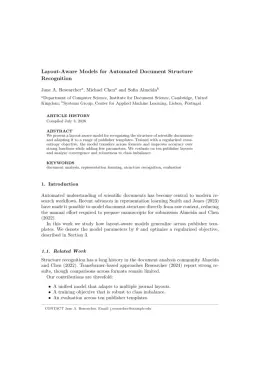
About the Reformation and Renaissance Review format
Reformation and Renaissance Review is a peer-reviewed journal published by Taylor & Francis, covering Reformation and Early Modern Christianity, Historical Studies of British Isles, Medieval Literature and History.
| Publisher | Taylor & Francis |
|---|
| Reference style | Author–year (Chicago, T&F) Author–year — (Smith, 2023) in the text
Smith, Ada, Ben Jones, and Cara Lee. 2023. "A Representative Article Title." Reformation and Renaissance Review 12 (3): 45–58.
Formats any DOI in Reformation and Renaissance Review style. No sign-up.
|
|---|
| Publishes research in | Reformation and Early Modern Christianity Historical Studies of British Isles Medieval Literature and History Historical Influence and Diplomacy American Constitutional Law and Politics |
|---|
| ISSN | 1462-2459 |
|---|
| Citation impact (2-yr) | 0.07 |
|---|
| h-index | 20 |
|---|
| i10-index | 32 |
|---|
| Total citations | 1,535 |
|---|
| Top institutions publishing here | University of Edinburgh |
|---|
| Journal website | www.tandfonline.com |
|---|
| You get | A submission-ready PDF and the editable LaTeX source — ready to submit. |
|---|
Papers published in Reformation and Renaissance Review per year
Citation impact of Reformation and Renaissance Review by publication year
Citations each year’s papers have accumulated so far — the most recent years are still building up.
Most-cited papers in Reformation and Renaissance Review
From concord to confession: the Wittenberg Concord and the<i>Consensus Tigurinus</i>in historical perspective
Amy Nelson Burnett · 2 Jan 2016
The differences between the Wittenberg Concord (1536) and the Consensus Tigurinus (1549) reflect a change in the function of a confession from an earlier, consensus-building model to a later concern with drawing boundaries and establishing confessional identity. The Wittenberg Concord used ambivalent language and strategic silence to define the boundaries of orthodoxy. Its acceptance by…
Calvin in the Context of Lutheran Consolidation1
Irène Dingel · 20 Oct 2010
This study investigates the perception of Calvin and his theology in the polarizing domain of confessional reinforcement, and what image of him was formed and conveyed by the heirs of Wittenberg theology and later Lutheranism respectively. Historical circumstances and associated theological issues are taken into account, with a three-phase model emerging. Its interfaces are marked…
Bullinger's Defence of Infant Baptism in Debate with the Anabaptists
Peter Stephens · 1 Dec 2002
Bullinger presents his understanding of infant baptism not only in systematic or summary form in the Decades and confessional works but also in dialogue or discussion form in other works. From 1525 what is fundamental in expounding his view and in challenging his opponents’ views is the argument from the covenant, which is one and…
Housing a Heretic: Johannes Oecolampadius (1482–1531) and the ‘Pre-History’ of the Servetus Affair
Jeff Fisher · 2 Jan 2018
Although many scholars have written about Calvin's treatment of Michael Servetus, very few have explored Servetus's earliest encounters with other Protestant Reformers. By utilizing letters, prefaces and other writings in the sixteenth century, this study aims to develop a portrait of the multiple ways in which the Basel Reformer, Johannes Oecolampadius, influenced Servetus and ultimately,…
D'un texte inconnu de Jérôme Bolsec contre Calvin
Chiara Lastraioli · 15 Jan 2008
This article considers the attribution to Jerome Bolsec of a tract lampooning John Calvin, and composed in verse under the pseudonym of ‘Pasquin Romain.’ The sole surviving copy is in the Bibliothèque nationale de France. Entitled Le double des lettres envoyees à Passevent Parisien, par le Noble et excellent Pasquin Romain, contenant en vérité la…