Taylor & Francis

Raw materials report/Minerals & energy./Minerals & energy Template

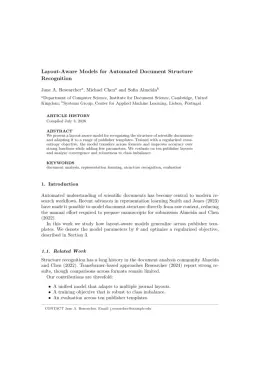
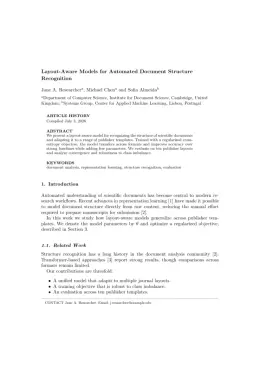
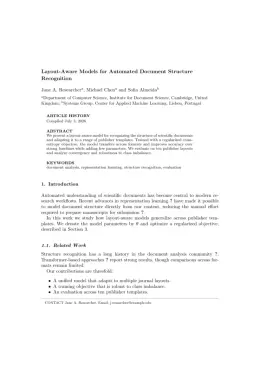
Write in a clean editor, then format for Raw materials report/Minerals & energy./Minerals & energy in one click — DocuGuru applies the official Taylor & Francis template with author–year references and exports a submission-ready PDF plus the editable LaTeX source. Free to start.

About the Raw materials report/Minerals & energy./Minerals & energy format

Raw materials report/Minerals & energy./Minerals & energy is a peer-reviewed journal published by Taylor & Francis, covering Mining and Resource Management, Extraction and Separation Processes, Mining Techniques and Economics.

PublisherTaylor & Francis
Reference styleAuthor–year (Chicago, T&F)
Author–year — (Smith, 2023) in the text
Smith, Ada, Ben Jones, and Cara Lee. 2023. "A Representative Article Title." Raw materials report/Minerals & energy./Minerals & energy 12 (3): 45–58.

Formats any DOI in Raw materials report/Minerals & energy./Minerals & energy style. No sign-up.

Publishes research inMining and Resource Management Extraction and Separation Processes Mining Techniques and Economics Metal Extraction and Bioleaching Natural Resources and Economic Development
ISSN0349-6287
h-index22
i10-index62
Total citations2,077
Top institutions publishing hereLuleå University of Technology
You getA submission-ready PDF and the editable LaTeX source — ready to submit.

Papers published in Raw materials report/Minerals & energy./Minerals & energy per year

37
1998
29
1999
30
2000
27
2001
23
2002
28
2003
21
2004
11
2005
21
2006
13
2007
14
2008
6
2009

Citation impact of Raw materials report/Minerals & energy./Minerals & energy by publication year

75
1998
69
1999
185
2000
93
2001
108
2002
463
2003
124
2004
35
2005
280
2006
140
2007
179
2008
13
2009

Citations each year’s papers have accumulated so far — the most recent years are still building up.

Most-cited papers in Raw materials report/Minerals & energy./Minerals & energy

The Peak and Decline of World Oil and Gas Production

K. Aleklett, Colin Campbell · 1 Jan 2003

Extrapolating the discovery trend of the past to determine future discovery and production should be straightforward, and the size distribution of the fields should be evident. But the atrociously unreliable nature of public data has given much latitude when it comes to interpreting the status of depletion and the impact of economic and political factors…

Factoring in governance is not enough. Mining codes in Africa, policy reform and corporate responsibility

Bonnie Campbell · 1 Sep 2003

One of the main hypotheses underlying much of the discussion and certain of the recommendations made by the World Bank Group's Extractive Industries Review suggests that the quality of governance of a country is a key determinant for the development outcomes of extractive industries activities. While undoubtedly of central importance, a recent comparative study of…

Assessing the Threat of Mineral Depletion

John E. Tilton · 1 Jan 2003

The debate over the long-run availability of mineral commodities remains today as polarized as it was 30 years ago. This partly reflects the two very different paradigms often used to assess this threat, which can lead to sharply contrasting conclusions. In addition, the uncertainties regarding future developments in mineral supply and demand, which will govern…

Treatment of MSWI Residues for Utilization as Secondary Construction Minerals: A Review of Methods

Jelena Todorović, Holger Ecke · 1 Jan 2006

Municipal solid waste incineration (MSWI) residues display a potential for reuse in construction. A risk of harmful emissions to the environment and negative effects on the performance of residues during utilization exist because of their composition. Extraction and stabilization pre‐treatment methods are available to decrease harmful leaching from utilized MSWI residues. Extraction procedures remove pollutants…

The New Pessimism about Petroleum Resources: Debunking the Hubbert Model (and Hubbert Modelers)

Michael C. Lynch · 1 Jan 2003

A group of petroleum analysts using the so-called Hubbert method have been arguing that resource scarcity will soon have a severe impact on the global economy. Although past efforts have not yielded valid results, the new researchers claim that using a proprietary database and field production data, they are able to generate creaming curves which…

Raw materials report/Minerals & energy./Minerals & energy template — frequently asked questions

How do I write a paper in the Raw materials report/Minerals & energy./Minerals & energy format?
In DocuGuru you write your manuscript in a normal editor — no LaTeX setup required — and select the Raw materials report/Minerals & energy./Minerals & energy template. When you export, DocuGuru compiles the paper into the official Taylor & Francis format and hands you a submission-ready PDF along with the editable LaTeX source.
What reference style does Raw materials report/Minerals & energy./Minerals & energy use?
Raw materials report/Minerals & energy./Minerals & energy uses Author–year (Chicago, T&F) references, shown as author–year markers such as (Smith, 2023) in the text. DocuGuru formats every in-text citation and the reference list in this exact style automatically. A reference appears like this: Smith, Ada, Ben Jones, and Cara Lee. 2023. "A Representative Article Title." Raw materials report/Minerals & energy./Minerals & energy 12 (3): 45–58.
Do I need to know LaTeX to submit to Raw materials report/Minerals & energy./Minerals & energy?
No. DocuGuru generates the interact LaTeX class and compiles the PDF for you in the background, so you get a Taylor & Francis-ready Raw materials report/Minerals & energy./Minerals & energy document without writing any LaTeX. If you do want it, the LaTeX source is included in the export.
Can I import an existing draft into the Raw materials report/Minerals & energy./Minerals & energy template?
Yes. Paste or upload your current manuscript — Word, LaTeX, Markdown, or plain text — and DocuGuru reflows it into the Raw materials report/Minerals & energy./Minerals & energy format with correct headings, figures, tables, and author–year citations.
Who publishes Raw materials report/Minerals & energy./Minerals & energy?
Raw materials report/Minerals & energy./Minerals & energy is a multidisciplinary journal published by Taylor & Francis. DocuGuru's Raw materials report/Minerals & energy./Minerals & energy template matches Taylor & Francis's official submission format.
Can I export a submission-ready Raw materials report/Minerals & energy./Minerals & energy PDF?
Yes — DocuGuru produces a PDF built with the official Raw materials report/Minerals & energy./Minerals & energy template (the interact class) that is ready to submit to Taylor & Francis, together with the matching LaTeX source files.
How much does the Raw materials report/Minerals & energy./Minerals & energy template cost?
You can start writing in the Raw materials report/Minerals & energy./Minerals & energy template for free. Exporting the final submission-ready Raw materials report/Minerals & energy./Minerals & energy PDF and LaTeX source is part of DocuGuru's paid plans — see the app for current pricing.

Use the Raw materials report/Minerals & energy./Minerals & energy template