Taylor & Francis

PsyEcology Bilingual Journal of Environmental Psychology Template

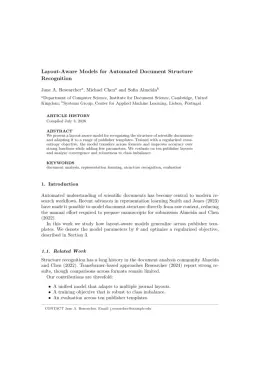
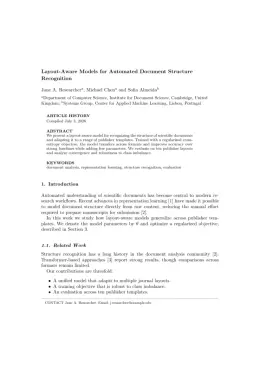
Write in a clean editor, then format for PsyEcology Bilingual Journal of Environmental Psychology in one click — DocuGuru applies the official Taylor & Francis template with author–year references and exports a submission-ready PDF plus the editable LaTeX source. Free to start.

About the PsyEcology Bilingual Journal of Environmental Psychology format

PsyEcology Bilingual Journal of Environmental Psychology is a peer-reviewed journal published by Taylor & Francis, covering Environmental Education and Sustainability, Urban Green Space and Health, Place Attachment and Urban Studies.

PublisherTaylor & Francis
Reference styleAuthor–year (Chicago, T&F)
Author–year — (Smith, 2023) in the text
Smith, Ada, Ben Jones, and Cara Lee. 2023. "A Representative Article Title." PsyEcology Bilingual Journal of Environmental Psychology 12 (3): 45–58.

Formats any DOI in PsyEcology Bilingual Journal of Environmental Psychology style. No sign-up.

Publishes research inEnvironmental Education and Sustainability Urban Green Space and Health Place Attachment and Urban Studies Environmental Sustainability in Business Climate Change Communication and Perception
ISSN1989-9386
Citation impact (2-yr)0.82
h-index24
i10-index78
Total citations2,467
Top institutions publishing hereUniversidad de La Laguna
Journal websitewww.tandfonline.com
You getA submission-ready PDF and the editable LaTeX source — ready to submit.

Papers published in PsyEcology Bilingual Journal of Environmental Psychology per year

15
2014
17
2015
15
2016
18
2017
16
2018
21
2019
12
2020
18
2021
14
2022
14
2023
14
2024
19
2025

Citation impact of PsyEcology Bilingual Journal of Environmental Psychology by publication year

98
2014
207
2015
155
2016
192
2017
206
2018
186
2019
105
2020
97
2021
47
2022
59
2023
30
2024
4
2025

Citations each year’s papers have accumulated so far — the most recent years are still building up.

Most-cited papers in PsyEcology Bilingual Journal of Environmental Psychology

Relations between naturalness and perceived restorativeness of different urban green spaces

Giuseppe Carrus, Raffaele Lafortezza, Giuseppe Colangelo et al. · 24 Sep 2013

Green spaces have positive effects on human well-being and quality of life in cities. So far, studies in this field mainly compared preferences for, and outcomes of contact with, natural vs. built environments. Less attention has been given to the study of the psychological effects of contact with green spaces differing in their degree of…

Three good things in nature: noticing nearby nature brings sustained increases in connection with nature / <i>Tres cosas buenas de la naturaleza: prestar atención a la naturaleza cercana produce incrementos prolongados en conexión con la naturaleza</i>

Miles Richardson, David Sheffield · 1 Feb 2017

Connecting people more fully with nature is emerging as a societal issue owing to the state of nature, links to pro-environmental behaviour and benefits to wellbeing. Simple, low-cost interventions that deliver sustained increases in nature connectedness would be valuable. Participants ( n = 50) noted three good things in nature each day for five days…

Psychometric properties of the Environmental Identity Scale (EID)

Pablo Olivos‐Jara, Juan Ignacio Aragonés · 1 Feb 2011

The Environmental Identity (EID) Scale was proposed by Clayton to study the relationship between identity and nature. Although it is cited in several publications, it has rarely been subjected to psychometric analysis. The main aim of this study is to analyze the fulfilment of construct and convergent validity criteria for this scale. For this purpose,…

Contact with nature in educational settings might help cognitive functioning and promote positive social behaviour / El contacto con la naturaleza en los contextos educativos podría mejorar el funcionamiento cognitivo y fomentar el comportamiento social positivo

Giuseppe Carrus, Ylenia Passiatore, Sabine Pirchio et al. · 1 May 2015

This research investigates the positive effects that contact with nature in educational settings has on pre-school children. Several studies have shown that contact with nature promotes many beneficial outcomes. In a study conducted in Italy, we tested the hypotheses that exposure to nature in educational settings promotes psychological restoration, strengthens children’s cognitive and affective resources…

Place identity, place attachment and the scale of place: The impact of place salience

Fátima Bernardo, José Manuel Palma‐Oliveira · 1 May 2013

Research about place, place identity and attachment supports the idea that bonds with places may differ depending on the place scale. Based on the view that identity is context-dependent, this paper brings to the table the impact of manipulating the salience of place on the intensity of place identity and place attachment reported. A study…

PsyEcology Bilingual Journal of Environmental Psychology template — frequently asked questions

How do I write a paper in the PsyEcology Bilingual Journal of Environmental Psychology format?
In DocuGuru you write your manuscript in a normal editor — no LaTeX setup required — and select the PsyEcology Bilingual Journal of Environmental Psychology template. When you export, DocuGuru compiles the paper into the official Taylor & Francis format and hands you a submission-ready PDF along with the editable LaTeX source.
What reference style does PsyEcology Bilingual Journal of Environmental Psychology use?
PsyEcology Bilingual Journal of Environmental Psychology uses Author–year (Chicago, T&F) references, shown as author–year markers such as (Smith, 2023) in the text. DocuGuru formats every in-text citation and the reference list in this exact style automatically. A reference appears like this: Smith, Ada, Ben Jones, and Cara Lee. 2023. "A Representative Article Title." PsyEcology Bilingual Journal of Environmental Psychology 12 (3): 45–58.
Do I need to know LaTeX to submit to PsyEcology Bilingual Journal of Environmental Psychology?
No. DocuGuru generates the interact LaTeX class and compiles the PDF for you in the background, so you get a Taylor & Francis-ready PsyEcology Bilingual Journal of Environmental Psychology document without writing any LaTeX. If you do want it, the LaTeX source is included in the export.
Can I import an existing draft into the PsyEcology Bilingual Journal of Environmental Psychology template?
Yes. Paste or upload your current manuscript — Word, LaTeX, Markdown, or plain text — and DocuGuru reflows it into the PsyEcology Bilingual Journal of Environmental Psychology format with correct headings, figures, tables, and author–year citations.
Who publishes PsyEcology Bilingual Journal of Environmental Psychology?
PsyEcology Bilingual Journal of Environmental Psychology is a multidisciplinary journal published by Taylor & Francis. DocuGuru's PsyEcology Bilingual Journal of Environmental Psychology template matches Taylor & Francis's official submission format.
Can I export a submission-ready PsyEcology Bilingual Journal of Environmental Psychology PDF?
Yes — DocuGuru produces a PDF built with the official PsyEcology Bilingual Journal of Environmental Psychology template (the interact class) that is ready to submit to Taylor & Francis, together with the matching LaTeX source files.
How much does the PsyEcology Bilingual Journal of Environmental Psychology template cost?
You can start writing in the PsyEcology Bilingual Journal of Environmental Psychology template for free. Exporting the final submission-ready PsyEcology Bilingual Journal of Environmental Psychology PDF and LaTeX source is part of DocuGuru's paid plans — see the app for current pricing.

Use the PsyEcology Bilingual Journal of Environmental Psychology template