Taylor & Francis

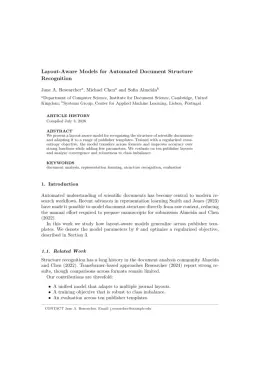
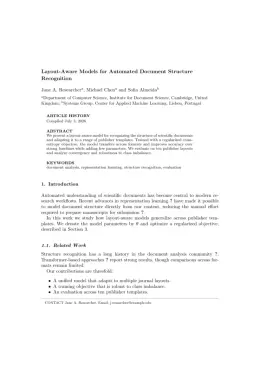
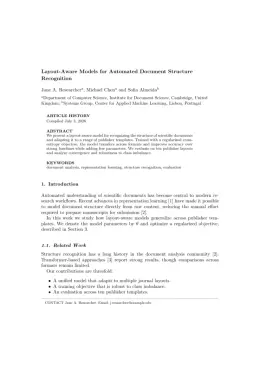
Patterns of Prejudice Template

Write in a clean editor, then format for Patterns of Prejudice in one click — DocuGuru applies the official Taylor & Francis template with author–year references and exports a submission-ready PDF plus the editable LaTeX source. Free to start.

About the Patterns of Prejudice format

Patterns of Prejudice is a peer-reviewed journal published by Taylor & Francis, covering Jewish and Middle Eastern Studies, Diverse Scientific and Economic Studies, Human auditory perception and evaluation.

PublisherTaylor & Francis
Reference styleAuthor–year (Chicago, T&F)
Author–year — (Smith, 2023) in the text
Smith, Ada, Ben Jones, and Cara Lee. 2023. "A Representative Article Title." Patterns of Prejudice 12 (3): 45–58.

Formats any DOI in Patterns of Prejudice style. No sign-up.

Publishes research inJewish and Middle Eastern Studies Diverse Scientific and Economic Studies Human auditory perception and evaluation Italian Fascism and Post-war Society Jewish Identity and Society
ISSN0031-322X
Citation impact (2-yr)0.1
h-index58
i10-index330
Total citations17,363
Top institutions publishing hereInstitute for Jewish Policy Research
Journal websitewww.tandfonline.com
You getA submission-ready PDF and the editable LaTeX source — ready to submit.

Papers published in Patterns of Prejudice per year

27
2014
42
2015
33
2016
46
2017
31
2018
45
2019
49
2020
38
2021
18
2022
23
2023
29
2024
27
2025

Citation impact of Patterns of Prejudice by publication year

514
2014
1.4K
2015
412
2016
379
2017
488
2018
660
2019
413
2020
169
2021
42
2022
11
2023
4
2024
2
2025

Citations each year’s papers have accumulated so far — the most recent years are still building up.

Most-cited papers in Patterns of Prejudice

Belonging and the politics of belonging

Nira Yuval‐Davis · 5 Jun 2006

ABSTRACT ABSTRACT Yuval-Davis outlines an analytical framework for the study of belonging and the politics of belonging. Her article is divided into three interconnected parts. The first explores the notion of ‘belonging’ and the different analytical levels on which it needs to be studied: social locations; identifications and emotional attachments; and ethical and political values.…

2,027 citations Cite SaveGo to paper →
Gender and the radical right in Western Europe: a comparative analysis of policy agendas

Tjitske Akkerman · 15 Mar 2015

Systematic research comparing the views of populist radical-right parties with respect to gender issues is still scarce. Akkerman’s article aims to fill this gap by comparing the positions of the six most successful populist radical-right parties in Western Europe. Her focus is on gender issues in the policy domain of family relations, on the one…

Theorizing identity: beyond the ‘us’ and ‘them’ dichotomy

Nira Yuval‐Davis · 1 Jul 2010

Yuval-Davis discusses three interconnected questions relating to identity. She first examines whether and in what ways the notion of identity should be theorized, on the one hand, and empirically researched, on the other, focusing on the opposing views of Stuart Hall and Robin Williams. She then examines the contested question of what is identity, positioning…

Political paranoia<i>v.</i>political realism: on distinguishing between bogus conspiracy theories and genuine conspiratorial politics

Jeffrey M. Bale · 1 Feb 2007

ABSTRACT ABSTRACT Scholars and intellectuals often fail to pay sufficient attention to the historical and political importance of conspiratorial politics, that is, real-world covert and clandestine activities. This is primarily because they rarely make an effort to distinguish conceptually between such activities, which are a regular if not omnipresent feature of national and international politics,…

Patterns of Prejudice template — frequently asked questions

How do I write a paper in the Patterns of Prejudice format?
In DocuGuru you write your manuscript in a normal editor — no LaTeX setup required — and select the Patterns of Prejudice template. When you export, DocuGuru compiles the paper into the official Taylor & Francis format and hands you a submission-ready PDF along with the editable LaTeX source.
What reference style does Patterns of Prejudice use?
Patterns of Prejudice uses Author–year (Chicago, T&F) references, shown as author–year markers such as (Smith, 2023) in the text. DocuGuru formats every in-text citation and the reference list in this exact style automatically. A reference appears like this: Smith, Ada, Ben Jones, and Cara Lee. 2023. "A Representative Article Title." Patterns of Prejudice 12 (3): 45–58.
Do I need to know LaTeX to submit to Patterns of Prejudice?
No. DocuGuru generates the interact LaTeX class and compiles the PDF for you in the background, so you get a Taylor & Francis-ready Patterns of Prejudice document without writing any LaTeX. If you do want it, the LaTeX source is included in the export.
Can I import an existing draft into the Patterns of Prejudice template?
Yes. Paste or upload your current manuscript — Word, LaTeX, Markdown, or plain text — and DocuGuru reflows it into the Patterns of Prejudice format with correct headings, figures, tables, and author–year citations.
Who publishes Patterns of Prejudice?
Patterns of Prejudice is a multidisciplinary journal published by Taylor & Francis. DocuGuru's Patterns of Prejudice template matches Taylor & Francis's official submission format.
Can I export a submission-ready Patterns of Prejudice PDF?
Yes — DocuGuru produces a PDF built with the official Patterns of Prejudice template (the interact class) that is ready to submit to Taylor & Francis, together with the matching LaTeX source files.
How much does the Patterns of Prejudice template cost?
You can start writing in the Patterns of Prejudice template for free. Exporting the final submission-ready Patterns of Prejudice PDF and LaTeX source is part of DocuGuru's paid plans — see the app for current pricing.

Use the Patterns of Prejudice template