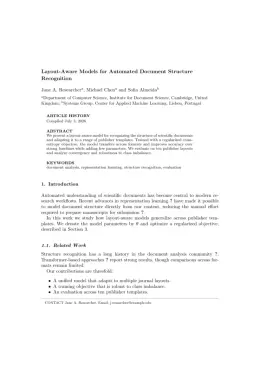
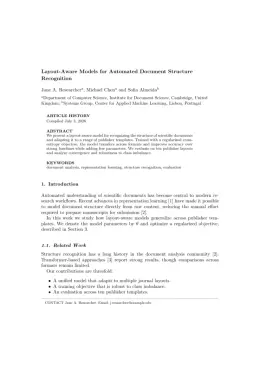
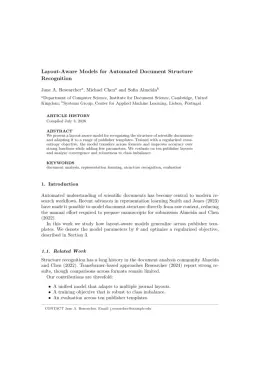
About the Numerical Heat Transfer format
Numerical Heat Transfer is a peer-reviewed journal published by Taylor & Francis, covering Fluid Dynamics and Turbulent Flows, Nanofluid Flow and Heat Transfer, Heat Transfer and Optimization.
| Publisher | Taylor & Francis |
|---|
| Reference style | Author–year (Chicago, T&F) Author–year — (Smith, 2023) in the text
Smith, Ada, Ben Jones, and Cara Lee. 2023. "A Representative Article Title." Numerical Heat Transfer 12 (3): 45–58.
Formats any DOI in Numerical Heat Transfer style. No sign-up.
|
|---|
| Publishes research in | Fluid Dynamics and Turbulent Flows Nanofluid Flow and Heat Transfer Heat Transfer and Optimization Advanced Numerical Methods in Computational Mathematics Computational Fluid Dynamics and Aerodynamics |
|---|
| ISSN | 0149-5720 |
|---|
| h-index | 59 |
|---|
| i10-index | 263 |
|---|
| Total citations | 19,261 |
|---|
| Top institutions publishing here | University of Minnesota |
|---|
| Journal website | www.tandfonline.com |
|---|
| You get | A submission-ready PDF and the editable LaTeX source — ready to submit. |
|---|
Papers published in Numerical Heat Transfer per year
Citation impact of Numerical Heat Transfer by publication year
Citations each year’s papers have accumulated so far — the most recent years are still building up.
Most-cited papers in Numerical Heat Transfer
ENHANCEMENTS OF THE SIMPLE METHOD FOR PREDICTING INCOMPRESSIBLE FLUID FLOWS
J. P. Van Doormaal, G. D. Raithby · 1 Apr 1984
Variations of the SIMPLE method of Patankar and Spalding have been widely used over the past decade to obtain numerical solutions to problems involving incompressible flows. The present paper shows several modifications to the method which both simplify its implementation and reduce solution costs. The performances of SIMPLE, SIMPLER, and SIMPLEC (the present method) are…
ENTHALPY-POROSITY TECHNIQUE FOR MODELING CONVECTION-DIFFUSION PHASE CHANGE: APPLICATION TO THE MELTING OF A PURE METAL
A. D. Brent, Vaughan R. Voller, Kenneth Reid · 1 Apr 1988
The melting of pure gallium in a rectangular cavity has been numerically investigated using the enthalpy-porosity approach for modeling combined convection-diffusion phase change. The major advantage of this technique is that it allows a fixed-grid solution of the coupled momentum and energy equations to be undertaken without resorting to variable transformations. In this work, a…
A CALCULATION PROCEDURE FOR TWO-DIMENSIONAL ELLIPTIC SITUATIONS
Suhas V. Patankar · 1 Oct 1981
Abstract A calculation method based on the control-volume approach has been developed for solving two-dimensional elliptic problems involving fluid flow and heat and mass transfer. The main features of the method include a power-law formulation for the combined convection-diffusion Influence, an equation-solving scheme that consists of a block-correction method coupled with a line-by-line procedure, and…
A MULTIGRID METHOD BASED ON THE ADDITIVE CORRECTION STRATEGY
Brad Hutchinson, G. D. Raithby · 1 May 1986
The solution of large sets of equations is required when discrete methods are used to solve fluid flow and heat transfer problems. The cost of the solution often becomes prohibitive when the coefficients of the algebraic equations become strongly anisotropic or when the number of equations in the set becomes large. The present paper demonstrates…
A NEW FINITE-ELEMENT FORMULATION FOR CONVECTION-DIFFUSION PROBLEMS
B. R. Baliga, Suhas V. Patankar · 1 Oct 1980
Abstract A general numerical method for convection-diffusion problems is presented. The method is formulated for two-dimensional problems, but its key Ideas can be extended to three-dimensional problems. The calculation domain is first divided into three-node triangular elements, and then polygonal control volumes are constructed by joining the centroids of the elements to the midpoints of…