Taylor & Francis

Mycobiology Template

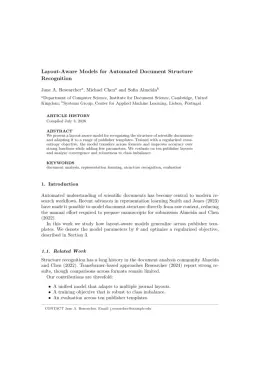
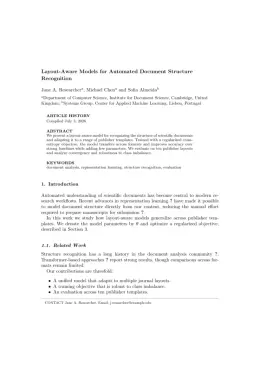
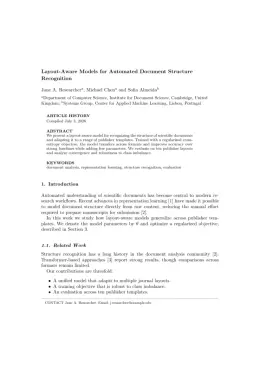
Write in a clean editor, then format for Mycobiology in one click — DocuGuru applies the official Taylor & Francis template with author–year references and exports a submission-ready PDF plus the editable LaTeX source. Free to start.

About the Mycobiology format

Mycobiology is a peer-reviewed journal published by Taylor & Francis, covering Plant Pathogens and Fungal Diseases, Fungal Biology and Applications, Mycorrhizal Fungi and Plant Interactions.

PublisherTaylor & Francis
Reference styleAuthor–year (Chicago, T&F)
Author–year — (Smith, 2023) in the text
Smith, Ada, Ben Jones, and Cara Lee. 2023. "A Representative Article Title." Mycobiology 12 (3): 45–58.

Formats any DOI in Mycobiology style. No sign-up.

Publishes research inPlant Pathogens and Fungal Diseases Fungal Biology and Applications Mycorrhizal Fungi and Plant Interactions Lichen and fungal ecology Yeasts and Rust Fungi Studies
ISSN1229-8093
Citation impact (2-yr)2.22
h-index60
i10-index653
Total citations23,918
Article processing charge$1,134
Open accessYes
Top institutions publishing hereRural Development Administration
Journal websitewww.tandfonline.com
You getA submission-ready PDF and the editable LaTeX source — ready to submit.

Papers published in Mycobiology per year

80
2014
76
2015
46
2016
60
2017
54
2018
67
2019
67
2020
49
2021
50
2022
53
2023
43
2024
84
2025

Citation impact of Mycobiology by publication year

1.4K
2014
2.2K
2015
840
2016
1.4K
2017
1.2K
2018
1.1K
2019
1.1K
2020
486
2021
420
2022
316
2023
232
2024
96
2025

Citations each year’s papers have accumulated so far — the most recent years are still building up.

Most-cited papers in Mycobiology

Antifungal Effects of Silver Nanoparticles (AgNPs) against Various Plant Pathogenic Fungi

Sang‐Woo Kim, Jin Hee Jung, Kabir Lamsal et al. · 1 Mar 2012

This research is concerned with the fungicidal properties of nano-size silver colloidal solution used as an agent for antifungal treatment of various plant pathogens. We used WA-CV-WA13B, WA-AT-WB13R, and WA-PR-WB13R silver nanoparticles (AgNPs) at concentrations of 10, 25, 50, and 100 ppm. Eighteen different plant pathogenic fungi were treated with these AgNPs on potato dextrose…

The Effects of Different Substrates on the Growth, Yield, and Nutritional Composition of Two Oyster Mushrooms (<i>Pleurotus ostreatus</i> and <i>Pleurotus cystidiosus</i>)

Hà Thị Hòa, Chun-Li Wang, Chun-Li Wang et al. · 1 Dec 2015

The study was conducted to compare the effects of different agro-wastes on the growth, yield, and nutritional composition of oyster mushrooms Pleurotus ostreatus (PO) and Pleurotus cystidiosus (PC). Seven substrate formulas including sawdust (SD), corncob (CC), sugarcane bagasse (SB) alone and in combination of 80 : 20, 50 : 50 ratio between SD and CC,…

Influence of Temperature and Water Activity on Deleterious Fungi and Mycotoxin Production during Grain Storage

Mohamed Mannaa, Ki Deok Kim · 1 Dec 2017

Cereal grains are the most important food source for humans. As the global population continues to grow exponentially, the need for the enhanced yield and minimal loss of agricultural crops, mainly cereal grains, is increasing. In general, harvested grains are stored for specific time periods to guarantee their continuous supply throughout the year. During storage,…

Application of Silver Nanoparticles for the Control of<i>Colletotrichum</i>Species<i>In Vitro</i>and Pepper Anthracnose Disease in Field

Kabir Lamsal, Sang‐Woo Kim, Jin Hee Jung et al. · 1 Sep 2011

Pepper anthracnose caused by Colletotrichum species is one of the most important limiting factors for pepper production in Korea, its management being strongly dependent on chemicals. The aim of this work was to evaluate the possibilities of using silver nanoparticles instead of commercial fungicides. In this study, we evaluated the effect of silver nanoparticles against…

Mycobiology template — frequently asked questions

How do I write a paper in the Mycobiology format?
In DocuGuru you write your manuscript in a normal editor — no LaTeX setup required — and select the Mycobiology template. When you export, DocuGuru compiles the paper into the official Taylor & Francis format and hands you a submission-ready PDF along with the editable LaTeX source.
What reference style does Mycobiology use?
Mycobiology uses Author–year (Chicago, T&F) references, shown as author–year markers such as (Smith, 2023) in the text. DocuGuru formats every in-text citation and the reference list in this exact style automatically. A reference appears like this: Smith, Ada, Ben Jones, and Cara Lee. 2023. "A Representative Article Title." Mycobiology 12 (3): 45–58.
Do I need to know LaTeX to submit to Mycobiology?
No. DocuGuru generates the interact LaTeX class and compiles the PDF for you in the background, so you get a Taylor & Francis-ready Mycobiology document without writing any LaTeX. If you do want it, the LaTeX source is included in the export.
Can I import an existing draft into the Mycobiology template?
Yes. Paste or upload your current manuscript — Word, LaTeX, Markdown, or plain text — and DocuGuru reflows it into the Mycobiology format with correct headings, figures, tables, and author–year citations.
Who publishes Mycobiology?
Mycobiology is a multidisciplinary journal published by Taylor & Francis. DocuGuru's Mycobiology template matches Taylor & Francis's official submission format.
Can I export a submission-ready Mycobiology PDF?
Yes — DocuGuru produces a PDF built with the official Mycobiology template (the interact class) that is ready to submit to Taylor & Francis, together with the matching LaTeX source files.
How much does the Mycobiology template cost?
You can start writing in the Mycobiology template for free. Exporting the final submission-ready Mycobiology PDF and LaTeX source is part of DocuGuru's paid plans — see the app for current pricing.
Use the Mycobiology template