Taylor & Francis

Mathematical Thinking and Learning Template

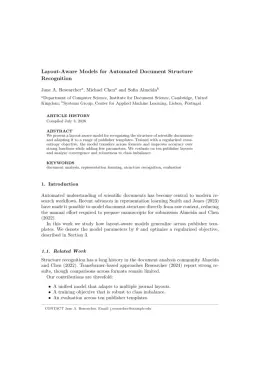
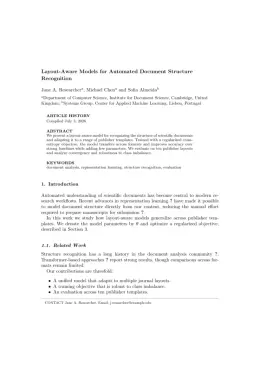
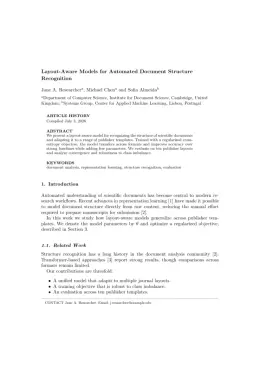
Write in a clean editor, then format for Mathematical Thinking and Learning in one click — DocuGuru applies the official Taylor & Francis template with author–year references and exports a submission-ready PDF plus the editable LaTeX source. Free to start.

About the Mathematical Thinking and Learning format

Mathematical Thinking and Learning is a peer-reviewed journal published by Taylor & Francis, covering Mathematics Education and Teaching Techniques, Cognitive and developmental aspects of mathematical skills, Statistics Education and Methodologies.

PublisherTaylor & Francis
Reference styleAuthor–year (Chicago, T&F)
Author–year — (Smith, 2023) in the text
Smith, Ada, Ben Jones, and Cara Lee. 2023. "A Representative Article Title." Mathematical Thinking and Learning 12 (3): 45–58.

Formats any DOI in Mathematical Thinking and Learning style. No sign-up.

Publishes research inMathematics Education and Teaching Techniques Cognitive and developmental aspects of mathematical skills Statistics Education and Methodologies Innovative Teaching and Learning Methods Science Education and Pedagogy
ISSN1098-6065
Citation impact (2-yr)1.34
h-index78
i10-index331
Total citations22,965
Top institutions publishing hereKU Leuven
Journal websitewww.tandfonline.com
You getA submission-ready PDF and the editable LaTeX source — ready to submit.

Papers published in Mathematical Thinking and Learning per year

18
2014
19
2015
17
2016
19
2017
18
2018
26
2019
35
2020
37
2021
19
2022
16
2023
28
2024
20
2025

Citation impact of Mathematical Thinking and Learning by publication year

309
2014
663
2015
551
2016
323
2017
538
2018
552
2019
570
2020
597
2021
195
2022
66
2023
50
2024
27
2025

Citations each year’s papers have accumulated so far — the most recent years are still building up.

Most-cited papers in Mathematical Thinking and Learning

Orchestrating Productive Mathematical Discussions: Five Practices for Helping Teachers Move Beyond Show and Tell

Mary Kay Stein, Randi A. Engle, Margaret S. Smith et al. · 21 Oct 2008

Teachers who attempt to use inquiry-based, student-centered instructional tasks face challenges that go beyond identifying well-designed tasks and setting them up appropriately in the classroom. Because solution paths are usually not specified for these kinds of tasks, students tend to approach them in unique and sometimes unanticipated ways. Teachers must not only strive to understand…

1,204 citations Cite SaveGo to paper →
A Situated and Sociocultural Perspective on Bilingual Mathematics Learners

Judit Moschkovich · 1 Jul 2002

Abstract My aim in this article is to explore 3 perspectives on bilingual mathematics learners and to consider how a situated and sociocultural perspective can inform work in this area. The 1st perspective focuses on acquisition of vocabulary, the 2nd focuses on the construction of multiple meanings across registers, and the 3rd focuses on participation…

How Emergent Models May Foster the Constitution of Formal Mathematics

Koeno Gravemeijer · 1 Jun 1999

This article deals with the role that so-called emergent models can play in the process of constituting formal mathematics. The underlying philosophy is that formal mathematics is something that is, or should be, constituted by the students themselves. In the instructional design theory for realistic mathematics education, models always have been employed to foster a…

Gestures, Speech, and the Sprouting of Signs: A Semiotic-Cultural Approach to Students' Types of Generalization

Luis Radford · 1 Jan 2003

To improve our understanding of novice students' production of symbolic algebraic expressions, this article contrasts students' presymbolic and symbolic procedures in generalizing activities. Although a significant amount of previous research on the learning of algebra has dealt with students' errors in the mastering of the algebraic syntax, the semiotic cultural theoretical approach presented here focuses…

Mathematical Thinking and Learning template — frequently asked questions

How do I write a paper in the Mathematical Thinking and Learning format?
In DocuGuru you write your manuscript in a normal editor — no LaTeX setup required — and select the Mathematical Thinking and Learning template. When you export, DocuGuru compiles the paper into the official Taylor & Francis format and hands you a submission-ready PDF along with the editable LaTeX source.
What reference style does Mathematical Thinking and Learning use?
Mathematical Thinking and Learning uses Author–year (Chicago, T&F) references, shown as author–year markers such as (Smith, 2023) in the text. DocuGuru formats every in-text citation and the reference list in this exact style automatically. A reference appears like this: Smith, Ada, Ben Jones, and Cara Lee. 2023. "A Representative Article Title." Mathematical Thinking and Learning 12 (3): 45–58.
Do I need to know LaTeX to submit to Mathematical Thinking and Learning?
No. DocuGuru generates the interact LaTeX class and compiles the PDF for you in the background, so you get a Taylor & Francis-ready Mathematical Thinking and Learning document without writing any LaTeX. If you do want it, the LaTeX source is included in the export.
Can I import an existing draft into the Mathematical Thinking and Learning template?
Yes. Paste or upload your current manuscript — Word, LaTeX, Markdown, or plain text — and DocuGuru reflows it into the Mathematical Thinking and Learning format with correct headings, figures, tables, and author–year citations.
Who publishes Mathematical Thinking and Learning?
Mathematical Thinking and Learning is a multidisciplinary journal published by Taylor & Francis. DocuGuru's Mathematical Thinking and Learning template matches Taylor & Francis's official submission format.
Can I export a submission-ready Mathematical Thinking and Learning PDF?
Yes — DocuGuru produces a PDF built with the official Mathematical Thinking and Learning template (the interact class) that is ready to submit to Taylor & Francis, together with the matching LaTeX source files.
How much does the Mathematical Thinking and Learning template cost?
You can start writing in the Mathematical Thinking and Learning template for free. Exporting the final submission-ready Mathematical Thinking and Learning PDF and LaTeX source is part of DocuGuru's paid plans — see the app for current pricing.

Use the Mathematical Thinking and Learning template