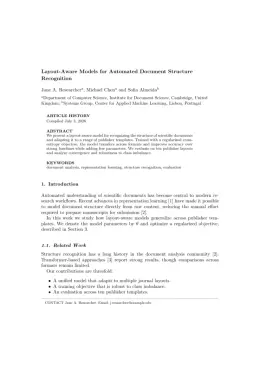
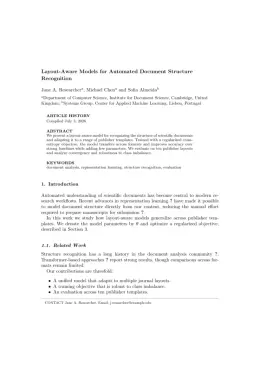
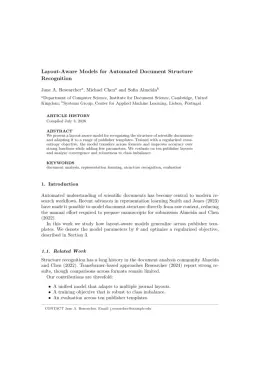
About the Low Intensity Conflict & Law Enforcement format
Low Intensity Conflict & Law Enforcement is a peer-reviewed journal published by Taylor & Francis, covering Terrorism, Counterterrorism, and Political Violence, Peacebuilding and International Security, Politics and Conflicts in Afghanistan, Pakistan, and Middle East.
| Publisher | Taylor & Francis |
|---|
| Reference style | Author–year (Chicago, T&F) Author–year — (Smith, 2023) in the text
Smith, Ada, Ben Jones, and Cara Lee. 2023. "A Representative Article Title." Low Intensity Conflict & Law Enforcement 12 (3): 45–58.
Formats any DOI in Low Intensity Conflict & Law Enforcement style. No sign-up.
|
|---|
| Publishes research in | Terrorism, Counterterrorism, and Political Violence Peacebuilding and International Security Politics and Conflicts in Afghanistan, Pakistan, and Middle East Intelligence, Security, War Strategy Military History and Strategy |
|---|
| ISSN | 0966-2847 |
|---|
| h-index | 11 |
|---|
| i10-index | 12 |
|---|
| Total citations | 312 |
|---|
| Top institutions publishing here | Pennsylvania State University |
|---|
| You get | A submission-ready PDF and the editable LaTeX source — ready to submit. |
|---|
Papers published in Low Intensity Conflict & Law Enforcement per year
Citation impact of Low Intensity Conflict & Law Enforcement by publication year
Citations each year’s papers have accumulated so far — the most recent years are still building up.
Most-cited papers in Low Intensity Conflict & Law Enforcement
Counterinsurgency and Operational Art
Thomas A. Marks · 1 Dec 2005
Addressing insurgency requires the same application of operational art as utilized in conventional warfare planning. Counterinsurgency strategy will be driven by the nature of the insurgent movement, with campaigns constructed to use tactics appropriately so that key facets of the insurgent campaign are neutralized. It is especially important to determine whether terror is used as…
Perception Management: IO's Stepchild?
Pascale Combelles Siegel · 1 Sep 2005
Over the past decade, information operations (IO) have become a central feature of America's way of war. The Department of Defense's (DOD) focus on technology has left perception management (PM), defined as actions taken to influence foreign audiences’ perceptions and behaviors, as IO's second-class citizen. This article postulates that in today's media environment and with…
Radical Maoist Insurgents and Terrorist Tactics: Comparing Peru and Nepal1
Thomas A. Marks, David Scott Palmer · 1 Sep 2005
Terrorism is not insurgency, though the latter invariably incorporates the former in its campaign to form a counter-state. Maoist 'people's war' has proved such a challenge to state response precisely because it incorporates terror as a tactic within the larger voluntarist effort 'to make a revolution'. Examining this dynamic in two cases of Maoist insurgency,…
Constructive Ambiguity and the Peace Process in Northern Ireland
James Dingley · 1 Jan 2005
The Belfast Agreement of 1998 was hailed at the time as a breakthrough in conflict resolution both in Northern Ireland and as a model for international emulation. In fact it has turned out to be neither; rather it has been a sad exercise in surrendering to terrorism and the cause of increased sectarian segregation and…
Netwar Revisited: The Fight for the Future Continues
John Arquilla, David Ronfeldt · 1 Jun 2002
This work continues to develop the 'netwar' concept that the authors introduced in 1993 and have expanded upon in their various RAND and other writings ever since. Deeper understanding of the nature, strengths and vulnerabilities of networks will prove useful in combating terrorism and transnational crime, but also in understanding militant social activism, both of…