Taylor & Francis

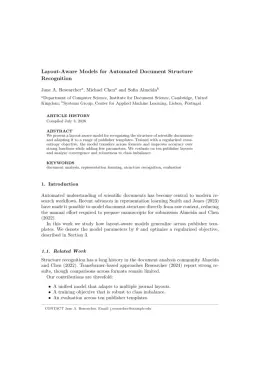
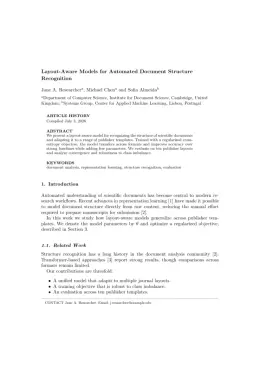
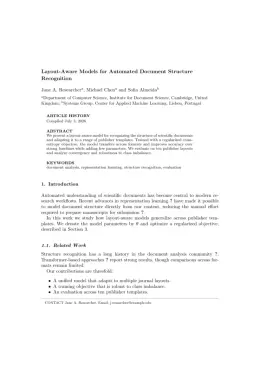
Logopedics Phoniatrics Vocology Template

Write in a clean editor, then format for Logopedics Phoniatrics Vocology in one click — DocuGuru applies the official Taylor & Francis template with author–year references and exports a submission-ready PDF plus the editable LaTeX source. Free to start.

About the Logopedics Phoniatrics Vocology format

Logopedics Phoniatrics Vocology is a peer-reviewed journal published by Taylor & Francis, covering Voice and Speech Disorders, Phonetics and Phonology Research, Dysphagia Assessment and Management.

PublisherTaylor & Francis
Reference styleAuthor–year (Chicago, T&F)
Author–year — (Smith, 2023) in the text
Smith, Ada, Ben Jones, and Cara Lee. 2023. "A Representative Article Title." Logopedics Phoniatrics Vocology 12 (3): 45–58.

Formats any DOI in Logopedics Phoniatrics Vocology style. No sign-up.

Publishes research inVoice and Speech Disorders Phonetics and Phonology Research Dysphagia Assessment and Management Stuttering Research and Treatment Speech Recognition and Synthesis
ISSN1401-5439
Citation impact (2-yr)0.91
h-index51
i10-index393
Total citations14,073
Top institutions publishing hereKarolinska Institutet
Journal websitewww.tandfonline.com
You getA submission-ready PDF and the editable LaTeX source — ready to submit.

Papers published in Logopedics Phoniatrics Vocology per year

27
2014
17
2015
21
2016
22
2017
16
2018
25
2019
34
2020
39
2021
23
2022
6
2023
16
2024
17
2025

Citation impact of Logopedics Phoniatrics Vocology by publication year

545
2014
326
2015
318
2016
273
2017
207
2018
371
2019
390
2020
315
2021
109
2022
31
2023
34
2024
6
2025

Citations each year’s papers have accumulated so far — the most recent years are still building up.

Most-cited papers in Logopedics Phoniatrics Vocology

Review: Occupational risks for voice problems

Katherine Verdolini, Lorraine O. Ramig · 1 Jan 2001

The purpose of this paper is to provide a cohesive review of the literature regarding the functional consequences of voice problems and occupational risk factors for them. The salient points are as follows. According to conservative estimates, approximately 28,000,000 workers in the US experience daily voice problems. Many people who experience voice problems perceive them…

Voice disorders and occupations

Björn Fritzell · 1 Jan 1996

Information on diagnosis, occupation, sex and age of new voice patients seen during a period of six months during 1992–93 were reported from the eight hospital departments of phoniatrics in Sweden. Data from altogether 1212 patients of working age were obtained. Phonasthenia was by far the most common diagnosis. Teaching professions were more common than…

The relative effectiveness of vocal hygiene training and vocal function exercises in preventing voice disorders in primary school teachers

Gulsen Pasa, Jennifer Oates, Georgia Dacakis · 1 Jan 2007

Voice disorders in teachers have a significant impact on their occupational functioning and well being. Teachers are believed to have a high prevalence of voice problems because of the unfavourable acoustic environments in which they work and the high vocal demands and stress levels associated with teaching. Although the types of voice problems teachers experience…

The resonance tube method in voice therapy: Description and practical implementations

Susanna Simberg, Anneli Laine · 1 Jan 2007

Phonation into glass tubes, keeping the free end of the tube in water, has been a frequently used voice therapy method in Finland for more than four decades. These so-called resonance tubes, introduced by Professor Sovijärvi in the 1960s, are used in different ways depending on the patient's diagnosis and the goal of the voice…

Mirroring the voice from Garcia to the present day: Some insights into singing voice registers

Nathalie Henrich Bernardoni · 17 Nov 2005

Starting from Garcia's definition, the historical evolution of the notion of vocal registers from then until now is considered. Even though much research has been carried out on vocal registers since then, the notion of registers is still confused in the singing voice community, and defined in many different ways. While some authors consider a…

Logopedics Phoniatrics Vocology template — frequently asked questions

How do I write a paper in the Logopedics Phoniatrics Vocology format?
In DocuGuru you write your manuscript in a normal editor — no LaTeX setup required — and select the Logopedics Phoniatrics Vocology template. When you export, DocuGuru compiles the paper into the official Taylor & Francis format and hands you a submission-ready PDF along with the editable LaTeX source.
What reference style does Logopedics Phoniatrics Vocology use?
Logopedics Phoniatrics Vocology uses Author–year (Chicago, T&F) references, shown as author–year markers such as (Smith, 2023) in the text. DocuGuru formats every in-text citation and the reference list in this exact style automatically. A reference appears like this: Smith, Ada, Ben Jones, and Cara Lee. 2023. "A Representative Article Title." Logopedics Phoniatrics Vocology 12 (3): 45–58.
Do I need to know LaTeX to submit to Logopedics Phoniatrics Vocology?
No. DocuGuru generates the interact LaTeX class and compiles the PDF for you in the background, so you get a Taylor & Francis-ready Logopedics Phoniatrics Vocology document without writing any LaTeX. If you do want it, the LaTeX source is included in the export.
Can I import an existing draft into the Logopedics Phoniatrics Vocology template?
Yes. Paste or upload your current manuscript — Word, LaTeX, Markdown, or plain text — and DocuGuru reflows it into the Logopedics Phoniatrics Vocology format with correct headings, figures, tables, and author–year citations.
Who publishes Logopedics Phoniatrics Vocology?
Logopedics Phoniatrics Vocology is a multidisciplinary journal published by Taylor & Francis. DocuGuru's Logopedics Phoniatrics Vocology template matches Taylor & Francis's official submission format.
Can I export a submission-ready Logopedics Phoniatrics Vocology PDF?
Yes — DocuGuru produces a PDF built with the official Logopedics Phoniatrics Vocology template (the interact class) that is ready to submit to Taylor & Francis, together with the matching LaTeX source files.
How much does the Logopedics Phoniatrics Vocology template cost?
You can start writing in the Logopedics Phoniatrics Vocology template for free. Exporting the final submission-ready Logopedics Phoniatrics Vocology PDF and LaTeX source is part of DocuGuru's paid plans — see the app for current pricing.

Use the Logopedics Phoniatrics Vocology template