
80 citations
Cite
SaveGo to paper →
Taylor & Francis
Law and Humanities Template
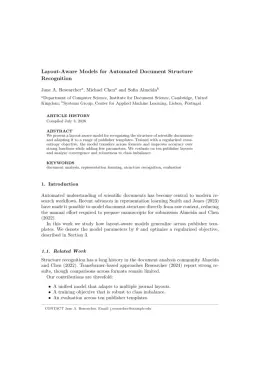
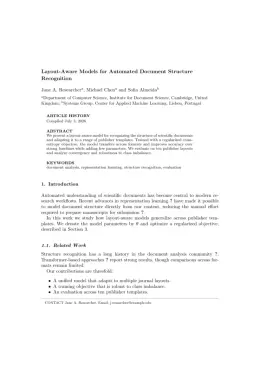
Write in a clean editor, then format for Law and Humanities in one click — DocuGuru applies the official Taylor & Francis template with author–year references and exports a submission-ready PDF plus the editable LaTeX source. Free to start.
About the Law and Humanities format
Law and Humanities is a peer-reviewed journal published by Taylor & Francis, covering Law in Society and Culture, Legal Education and Practice Innovations, Legal principles and applications.
| Publisher | Taylor & Francis |
|---|---|
| Reference style | Author–year (Chicago, T&F) Author–year — (Smith, 2023) in the text Smith, Ada, Ben Jones, and Cara Lee. 2023. "A Representative Article Title." Law and Humanities 12 (3): 45–58.
Formats any DOI in Law and Humanities style. No sign-up. |
| Publishes research in | Law in Society and Culture Legal Education and Practice Innovations Legal principles and applications Judicial and Constitutional Studies Shakespeare, Adaptation, and Literary Criticism |
| ISSN | 1752-1483 |
| Citation impact (2-yr) | 0.13 |
| h-index | 15 |
| i10-index | 34 |
| Total citations | 1,131 |
| Top institutions publishing here | University of Warwick |
| Journal website | www.tandfonline.com |
| You get | A submission-ready PDF and the editable LaTeX source — ready to submit. |
Papers published in Law and Humanities per year
Citation impact of Law and Humanities by publication year
Citations each year’s papers have accumulated so far — the most recent years are still building up.
Most-cited papers in Law and Humanities
This article looks at the current documentary obsession with true crime stories, arguing that ultimately this heterogeneous series of individual texts loosely constitute a genre. Bookended by The Staircase from 2004 (the genre's touchstone or foundational text) and Making a Murderer from 2015 (the genre's most notorious example to date), this discussion will look at…
77 citations
Cite
SaveGo to paper →
The key aspects and features of an ethnographic study of the lower level law court in Stockholm conducted in November 2008 and in February. A discussion of the logical, emotional and affective aspects of the legal space of the courtroom and the perceived tension and opposition between laws and emotion is highlighted.
47 citations
Cite
SaveGo to paper →
This article examines the legislative measures imposed by governments as a response to the COVID-19 pandemic and scrutinizes, in particular, governments' extensive use of military metaphors to justify those measures. It argues that while the use of military metaphors can usefully and desirably function to mobilize widespread acceptance and compliance with the relevant legislative measures…
46 citations
Cite
SaveGo to paper →
(2007). Sovereignty before the Law: Agamben and the Roman Republic. Law and Humanities: Vol. 1, No. 1, pp. 31-55.
43 citations
Cite
SaveGo to paper →
Related journal templates
 Communications in Statistics - Theory and Methods
 Econometric Reviews
Georisk: Assessment and Management of Risk for Engineered Systems and Geohazards
International Journal of Control
International Journal of Production Research
Journal of Business & Economic Statistics
Journal of Nonparametric Statistics
Journal of the American Statistical Association
Econometric Reviews
Georisk: Assessment and Management of Risk for Engineered Systems and Geohazards
International Journal of Control
International Journal of Production Research
Journal of Business & Economic Statistics
Journal of Nonparametric Statistics
Journal of the American Statistical Association
Law and Humanities template — frequently asked questions
How do I write a paper in the Law and Humanities format?
In DocuGuru you write your manuscript in a normal editor — no LaTeX setup required — and select the Law and Humanities template. When you export, DocuGuru compiles the paper into the official Taylor & Francis format and hands you a submission-ready PDF along with the editable LaTeX source.
What reference style does Law and Humanities use?
Law and Humanities uses Author–year (Chicago, T&F) references, shown as author–year markers such as (Smith, 2023) in the text. DocuGuru formats every in-text citation and the reference list in this exact style automatically. A reference appears like this: Smith, Ada, Ben Jones, and Cara Lee. 2023. "A Representative Article Title." Law and Humanities 12 (3): 45–58.
Do I need to know LaTeX to submit to Law and Humanities?
No. DocuGuru generates the interact LaTeX class and compiles the PDF for you in the background, so you get a Taylor & Francis-ready Law and Humanities document without writing any LaTeX. If you do want it, the LaTeX source is included in the export.
Can I import an existing draft into the Law and Humanities template?
Yes. Paste or upload your current manuscript — Word, LaTeX, Markdown, or plain text — and DocuGuru reflows it into the Law and Humanities format with correct headings, figures, tables, and author–year citations.
Who publishes Law and Humanities?
Law and Humanities is a multidisciplinary journal published by Taylor & Francis. DocuGuru's Law and Humanities template matches Taylor & Francis's official submission format.
Can I export a submission-ready Law and Humanities PDF?
Yes — DocuGuru produces a PDF built with the official Law and Humanities template (the interact class) that is ready to submit to Taylor & Francis, together with the matching LaTeX source files.
How much does the Law and Humanities template cost?
You can start writing in the Law and Humanities template for free. Exporting the final submission-ready Law and Humanities PDF and LaTeX source is part of DocuGuru's paid plans — see the app for current pricing.