
825 citations
Cite
SaveGo to paper →
Taylor & Francis
Journal of the American College of Toxicology Template
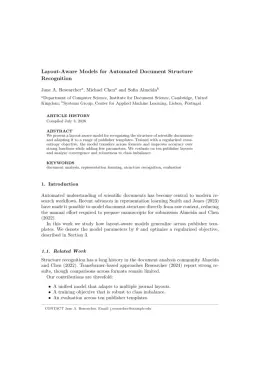
Write in a clean editor, then format for Journal of the American College of Toxicology in one click — DocuGuru applies the official Taylor & Francis template with author–year references and exports a submission-ready PDF plus the editable LaTeX source. Free to start.
About the Journal of the American College of Toxicology format
Journal of the American College of Toxicology is a peer-reviewed journal published by Taylor & Francis, covering Carcinogens and Genotoxicity Assessment, Animal testing and alternatives, Effects and risks of endocrine disrupting chemicals.
| Publisher | Taylor & Francis |
|---|---|
| Reference style | Author–year (Chicago, T&F) Author–year — (Smith, 2023) in the text Smith, Ada, Ben Jones, and Cara Lee. 2023. "A Representative Article Title." Journal of the American College of Toxicology 12 (3): 45–58.
Formats any DOI in Journal of the American College of Toxicology style. No sign-up. |
| Publishes research in | Carcinogens and Genotoxicity Assessment Animal testing and alternatives Effects and risks of endocrine disrupting chemicals Pesticide Exposure and Toxicity Immunotoxicology and immune responses |
| ISSN | 0730-0913 |
| h-index | 50 |
| i10-index | 291 |
| Total citations | 12,781 |
| Top institutions publishing here | Environmental Protection Agency |
| You get | A submission-ready PDF and the editable LaTeX source — ready to submit. |
Papers published in Journal of the American College of Toxicology per year
Citation impact of Journal of the American College of Toxicology by publication year
Citations each year’s papers have accumulated so far — the most recent years are still building up.
Most-cited papers in Journal of the American College of Toxicology
Malachite green, an N-methylated diaminotriphenylmethane dye, is used primarily as a therapeutic agent in aquaculture. In solution, the dye exists as a mixture of the cation (chromatic malachite green) and its carbinol base, with the ratio depending on the p H of the solution; the dye also can undergo chemical and metabolic reduction to a…
515 citations
Cite
SaveGo to paper →
479 citations
Cite
SaveGo to paper →
223 citations
Cite
SaveGo to paper →
Selenium occurs in a variety of different chemical forms in plants and animals. Plants take up inorganic forms of selenium and make numerous selenium analogs of sulfur compounds. Exclusion of selenium from proteins is characteristic of plant species able to tolerate high concentrations of selenium. Animals metabolize both inorganic and organic forms of selenium into…
187 citations
Cite
SaveGo to paper →
Related journal templates
 Transportmetrica B: Transport Dynamics
 Advances in Physics
Applied Economics
Advances in Physics
Applied Economics
 Cartography and Geographic Information Science
Communications in Partial Differential Equations
Contemporary Physics
Economic Systems Research
Georisk: Assessment and Management of Risk for Engineered Systems and Geohazards
Cartography and Geographic Information Science
Communications in Partial Differential Equations
Contemporary Physics
Economic Systems Research
Georisk: Assessment and Management of Risk for Engineered Systems and Geohazards
Journal of the American College of Toxicology template — frequently asked questions
How do I write a paper in the Journal of the American College of Toxicology format?
In DocuGuru you write your manuscript in a normal editor — no LaTeX setup required — and select the Journal of the American College of Toxicology template. When you export, DocuGuru compiles the paper into the official Taylor & Francis format and hands you a submission-ready PDF along with the editable LaTeX source.
What reference style does Journal of the American College of Toxicology use?
Journal of the American College of Toxicology uses Author–year (Chicago, T&F) references, shown as author–year markers such as (Smith, 2023) in the text. DocuGuru formats every in-text citation and the reference list in this exact style automatically. A reference appears like this: Smith, Ada, Ben Jones, and Cara Lee. 2023. "A Representative Article Title." Journal of the American College of Toxicology 12 (3): 45–58.
Do I need to know LaTeX to submit to Journal of the American College of Toxicology?
No. DocuGuru generates the interact LaTeX class and compiles the PDF for you in the background, so you get a Taylor & Francis-ready Journal of the American College of Toxicology document without writing any LaTeX. If you do want it, the LaTeX source is included in the export.
Can I import an existing draft into the Journal of the American College of Toxicology template?
Yes. Paste or upload your current manuscript — Word, LaTeX, Markdown, or plain text — and DocuGuru reflows it into the Journal of the American College of Toxicology format with correct headings, figures, tables, and author–year citations.
Who publishes Journal of the American College of Toxicology?
Journal of the American College of Toxicology is a multidisciplinary journal published by Taylor & Francis. DocuGuru's Journal of the American College of Toxicology template matches Taylor & Francis's official submission format.
Can I export a submission-ready Journal of the American College of Toxicology PDF?
Yes — DocuGuru produces a PDF built with the official Journal of the American College of Toxicology template (the interact class) that is ready to submit to Taylor & Francis, together with the matching LaTeX source files.
How much does the Journal of the American College of Toxicology template cost?
You can start writing in the Journal of the American College of Toxicology template for free. Exporting the final submission-ready Journal of the American College of Toxicology PDF and LaTeX source is part of DocuGuru's paid plans — see the app for current pricing.