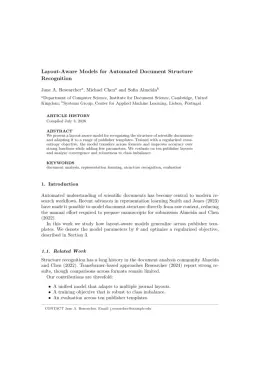
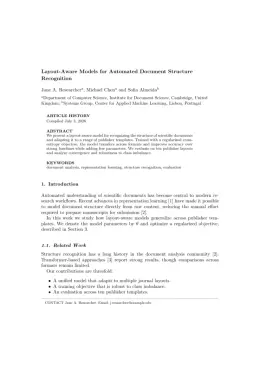
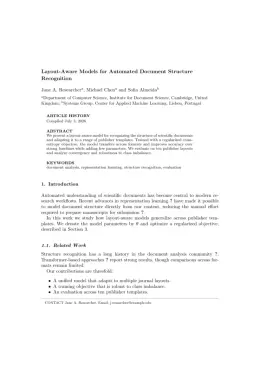
Taylor & Francis

Journal of First-generation Student Success Template

Write in a clean editor, then format for Journal of First-generation Student Success in one click — DocuGuru applies the official Taylor & Francis template with author–year references and exports a submission-ready PDF plus the editable LaTeX source. Free to start.

About the Journal of First-generation Student Success format

Journal of First-generation Student Success is a peer-reviewed journal published by Taylor & Francis, covering Higher Education Research Studies, Mentoring and Academic Development, Career Development and Diversity.

PublisherTaylor & Francis
Reference styleAuthor–year (Chicago, T&F)
Author–year — (Smith, 2023) in the text
Smith, Ada, Ben Jones, and Cara Lee. 2023. "A Representative Article Title." Journal of First-generation Student Success 12 (3): 45–58.

Formats any DOI in Journal of First-generation Student Success style. No sign-up.

Publishes research inHigher Education Research Studies Mentoring and Academic Development Career Development and Diversity Critical Race Theory in Education Higher Education Practises and Engagement
ISSN2690-6015
Citation impact (2-yr)1.01
h-index11
i10-index13
Total citations468
Top institutions publishing hereUniversity of Minnesota
Journal websitewww.tandfonline.com
You getA submission-ready PDF and the editable LaTeX source — ready to submit.

Papers published in Journal of First-generation Student Success per year

18
2021
15
2022
17
2023
30
2024
25
2025

Citation impact of Journal of First-generation Student Success by publication year

177
2021
135
2022
70
2023
57
2024
7
2025

Citations each year’s papers have accumulated so far — the most recent years are still building up.

Most-cited papers in Journal of First-generation Student Success

“They Don’t Value My Knowledge”: Interrogating the Racialized Experiences of Black First-Generation Doctoral Students in HESA Programs at HWIs

Jason K. Wallace, Jesse R. Ford · 4 May 2021

Research on first-generation doctoral students and Black doctoral students have largely remained separate despite the significant overlap in the two populations. With almost half of Black doctoral students identifying as first-generation, it is critical for higher education and student affairs (HESA) faculty and institutional leaders to understand the intersectional experiences of these students to successfully…

What Institutions Can Learn From the Navigational Capital of Minoritized Students

Rebecca Covarrubias, Giselle Laiduc, Ibette Valle · 2 Jan 2022

Minoritized students — low-income, first-generation students of color — leverage skills when navigating higher education. Yet, institutions often misrecognize this navigational capital, rendering it invaluable and missing an opportunity to learn from students. We explored how 16 first-year minoritized students — who participated in a counterspace aimed to affirm their experiences — translated their navigational…

Relatable Role Models: An Online Intervention Highlighting First-Generation Faculty Benefits First-Generation Students

Giselle Laiduc, Sarah D. Herrmann, Rebecca Covarrubias · 2 Sep 2021

Role models improve outcomes for historically marginalized students by demonstrating that similar others are capable of success. Yet, little research has examined the impact of first-generation role models. The current studies investigate whether highlighting first-generation faculty increases first-generation students’ help-seeking intentions and belonging. Compared to continuing-generation students, first-generation students demonstrate higher relatability, intention to visit…

First and Flourishing?: An Exploration of How First-Generation College Students Make Meaning of Their Well-Being Through Purpose, Relationships, and Multiple Identities

Graziella Pagliarulo McCarron · 2 Jan 2022

The complexities of the first-generation college student journey may change how these students experience well-being — both what contributes to and detracts from it. As such, this study was conducted to deepen understanding of first-generation college students’ lived experiences in relation to their well-being. This work shares findings from an interpretive, constructivist qualitative study grounded…

First-Generation College Students’ Mental Health During the COVID-19 Pandemic

Krista M. Soria, Christine Kelling, Melissa Mossinghoff et al. · 4 May 2022

We analyzed data from 7,269 first-generation college students enrolled at nine large, public research-intensive universities who completed the Student Experience in the Research University (SERU) COVID-19 survey. In our sample, 40.3% of first-generation students experienced clinically significant symptoms of major depressive disorder (MDD) and 44.6% experienced clinically significant symptoms of generalized anxiety disorder (GAD)—figures higher…

Journal of First-generation Student Success template — frequently asked questions

How do I write a paper in the Journal of First-generation Student Success format?
In DocuGuru you write your manuscript in a normal editor — no LaTeX setup required — and select the Journal of First-generation Student Success template. When you export, DocuGuru compiles the paper into the official Taylor & Francis format and hands you a submission-ready PDF along with the editable LaTeX source.
What reference style does Journal of First-generation Student Success use?
Journal of First-generation Student Success uses Author–year (Chicago, T&F) references, shown as author–year markers such as (Smith, 2023) in the text. DocuGuru formats every in-text citation and the reference list in this exact style automatically. A reference appears like this: Smith, Ada, Ben Jones, and Cara Lee. 2023. "A Representative Article Title." Journal of First-generation Student Success 12 (3): 45–58.
Do I need to know LaTeX to submit to Journal of First-generation Student Success?
No. DocuGuru generates the interact LaTeX class and compiles the PDF for you in the background, so you get a Taylor & Francis-ready Journal of First-generation Student Success document without writing any LaTeX. If you do want it, the LaTeX source is included in the export.
Can I import an existing draft into the Journal of First-generation Student Success template?
Yes. Paste or upload your current manuscript — Word, LaTeX, Markdown, or plain text — and DocuGuru reflows it into the Journal of First-generation Student Success format with correct headings, figures, tables, and author–year citations.
Who publishes Journal of First-generation Student Success?
Journal of First-generation Student Success is a multidisciplinary journal published by Taylor & Francis. DocuGuru's Journal of First-generation Student Success template matches Taylor & Francis's official submission format.
Can I export a submission-ready Journal of First-generation Student Success PDF?
Yes — DocuGuru produces a PDF built with the official Journal of First-generation Student Success template (the interact class) that is ready to submit to Taylor & Francis, together with the matching LaTeX source files.
How much does the Journal of First-generation Student Success template cost?
You can start writing in the Journal of First-generation Student Success template for free. Exporting the final submission-ready Journal of First-generation Student Success PDF and LaTeX source is part of DocuGuru's paid plans — see the app for current pricing.

Use the Journal of First-generation Student Success template