Taylor & Francis

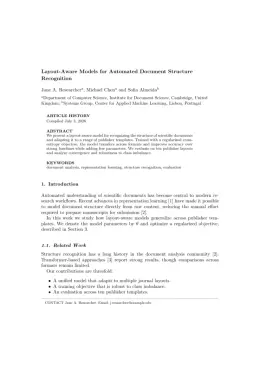
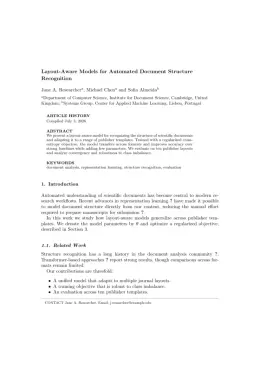
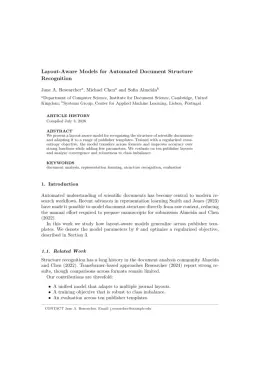
Journal of Extracellular Vesicles Template

Write in a clean editor, then format for Journal of Extracellular Vesicles in one click — DocuGuru applies the official Taylor & Francis template with author–year references and exports a submission-ready PDF plus the editable LaTeX source. Free to start.

About the Journal of Extracellular Vesicles format

Journal of Extracellular Vesicles is a peer-reviewed journal published by Taylor & Francis, covering Extracellular vesicles in disease, MicroRNA in disease regulation, RNA Interference and Gene Delivery.

PublisherTaylor & Francis
Reference styleAuthor–year (Chicago, T&F)
Author–year — (Smith, 2023) in the text
Smith, Ada, Ben Jones, and Cara Lee. 2023. "A Representative Article Title." Journal of Extracellular Vesicles 12 (3): 45–58.

Formats any DOI in Journal of Extracellular Vesicles style. No sign-up.

Publishes research inExtracellular vesicles in disease MicroRNA in disease regulation RNA Interference and Gene Delivery Cell Adhesion Molecules Research Nanoplatforms for cancer theranostics
ISSN2001-3078
Citation impact (2-yr)18.87
h-index171
i10-index890
Total citations129,557
Article processing charge$3,850
Open accessYes
Top institutions publishing hereInserm
Journal websiteonlinelibrary.wiley.com
You getA submission-ready PDF and the editable LaTeX source — ready to submit.

Papers published in Journal of Extracellular Vesicles per year

42
2014
49
2015
32
2016
47
2017
47
2018
91
2019
113
2020
130
2021
130
2022
117
2023
165
2024
208
2025

Citation impact of Journal of Extracellular Vesicles by publication year

13.2K
2014
17.9K
2015
6.2K
2016
7.1K
2017
17.4K
2018
11.5K
2019
10.5K
2020
12K
2021
7.8K
2022
4.3K
2023
7.4K
2024
1.4K
2025

Citations each year’s papers have accumulated so far — the most recent years are still building up.

Most-cited papers in Journal of Extracellular Vesicles

Minimal information for studies of extracellular vesicles 2018 (MISEV2018): a position statement of the International Society for Extracellular Vesicles and update of the MISEV2014 guidelines

Clotilde Théry, Kenneth W. Witwer, Elena Aïkawa et al. · 23 Nov 2018

The last decade has seen a sharp increase in the number of scientific publications describing physiological and pathological functions of extracellular vesicles (EVs), a collective term covering various subtypes of cell-released, membranous structures, called exosomes, microvesicles, microparticles, ectosomes, oncosomes, apoptotic bodies, and many other names. However, specific issues arise when working with these entities, whose…

11,274 citations Cite SaveGo to paper →
Biological properties of extracellular vesicles and their physiological functions

María Yáñez‐Mó, Pia Siljander, Zoraida Andreu et al. · 1 Jan 2015

In the past decade, extracellular vesicles (EVs) have been recognized as potent vehicles of intercellular communication, both in prokaryotes and eukaryotes. This is due to their capacity to transfer proteins, lipids and nucleic acids, thereby influencing various physiological and pathological functions of both recipient and parent cells. While intensive investigation has targeted the role of…

6,017 citations Cite SaveGo to paper →
Minimal information for studies of extracellular vesicles (MISEV2023): From basic to advanced approaches

Joshua A Welsh, Deborah C. I. Goberdhan, Lorraine O’Driscoll et al. · 1 Feb 2024

Extracellular vesicles (EVs), through their complex cargo, can reflect the state of their cell of origin and change the functions and phenotypes of other cells. These features indicate strong biomarker and therapeutic potential and have generated broad interest, as evidenced by the steady year-on-year increase in the numbers of scientific publications about EVs. Important advances…

3,831 citations Cite SaveGo to paper →
Routes and mechanisms of extracellular vesicle uptake

Laura Ann Mulcahy, Ryan Pink, David Raul Francisco Carter · 1 Jan 2014

Extracellular vesicles (EVs) are small vesicles released by donor cells that can be taken up by recipient cells. Despite their discovery decades ago, it has only recently become apparent that EVs play an important role in cell-to-cell communication. EVs can carry a range of nucleic acids and proteins which can have a significant impact on…

2,806 citations Cite SaveGo to paper →
Minimal experimental requirements for definition of extracellular vesicles and their functions: a position statement from the International Society for Extracellular Vesicles

Jan Lötvall, Andrew F. Hill, Fred H. Hochberg et al. · 1 Jan 2014

Secreted membrane-enclosed vesicles, collectively called extracellular vesicles (EVs), which include exosomes, ectosomes, microvesicles, microparticles, apoptotic bodies and other EV subsets, encompass a very rapidly growing scientific field in biology and medicine. Importantly, it is currently technically challenging to obtain a totally pure EV fraction free from non-vesicular components for functional studies, and therefore there is…

2,698 citations Cite SaveGo to paper →

Journal of Extracellular Vesicles template — frequently asked questions

How do I write a paper in the Journal of Extracellular Vesicles format?
In DocuGuru you write your manuscript in a normal editor — no LaTeX setup required — and select the Journal of Extracellular Vesicles template. When you export, DocuGuru compiles the paper into the official Taylor & Francis format and hands you a submission-ready PDF along with the editable LaTeX source.
What reference style does Journal of Extracellular Vesicles use?
Journal of Extracellular Vesicles uses Author–year (Chicago, T&F) references, shown as author–year markers such as (Smith, 2023) in the text. DocuGuru formats every in-text citation and the reference list in this exact style automatically. A reference appears like this: Smith, Ada, Ben Jones, and Cara Lee. 2023. "A Representative Article Title." Journal of Extracellular Vesicles 12 (3): 45–58.
Do I need to know LaTeX to submit to Journal of Extracellular Vesicles?
No. DocuGuru generates the interact LaTeX class and compiles the PDF for you in the background, so you get a Taylor & Francis-ready Journal of Extracellular Vesicles document without writing any LaTeX. If you do want it, the LaTeX source is included in the export.
Can I import an existing draft into the Journal of Extracellular Vesicles template?
Yes. Paste or upload your current manuscript — Word, LaTeX, Markdown, or plain text — and DocuGuru reflows it into the Journal of Extracellular Vesicles format with correct headings, figures, tables, and author–year citations.
Who publishes Journal of Extracellular Vesicles?
Journal of Extracellular Vesicles is a multidisciplinary journal published by Taylor & Francis. DocuGuru's Journal of Extracellular Vesicles template matches Taylor & Francis's official submission format.
Can I export a submission-ready Journal of Extracellular Vesicles PDF?
Yes — DocuGuru produces a PDF built with the official Journal of Extracellular Vesicles template (the interact class) that is ready to submit to Taylor & Francis, together with the matching LaTeX source files.
How much does the Journal of Extracellular Vesicles template cost?
You can start writing in the Journal of Extracellular Vesicles template for free. Exporting the final submission-ready Journal of Extracellular Vesicles PDF and LaTeX source is part of DocuGuru's paid plans — see the app for current pricing.
Use the Journal of Extracellular Vesicles template