Taylor & Francis

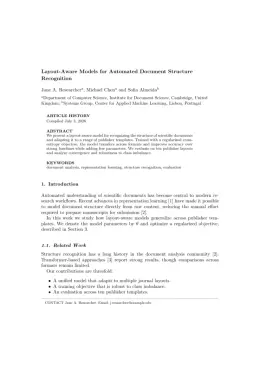
Journal of Enzyme Inhibition and Medicinal Chemistry Template

Write in a clean editor, then format for Journal of Enzyme Inhibition and Medicinal Chemistry in one click — DocuGuru applies the official Taylor & Francis template with author–year references and exports a submission-ready PDF plus the editable LaTeX source. Free to start.

About the Journal of Enzyme Inhibition and Medicinal Chemistry format

Journal of Enzyme Inhibition and Medicinal Chemistry is a peer-reviewed journal published by Taylor & Francis, covering Synthesis and biological activity, Enzyme function and inhibition, Cholinesterase and Neurodegenerative Diseases.

PublisherTaylor & Francis
Reference styleAuthor–year (Chicago, T&F)
Author–year — (Smith, 2023) in the text
Smith, Ada, Ben Jones, and Cara Lee. 2023. "A Representative Article Title." Journal of Enzyme Inhibition and Medicinal Chemistry 12 (3): 45–58.

Formats any DOI in Journal of Enzyme Inhibition and Medicinal Chemistry style. No sign-up.

Publishes research inSynthesis and biological activity Enzyme function and inhibition Cholinesterase and Neurodegenerative Diseases Synthesis and Catalytic Reactions Computational Drug Discovery Methods
ISSN1475-6366
Citation impact (2-yr)3.52
h-index107
i10-index2,398
Total citations97,535
Article processing charge$2,306
Open accessYes
Top institutions publishing hereUniversity of Florence
Journal websitewww.tandfonline.com
You getA submission-ready PDF and the editable LaTeX source — ready to submit.

Papers published in Journal of Enzyme Inhibition and Medicinal Chemistry per year

130
2014
186
2015
188
2016
158
2017
155
2018
188
2019
169
2020
192
2021
207
2022
196
2023
74
2024
112
2025

Citation impact of Journal of Enzyme Inhibition and Medicinal Chemistry by publication year

3.8K
2014
7.1K
2015
7.2K
2016
7.7K
2017
4.7K
2018
7.5K
2019
5.1K
2020
5K
2021
4.6K
2022
3K
2023
508
2024
324
2025

Citations each year’s papers have accumulated so far — the most recent years are still building up.

Most-cited papers in Journal of Enzyme Inhibition and Medicinal Chemistry

A comprehensive review on tyrosinase inhibitors

Samaneh Zolghadri, Asieh Bahrami, Mahmud Tareq Hassan Khan et al. · 1 Jan 2019

Tyrosinase is a multi-copper enzyme which is widely distributed in different organisms and plays an important role in the melanogenesis and enzymatic browning. Therefore, its inhibitors can be attractive in cosmetics and medicinal industries as depigmentation agents and also in food and agriculture industries as antibrowning compounds. For this purpose, many natural, semi-synthetic and synthetic…

1,044 citations Cite SaveGo to paper →
Matrix metalloproteinases (MMPs), the main extracellular matrix (ECM) enzymes in collagen degradation, as a target for anticancer drugs

Agata Jabłońska‐Trypuć, Marzena Matejczyk, S. J. Rosochacki · 30 Mar 2016

The main group of enzymes responsible for the collagen and other protein degradation in extracellular matrix (ECM) are matrix metalloproteinases (MMPs). Collagen is the main structural component of connective tissue and its degradation is a very important process in the development, morphogenesis, tissue remodeling, and repair. Typical structure of MMPs consists of several distinct domains.…

1,038 citations Cite SaveGo to paper →
Skin whitening agents: medicinal chemistry perspective of tyrosinase inhibitors

Thanigaimalai Pillaiyar, Manoj Manickam, Vigneshwaran Namasivayam · 1 Jan 2017

Melanogenesis is a process to synthesize melanin, which is a primary responsible for the pigmentation of human skin, eye and hair. Although numerous enzymatic catalyzed and chemical reactions are involved in melanogenesis process, the enzymes such as tyrosinase and tyrosinase-related protein-1 (TRP-1) and TRP-2 played a major role in melanin synthesis. Specifically, tyrosinase is a…

The role of fluorine in medicinal chemistry

Poonam Shah, Andrew D. Westwell · 1 Jan 2007

The small and highly electronegative fluorine atom can play a remarkable role in medicinal chemistry. Selective installation of fluorine into a therapeutic or diagnostic small molecule candidate can enhance a number of pharmacokinetic and physicochemical properties such as improved metabolic stability and enhanced membrane permeation. Increased binding affinity of fluorinated drug candidates to target protein…

How many carbonic anhydrase inhibition mechanisms exist?

Claudiu T. Supuran · 30 Nov 2015

Six genetic families of the enzyme carbonic anhydrase (CA, EC 4.2.1.1) were described to date. Inhibition of CAs has pharmacologic applications in the field of antiglaucoma, anticonvulsant, anticancer, and anti-infective agents. New classes of CA inhibitors (CAIs) were described in the last decade with enzyme inhibition mechanisms differing considerably from the classical inhibitors of the…

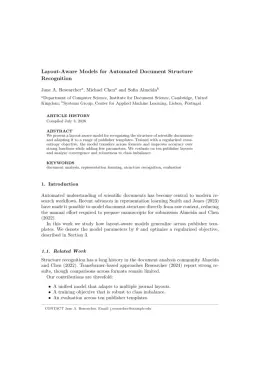
Journal of Enzyme Inhibition and Medicinal Chemistry template — frequently asked questions

How do I write a paper in the Journal of Enzyme Inhibition and Medicinal Chemistry format?
In DocuGuru you write your manuscript in a normal editor — no LaTeX setup required — and select the Journal of Enzyme Inhibition and Medicinal Chemistry template. When you export, DocuGuru compiles the paper into the official Taylor & Francis format and hands you a submission-ready PDF along with the editable LaTeX source.
What reference style does Journal of Enzyme Inhibition and Medicinal Chemistry use?
Journal of Enzyme Inhibition and Medicinal Chemistry uses Author–year (Chicago, T&F) references, shown as author–year markers such as (Smith, 2023) in the text. DocuGuru formats every in-text citation and the reference list in this exact style automatically. A reference appears like this: Smith, Ada, Ben Jones, and Cara Lee. 2023. "A Representative Article Title." Journal of Enzyme Inhibition and Medicinal Chemistry 12 (3): 45–58.
Do I need to know LaTeX to submit to Journal of Enzyme Inhibition and Medicinal Chemistry?
No. DocuGuru generates the interact LaTeX class and compiles the PDF for you in the background, so you get a Taylor & Francis-ready Journal of Enzyme Inhibition and Medicinal Chemistry document without writing any LaTeX. If you do want it, the LaTeX source is included in the export.
Can I import an existing draft into the Journal of Enzyme Inhibition and Medicinal Chemistry template?
Yes. Paste or upload your current manuscript — Word, LaTeX, Markdown, or plain text — and DocuGuru reflows it into the Journal of Enzyme Inhibition and Medicinal Chemistry format with correct headings, figures, tables, and author–year citations.
Who publishes Journal of Enzyme Inhibition and Medicinal Chemistry?
Journal of Enzyme Inhibition and Medicinal Chemistry is a multidisciplinary journal published by Taylor & Francis. DocuGuru's Journal of Enzyme Inhibition and Medicinal Chemistry template matches Taylor & Francis's official submission format.
Can I export a submission-ready Journal of Enzyme Inhibition and Medicinal Chemistry PDF?
Yes — DocuGuru produces a PDF built with the official Journal of Enzyme Inhibition and Medicinal Chemistry template (the interact class) that is ready to submit to Taylor & Francis, together with the matching LaTeX source files.
How much does the Journal of Enzyme Inhibition and Medicinal Chemistry template cost?
You can start writing in the Journal of Enzyme Inhibition and Medicinal Chemistry template for free. Exporting the final submission-ready Journal of Enzyme Inhibition and Medicinal Chemistry PDF and LaTeX source is part of DocuGuru's paid plans — see the app for current pricing.
Use the Journal of Enzyme Inhibition and Medicinal Chemistry template