Taylor & Francis

Journal of Cognitive Psychology Template

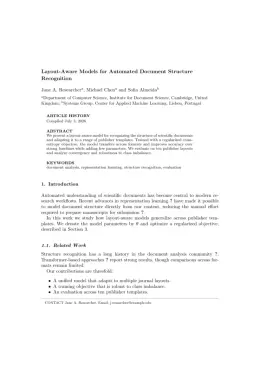
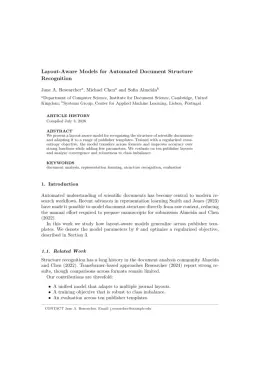
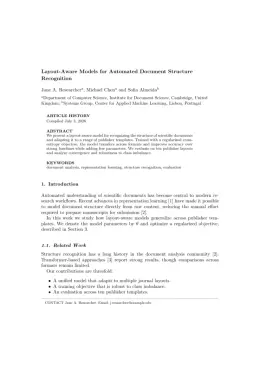
Write in a clean editor, then format for Journal of Cognitive Psychology in one click — DocuGuru applies the official Taylor & Francis template with author–year references and exports a submission-ready PDF plus the editable LaTeX source. Free to start.

About the Journal of Cognitive Psychology format

Journal of Cognitive Psychology is a peer-reviewed journal published by Taylor & Francis, covering Neural and Behavioral Psychology Studies, Memory Processes and Influences, Reading and Literacy Development.

PublisherTaylor & Francis
Reference styleAuthor–year (Chicago, T&F)
Author–year — (Smith, 2023) in the text
Smith, Ada, Ben Jones, and Cara Lee. 2023. "A Representative Article Title." Journal of Cognitive Psychology 12 (3): 45–58.

Formats any DOI in Journal of Cognitive Psychology style. No sign-up.

Publishes research inNeural and Behavioral Psychology Studies Memory Processes and Influences Reading and Literacy Development Neurobiology of Language and Bilingualism Child and Animal Learning Development
ISSN2044-5911
Citation impact (2-yr)1.81
h-index62
i10-index461
Total citations20,438
Top institutions publishing hereCentre National de la Recherche Scientifique
Journal websitewww.tandfonline.com
You getA submission-ready PDF and the editable LaTeX source — ready to submit.

Papers published in Journal of Cognitive Psychology per year

81
2014
77
2015
80
2016
72
2017
53
2018
66
2019
66
2020
79
2021
63
2022
47
2023
74
2024
58
2025

Citation impact of Journal of Cognitive Psychology by publication year

2.1K
2014
2K
2015
1.5K
2016
978
2017
525
2018
837
2019
611
2020
662
2021
302
2022
241
2023
195
2024
62
2025

Citations each year’s papers have accumulated so far — the most recent years are still building up.

Most-cited papers in Journal of Cognitive Psychology

Language control in bilinguals: The adaptive control hypothesis

David W. Green, Jubin Abutalebi · 24 May 2013

Speech comprehension and production are governed by control processes. We explore their nature and dynamics in bilingual speakers with a focus on speech production. Prior research indicates that individuals increase cognitive control in order to achieve a desired goal. In the adaptive control hypothesis we propose a stronger hypothesis: Language control processes themselves adapt to…

1,778 citations Cite SaveGo to paper →
Bilingualism is not a categorical variable: Interaction between language proficiency and usage

Gigi Luk, Ellen Bialystok · 16 May 2013

Bilingual experience is dynamic and poses a challenge for researchers to develop instruments that capture its relevant dimensions. The present study examined responses from a questionnaire administered to 110 heterogeneous bilingual young adults. These questions concern participants' language use, acquisition history and self-reported proficiency. The questionnaire responses and performances on standardized English proficiency measures were…

Understanding the consequences of bilingualism for language processing and cognition

Judith F. Kroll, Ellen Bialystok · 22 May 2013

Contemporary research on bilingualism has been framed by two major discoveries. In the realm of language processing, studies of comprehension and production show that bilinguals activate information about both languages when using one language alone. Parallel activation of the two languages has been demonstrated for highly proficient bilinguals as well as second language learners and…

Neural correlates of emotion–cognition interactions: A review of evidence from brain imaging investigations

Florin Dolcos, Alexandru D. Iordan, Sanda Dolcos · 1 Sep 2011

Complex dynamic behaviour involves reciprocal influences between emotion and cognition. On the one hand, emotion is a "double-edged sword" that may affect various aspects of our cognition and behaviour, by enhancing or hindering them and exerting both transient and long-term influences. On the other hand, emotion processing is also susceptible to cognitive influences, typically exerted…

Language switching in picture naming: What asymmetric switch costs (do not) tell us about inhibition in bilingual speech planning

Susan C. Bobb, Zofia Wodniecka · 16 Jul 2013

Meuter and Allport (1999) were among the first to implicate an inhibitory mechanism in bilingual language control. In their study, bilinguals took longer to name a number in the L1 directly following an L2 naming trial than to name a number in the L2 following an L1 naming trial, suggesting that bilinguals suppress the more…

Journal of Cognitive Psychology template — frequently asked questions

How do I write a paper in the Journal of Cognitive Psychology format?
In DocuGuru you write your manuscript in a normal editor — no LaTeX setup required — and select the Journal of Cognitive Psychology template. When you export, DocuGuru compiles the paper into the official Taylor & Francis format and hands you a submission-ready PDF along with the editable LaTeX source.
What reference style does Journal of Cognitive Psychology use?
Journal of Cognitive Psychology uses Author–year (Chicago, T&F) references, shown as author–year markers such as (Smith, 2023) in the text. DocuGuru formats every in-text citation and the reference list in this exact style automatically. A reference appears like this: Smith, Ada, Ben Jones, and Cara Lee. 2023. "A Representative Article Title." Journal of Cognitive Psychology 12 (3): 45–58.
Do I need to know LaTeX to submit to Journal of Cognitive Psychology?
No. DocuGuru generates the interact LaTeX class and compiles the PDF for you in the background, so you get a Taylor & Francis-ready Journal of Cognitive Psychology document without writing any LaTeX. If you do want it, the LaTeX source is included in the export.
Can I import an existing draft into the Journal of Cognitive Psychology template?
Yes. Paste or upload your current manuscript — Word, LaTeX, Markdown, or plain text — and DocuGuru reflows it into the Journal of Cognitive Psychology format with correct headings, figures, tables, and author–year citations.
Who publishes Journal of Cognitive Psychology?
Journal of Cognitive Psychology is a multidisciplinary journal published by Taylor & Francis. DocuGuru's Journal of Cognitive Psychology template matches Taylor & Francis's official submission format.
Can I export a submission-ready Journal of Cognitive Psychology PDF?
Yes — DocuGuru produces a PDF built with the official Journal of Cognitive Psychology template (the interact class) that is ready to submit to Taylor & Francis, together with the matching LaTeX source files.
How much does the Journal of Cognitive Psychology template cost?
You can start writing in the Journal of Cognitive Psychology template for free. Exporting the final submission-ready Journal of Cognitive Psychology PDF and LaTeX source is part of DocuGuru's paid plans — see the app for current pricing.

Use the Journal of Cognitive Psychology template