Taylor & Francis

Journal of Biomaterials Science Polymer Edition Template

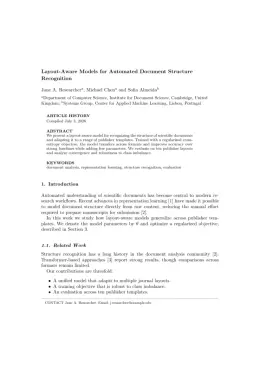
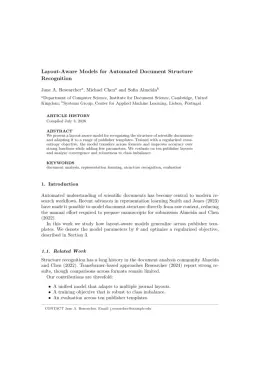
Write in a clean editor, then format for Journal of Biomaterials Science Polymer Edition in one click — DocuGuru applies the official Taylor & Francis template with numbered references and exports a submission-ready PDF plus the editable LaTeX source. Free to start.

About the Journal of Biomaterials Science Polymer Edition format

Journal of Biomaterials Science Polymer Edition is a peer-reviewed journal published by Taylor & Francis, covering Electrospun Nanofibers in Biomedical Applications, Bone Tissue Engineering Materials, Polymer Surface Interaction Studies.

PublisherTaylor & Francis
Reference styleNumbered (Vancouver/NLM)
Numbered — [1], [2] in the text
1. Smith A, Jones B, Lee C. A representative article title. Journal of Biomaterials Science Polymer Edition. 2023;12(3):45–58.

Formats any DOI in Journal of Biomaterials Science Polymer Edition style. No sign-up.

Publishes research inElectrospun Nanofibers in Biomedical Applications Bone Tissue Engineering Materials Polymer Surface Interaction Studies biodegradable polymer synthesis and properties Hydrogels: synthesis, properties, applications
ISSN0920-5063
Citation impact (2-yr)3.39
h-index128
i10-index2,663
Total citations118,181
Top institutions publishing hereHacettepe University
Journal websitewww.tandfonline.com
You getA submission-ready PDF and the editable LaTeX source — ready to submit.

Papers published in Journal of Biomaterials Science Polymer Edition per year

121
2014
114
2015
132
2016
170
2017
114
2018
118
2019
144
2020
128
2021
132
2022
89
2023
164
2024
189
2025

Citation impact of Journal of Biomaterials Science Polymer Edition by publication year

2.8K
2014
3K
2015
2.9K
2016
4.9K
2017
2.7K
2018
3.2K
2019
3K
2020
2.3K
2021
2.2K
2022
825
2023
996
2024
401
2025

Citations each year’s papers have accumulated so far — the most recent years are still building up.

Most-cited papers in Journal of Biomaterials Science Polymer Edition

Scaffold design and fabrication technologies for engineering tissues — state of the art and future perspectives

Dietmar W. Hutmacher · 1 Jan 2001

Today, tissue engineers are attempting to engineer virtually every human tissue. Potential tissue-engineered products include cartilage, bone, heart valves, nerves, muscle, bladder, liver, etc. Tissue engineering techniques generally require the use of a porous scaffold, which serves as a three-dimensional template for initial cell attachment and subsequent tissue formation both in vitro and in vivo.…

1,406 citations Cite SaveGo to paper →
Nanostructured materials for applications in drug delivery and tissue engineering

Michael S. Goldberg, Róbert Langer, Xinqiao Jia · 1 Jan 2007

Research in the areas of drug delivery and tissue engineering has witnessed tremendous progress in recent years due to their unlimited potential to improve human health. Meanwhile, the development of nanotechnology provides opportunities to characterize, manipulate and organize matter systematically at the nanometer scale. Biomaterials with nano-scale organizations have been used as controlled release reservoirs…

1,048 citations Cite SaveGo to paper →
PCL and PCL-based materials in biomedical applications

Elbay Malikmammadov, Tuğba Endoğan Tanır, Aysel Kızıltay et al. · 20 Oct 2017

Biodegradable polymers have met with an increasing demand in medical usage over the last decades. One of such polymers is poly(ε-caprolactone) (PCL), which is a polyester that has been widely used in tissue engineering field for its availability, relatively inexpensive price and suitability for modification. Its chemical and biological properties, physicochemical state, degradability and mechanical…

Cytocompatibility of UV and visible light photoinitiating systems on cultured NIH/3T3 fibroblasts in vitro

Stephanie J. Bryant, Charles R. Nuttelman, Kristi S. Anseth · 1 Jan 2000

This work investigates the cytocompatibility of several photoinitiating systems for potential cell encapsulation applications. Both UV and visible light initiating schemes were examined. The UV photoinitiators included 2,2-dimethoxy-2-phenylacetophenone (Irgacure 651), 1-hydroxycyclohexyl phenyl ketone (Irgacure 184), 2-methyl-1-[4-(methylthio) phenyl]-2-(4-morpholinyl)-1-propanone (Irgacure 907), and 2-hydroxy-1-[4-(hydroxyethoxy)phenyl]-2-methyl-1-propanone (Darocur 2959). The visible light initiating systems included camphorquinone (CQ) with ethyl 4-N,N-dimethylaminobenzoate (4EDMAB)…

Synthesis and characterization of PLGA nanoparticles

Carlos E. Astete, Cristina M. Sabliov · 1 Jan 2006

Poly(lactide-co-glycolide) (PLGA) nanoparticles of different physical characteristics (size, size distribution, morphology, zeta potential) can be synthesized by controlling the parameters specific to the synthesis method employed. The aim of this review is to clearly, quantitatively and comprehensively describe the top-down synthesis techniques available for PLGA nanoparticle formation, as well as the techniques commonly used for…

Journal of Biomaterials Science Polymer Edition template — frequently asked questions

How do I write a paper in the Journal of Biomaterials Science Polymer Edition format?
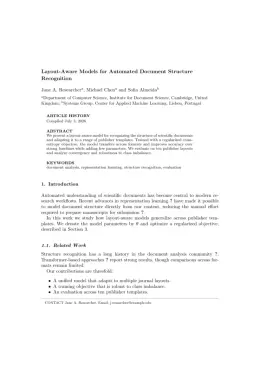
In DocuGuru you write your manuscript in a normal editor — no LaTeX setup required — and select the Journal of Biomaterials Science Polymer Edition template. When you export, DocuGuru compiles the paper into the official Taylor & Francis format and hands you a submission-ready PDF along with the editable LaTeX source.
What reference style does Journal of Biomaterials Science Polymer Edition use?
Journal of Biomaterials Science Polymer Edition uses Numbered (Vancouver/NLM) references, shown as numbered [1], [2] markers in the text. DocuGuru formats every in-text citation and the reference list in this exact style automatically. A reference appears like this: 1. Smith A, Jones B, Lee C. A representative article title. Journal of Biomaterials Science Polymer Edition. 2023;12(3):45–58.
Do I need to know LaTeX to submit to Journal of Biomaterials Science Polymer Edition?
No. DocuGuru generates the interact LaTeX class and compiles the PDF for you in the background, so you get a Taylor & Francis-ready Journal of Biomaterials Science Polymer Edition document without writing any LaTeX. If you do want it, the LaTeX source is included in the export.
Can I import an existing draft into the Journal of Biomaterials Science Polymer Edition template?
Yes. Paste or upload your current manuscript — Word, LaTeX, Markdown, or plain text — and DocuGuru reflows it into the Journal of Biomaterials Science Polymer Edition format with correct headings, figures, tables, and numbered citations.
Who publishes Journal of Biomaterials Science Polymer Edition?
Journal of Biomaterials Science Polymer Edition is a multidisciplinary journal published by Taylor & Francis. DocuGuru's Journal of Biomaterials Science Polymer Edition template matches Taylor & Francis's official submission format.
Can I export a submission-ready Journal of Biomaterials Science Polymer Edition PDF?
Yes — DocuGuru produces a PDF built with the official Journal of Biomaterials Science Polymer Edition template (the interact class) that is ready to submit to Taylor & Francis, together with the matching LaTeX source files.
How much does the Journal of Biomaterials Science Polymer Edition template cost?
You can start writing in the Journal of Biomaterials Science Polymer Edition template for free. Exporting the final submission-ready Journal of Biomaterials Science Polymer Edition PDF and LaTeX source is part of DocuGuru's paid plans — see the app for current pricing.
Use the Journal of Biomaterials Science Polymer Edition template