Taylor & Francis

Journal of Asian Natural Products Research Template

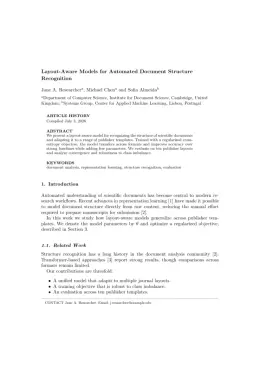
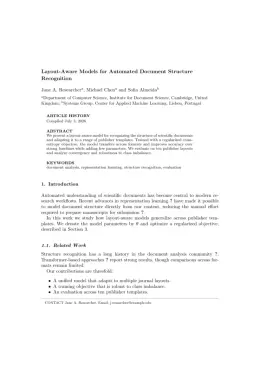
Write in a clean editor, then format for Journal of Asian Natural Products Research in one click — DocuGuru applies the official Taylor & Francis template with numbered references and exports a submission-ready PDF plus the editable LaTeX source. Free to start.

About the Journal of Asian Natural Products Research format

Journal of Asian Natural Products Research is a peer-reviewed journal published by Taylor & Francis, covering Natural product bioactivities and synthesis, Phytochemistry and Biological Activities, Microbial Natural Products and Biosynthesis.

PublisherTaylor & Francis
Reference styleNumbered (Vancouver/NLM)
Numbered — [1], [2] in the text
1. Smith A, Jones B, Lee C. A representative article title. Journal of Asian Natural Products Research. 2023;12(3):45–58.

Formats any DOI in Journal of Asian Natural Products Research style. No sign-up.

Publishes research inNatural product bioactivities and synthesis Phytochemistry and Biological Activities Microbial Natural Products and Biosynthesis Traditional and Medicinal Uses of Annonaceae Phytochemical compounds biological activities
ISSN1028-6020
Citation impact (2-yr)1.64
h-index56
i10-index1,684
Total citations44,262
Top institutions publishing hereChinese Academy of Medical Sciences & Peking Union Medical College
Journal websitewww.tandfonline.com
You getA submission-ready PDF and the editable LaTeX source — ready to submit.

Papers published in Journal of Asian Natural Products Research per year

173
2014
165
2015
173
2016
195
2017
150
2018
137
2019
117
2020
119
2021
125
2022
82
2023
170
2024
167
2025

Citation impact of Journal of Asian Natural Products Research by publication year

2.5K
2014
2.2K
2015
2.3K
2016
2.5K
2017
1.8K
2018
1.2K
2019
1.2K
2020
860
2021
465
2022
284
2023
473
2024
157
2025

Citations each year’s papers have accumulated so far — the most recent years are still building up.

Most-cited papers in Journal of Asian Natural Products Research

Natural products – antifungal agents derived from plants

Tasleem Arif, Jitendra D. Bhosale, Naresh Kumar et al. · 1 Jul 2009

A new spectrum of human fungal infections is increasing due to increased cancer, AIDS, and immunocompromised patients. The increased use of antifungal agents also resulted in the development of resistance to the present drugs. It makes necessary to discover new classes of antifungal compounds to cure fungal infections. Plants are rich source of bioactive secondary…

1,8-Cineole: a review of source, biological activities, and application

Zimin Cai, Jianqing Peng, Yi Chen et al. · 28 Oct 2020

1,8-Cineole (also known as eucalyptol) is mostly extracted from the essential oils of plants, which showed extensively pharmacological properties including anti-inflammatory and antioxidant mainly via the regulation on NF-κB and Nrf2, and was used for the treatment of respiratory diseases and cardiovascular, etc. Although various administration routes have been used in the application of 1.8-cineole,…

Antihyperglycemic Effects of Gymnemic Acid IV, a Compound Derived from<i>Gymnema sylvestre</i>Leaves in Streptozotocin-Diabetic Mice

Y. SUGIHARA, Hiroshi Nojima, Hisashi Matsuda et al. · 1 Dec 2000

We investigated the antihyperglycemic action of a crude saponin fraction and five triterpene glycosides (gymnemic acids I-IV and gymnemasaponin V) derived from the methanol extract of leaves of Gymnema sylvestre R. BR. (Asclepiadaceae) in streptozotocin (STZ)-diabetic mice. The saponin fraction (60mg/kg) reduced blood glucose levels 2 4h after the intraperitoneal administration. Gymnemic acid IV, not…

Flavonoids from<i>Vitex trifolia</i>L. inhibit cell cycle progression at G<sub>2</sub>/M phase and induce apoptosis in mammalian cancer cells

Wenxin Li, Cheng‐Bin Cui, Bing Cai et al. · 1 Aug 2005

Six flavonoids, persicogenin (1), artemetin (2), luteolin (3), penduletin (4), vitexicarpin (5) and chrysosplenol-D (6), have been isolated for the first time as new cell cycle inhibitors from Vitex trifolia L., a Chinese folk medicine used to treat cancers, through a bioassay-guided separation procedure. They were identified by spectroscopic methods. The inhibitory effects of 1-6…

Antidepressant-like effects of piperine and its derivative, antiepilepsirine

Song Li, Che Wang, Wei Li et al. · 1 Jul 2007

In the present study, antidepressant-like effects of piperine (PIP) and its derivative, antiepilepsirine (AES), were investigated in two depressive models: forced swimming test (FST) and tail suspension test (TST). To further explore the mechanisms underlying their antidepressant-like activities, the brain monoamine levels and monoamine oxidase A and B (MAO-A and MAO-B) activities were also determined.…

Journal of Asian Natural Products Research template — frequently asked questions

How do I write a paper in the Journal of Asian Natural Products Research format?
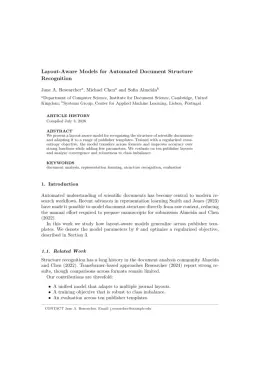
In DocuGuru you write your manuscript in a normal editor — no LaTeX setup required — and select the Journal of Asian Natural Products Research template. When you export, DocuGuru compiles the paper into the official Taylor & Francis format and hands you a submission-ready PDF along with the editable LaTeX source.
What reference style does Journal of Asian Natural Products Research use?
Journal of Asian Natural Products Research uses Numbered (Vancouver/NLM) references, shown as numbered [1], [2] markers in the text. DocuGuru formats every in-text citation and the reference list in this exact style automatically. A reference appears like this: 1. Smith A, Jones B, Lee C. A representative article title. Journal of Asian Natural Products Research. 2023;12(3):45–58.
Do I need to know LaTeX to submit to Journal of Asian Natural Products Research?
No. DocuGuru generates the interact LaTeX class and compiles the PDF for you in the background, so you get a Taylor & Francis-ready Journal of Asian Natural Products Research document without writing any LaTeX. If you do want it, the LaTeX source is included in the export.
Can I import an existing draft into the Journal of Asian Natural Products Research template?
Yes. Paste or upload your current manuscript — Word, LaTeX, Markdown, or plain text — and DocuGuru reflows it into the Journal of Asian Natural Products Research format with correct headings, figures, tables, and numbered citations.
Who publishes Journal of Asian Natural Products Research?
Journal of Asian Natural Products Research is a multidisciplinary journal published by Taylor & Francis. DocuGuru's Journal of Asian Natural Products Research template matches Taylor & Francis's official submission format.
Can I export a submission-ready Journal of Asian Natural Products Research PDF?
Yes — DocuGuru produces a PDF built with the official Journal of Asian Natural Products Research template (the interact class) that is ready to submit to Taylor & Francis, together with the matching LaTeX source files.
How much does the Journal of Asian Natural Products Research template cost?
You can start writing in the Journal of Asian Natural Products Research template for free. Exporting the final submission-ready Journal of Asian Natural Products Research PDF and LaTeX source is part of DocuGuru's paid plans — see the app for current pricing.
Use the Journal of Asian Natural Products Research template