Taylor & Francis

JAPCA Template

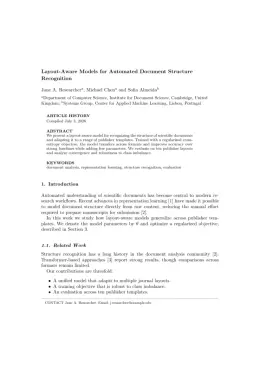
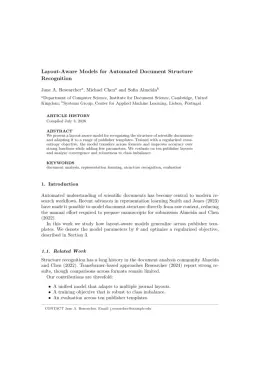
Write in a clean editor, then format for JAPCA in one click — DocuGuru applies the official Taylor & Francis template with author–year references and exports a submission-ready PDF plus the editable LaTeX source. Free to start.

About the JAPCA format

JAPCA is a peer-reviewed journal published by Taylor & Francis, covering Air Quality and Health Impacts, Air Quality Monitoring and Forecasting, Atmospheric chemistry and aerosols.

PublisherTaylor & Francis
Reference styleAuthor–year (Chicago, T&F)
Author–year — (Smith, 2023) in the text
Smith, Ada, Ben Jones, and Cara Lee. 2023. "A Representative Article Title." JAPCA 12 (3): 45–58.

Formats any DOI in JAPCA style. No sign-up.

Publishes research inAir Quality and Health Impacts Air Quality Monitoring and Forecasting Atmospheric chemistry and aerosols Vehicle emissions and performance Odor and Emission Control Technologies
ISSN0894-0630
h-index39
i10-index155
Total citations6,847
Top institutions publishing hereEnvironmental Protection Agency
Journal websitewww.tandfonline.com
You getA submission-ready PDF and the editable LaTeX source — ready to submit.

Papers published in JAPCA per year

142
1987
147
1988
150
1989
1
2013

Citation impact of JAPCA by publication year

2.4K
1987
1.8K
1988
2.7K
1989
3
2013

Citations each year’s papers have accumulated so far — the most recent years are still building up.

Most-cited papers in JAPCA

HEALTH EFFECTS OF OZONE A Critical Review

Morton Lippmann · 1 May 1989

Health and pollution control professionals and the general public need to develop a more complete understanding of the health effects of ozone (O3) because: 1) we have been unable to significantly reduce ambient O3 levels using current strategies and controls; 2) in areas occupied by more than half of the U.S. population, current peak ambient…

Toxic Trace Elements Associated with Airborne Particulate Matter: A Review

W. H. Schroeder, Miriam C. Dobson, David Kane et al. · 1 Nov 1987

This article provides a concise review of published literature pertaining to sampling and analytical methodologies, aerometric studies, source identification techniques and modeling activities for the elements arsenic, cadmium, nickel, lead, vanadium, zinc, cobalt, chromium, copper, iron, mercury, manganese, selenium and antimony, and their compounds, associated with airborne particulate matter. Sampling techniques discussed include filtration and…

Low Flow Rate Sharp Cut Impactors for Indoor Air Sampling: Design and Calibration

Virgil A. Marple, Kenneth L. Rubow, William Turner et al. · 1 Nov 1987

Two single round nozzle impactors have been developed for use in Harvard’s indoor air pollution health study. Both impactors operate at flow rates of 4 L/m and are nearly identical, differing only in their cut sizes of 2.5 μm and 10 μm aerodynamic diameters. Two identical cascaded stages of the same cut size are used…

Pulmonary Function and Symptom Responses after 6.6-Hour Exposure to 0.12 ppm Ozone with Moderate Exercise

Lawrence J. Folinsbee, William F. McDonnell, Donald H. Horstman · 1 Jan 1988

Episodes occasionally occur when ambient ozone (O3) levels remain at or near 0.12 ppm for more than 6 h. Small decrements In lung function have been reported following 2-h exposures to 0.12 ppm O3. For short exposures to higher O3 concentrations, lung function decrements are a function of exposure duration. Thus, we investigated the hypothesis…

Incineration Of Hazardous Waste

E. Timothy Oppelt · 1 May 1987

Abstract Over the last ten years, concern over improper disposal practices of the past has manifested itself in the passage of a series of federal and state-level hazardous waste clean-up and control statutes of unprecedented scope. The impact of these various statutes will be a significant modification of waste management practices. The more traditional and…

JAPCA template — frequently asked questions

How do I write a paper in the JAPCA format?
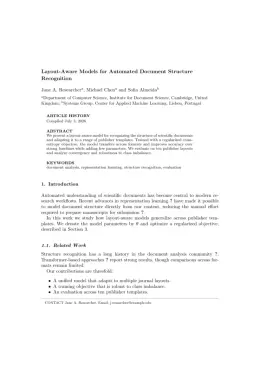
In DocuGuru you write your manuscript in a normal editor — no LaTeX setup required — and select the JAPCA template. When you export, DocuGuru compiles the paper into the official Taylor & Francis format and hands you a submission-ready PDF along with the editable LaTeX source.
What reference style does JAPCA use?
JAPCA uses Author–year (Chicago, T&F) references, shown as author–year markers such as (Smith, 2023) in the text. DocuGuru formats every in-text citation and the reference list in this exact style automatically. A reference appears like this: Smith, Ada, Ben Jones, and Cara Lee. 2023. "A Representative Article Title." JAPCA 12 (3): 45–58.
Do I need to know LaTeX to submit to JAPCA?
No. DocuGuru generates the interact LaTeX class and compiles the PDF for you in the background, so you get a Taylor & Francis-ready JAPCA document without writing any LaTeX. If you do want it, the LaTeX source is included in the export.
Can I import an existing draft into the JAPCA template?
Yes. Paste or upload your current manuscript — Word, LaTeX, Markdown, or plain text — and DocuGuru reflows it into the JAPCA format with correct headings, figures, tables, and author–year citations.
Who publishes JAPCA?
JAPCA is a multidisciplinary journal published by Taylor & Francis. DocuGuru's JAPCA template matches Taylor & Francis's official submission format.
Can I export a submission-ready JAPCA PDF?
Yes — DocuGuru produces a PDF built with the official JAPCA template (the interact class) that is ready to submit to Taylor & Francis, together with the matching LaTeX source files.
How much does the JAPCA template cost?
You can start writing in the JAPCA template for free. Exporting the final submission-ready JAPCA PDF and LaTeX source is part of DocuGuru's paid plans — see the app for current pricing.
Use the JAPCA template