Taylor & Francis

Japanese Journal of Rheumatology Template

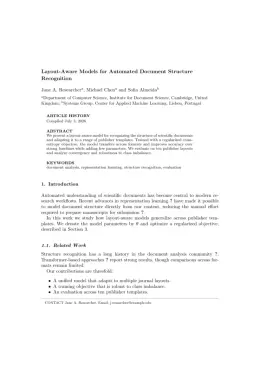
Write in a clean editor, then format for Japanese Journal of Rheumatology in one click — DocuGuru applies the official Taylor & Francis template with author–year references and exports a submission-ready PDF plus the editable LaTeX source. Free to start.

About the Japanese Journal of Rheumatology format

Japanese Journal of Rheumatology is a peer-reviewed journal published by Taylor & Francis, covering Systemic Lupus Erythematosus Research, Rheumatoid Arthritis Research and Therapies, Systemic Sclerosis and Related Diseases.

PublisherTaylor & Francis
Reference styleAuthor–year (Chicago, T&F)
Author–year — (Smith, 2023) in the text
Smith, Ada, Ben Jones, and Cara Lee. 2023. "A Representative Article Title." Japanese Journal of Rheumatology 12 (3): 45–58.

Formats any DOI in Japanese Journal of Rheumatology style. No sign-up.

Publishes research inSystemic Lupus Erythematosus Research Rheumatoid Arthritis Research and Therapies Systemic Sclerosis and Related Diseases T-cell and B-cell Immunology Monoclonal and Polyclonal Antibodies Research
ISSN0169-1163
h-index8
i10-index6
Total citations349
Top institutions publishing hereJuntendo University
Journal websitewww.tandfonline.com
You getA submission-ready PDF and the editable LaTeX source — ready to submit.

Papers published in Japanese Journal of Rheumatology per year

1
1989
1
1990
6
1991
1
1992
1
1993
4
1994
9
1995
21
1996
60
1997
92
1998
86
1999

Citation impact of Japanese Journal of Rheumatology by publication year

0
1989
0
1990
5
1991
0
1992
2
1993
5
1994
7
1995
28
1996
106
1997
85
1998
111
1999

Citations each year’s papers have accumulated so far — the most recent years are still building up.

Most-cited papers in Japanese Journal of Rheumatology

Matrix metalloproteinase 9 (MMP-9) in patients with rheumatoid arthritis

Masayuki Seki, Miwa Uzuki, Hiroshi Ohmoto et al. · 1 Sep 1997

MMP-9 degrades type IV collagen, gelatin, type V collagen, and type XI collagen. We measured proMMP-9 and proMMP-9/TIMP-1 complex in sera and joint fluids by sandwich ELISA, and examined immunohistochemically the expression of these proteins in joint tissue from patients with rheumatoid arthritis (RA). ProMMP-9 was purified by the three chromatographic steps from the culture…

Matrix metalloproteinase 9 (MMP-9) in patients with rheumatoid arthritis

Masayuki Seki, Miwa Uzuki, Hiroshi Ohmoto et al. · 1 Sep 1997

Matrix metalloproteinase 9 (MMP-9) degrades type IV collagen, gelatin, type V collagen and type XI collagen. We measured proMMP-9 and proMMP-9-TIMP-1 complex in sera and joint fluids by sandwich ELISA, and immunohistochemically examined the expression of this enzyme in joint tissues from patients with rheumatoid arthritis (RA). ProMMP-9 was purified from the culture medium of…

Molecular basis of joint development

F. Dell’ Accio, Cosimo De Bari, Frank P. Luyten · 1 Mar 1999

The introduction of the techniques of molecular biology has provided powerful tools in modern biomedical research including the field of developmental biology and new insights in the molecular pathways governing joint development. The critical signals involved in the joint formation process are also likely to be involved in the maintenance and repair of the joint…

Endoscopic evaluation of aceclofenac-induced gastroduodenal mucosal damage: a double-blind comparison with sodium diclofenac and placebo

Akira Yanagawa, Toru Endo, Koji Kusakari et al. · 1 Sep 1998

Gastroduodenal mucosal damage was endoscopically compared between aceclofenac, a non-steroidal anti-inflammatory drug, and sodium diclofenac or placebo in a double-blind clinical trial. Thirty healthy male volunteers received 150 mg/ day of aceclofenac, 75 mg/day of sodium diclofenac or placebo for 2 weeks. Aceclofenac caused significantly less gastropathy than sodium diclofenac, and placebo caused no gastropathy.…

Histopathological study of mixed connective tissue disease from 32 autopsy cases in Japan

Takashi Sawai, Kazuhiro Murakami, Reiji Kasukawa et al. · 1 Dec 1997

In order to identify the histological specificity of newly defined connective tissue disease, we examined 32 autopsy cases of mixed connective tissue disease (MCTD) which fulfilled the disease criteria proposed by the Japanese MCTD Committee. The age of the 32 cases ranged from 19 to 79 with an average age of 43 years. The male:…


Japanese Journal of Rheumatology template — frequently asked questions

How do I write a paper in the Japanese Journal of Rheumatology format?
In DocuGuru you write your manuscript in a normal editor — no LaTeX setup required — and select the Japanese Journal of Rheumatology template. When you export, DocuGuru compiles the paper into the official Taylor & Francis format and hands you a submission-ready PDF along with the editable LaTeX source.
What reference style does Japanese Journal of Rheumatology use?
Japanese Journal of Rheumatology uses Author–year (Chicago, T&F) references, shown as author–year markers such as (Smith, 2023) in the text. DocuGuru formats every in-text citation and the reference list in this exact style automatically. A reference appears like this: Smith, Ada, Ben Jones, and Cara Lee. 2023. "A Representative Article Title." Japanese Journal of Rheumatology 12 (3): 45–58.
Do I need to know LaTeX to submit to Japanese Journal of Rheumatology?
No. DocuGuru generates the interact LaTeX class and compiles the PDF for you in the background, so you get a Taylor & Francis-ready Japanese Journal of Rheumatology document without writing any LaTeX. If you do want it, the LaTeX source is included in the export.
Can I import an existing draft into the Japanese Journal of Rheumatology template?
Yes. Paste or upload your current manuscript — Word, LaTeX, Markdown, or plain text — and DocuGuru reflows it into the Japanese Journal of Rheumatology format with correct headings, figures, tables, and author–year citations.
Who publishes Japanese Journal of Rheumatology?
Japanese Journal of Rheumatology is a multidisciplinary journal published by Taylor & Francis. DocuGuru's Japanese Journal of Rheumatology template matches Taylor & Francis's official submission format.
Can I export a submission-ready Japanese Journal of Rheumatology PDF?
Yes — DocuGuru produces a PDF built with the official Japanese Journal of Rheumatology template (the interact class) that is ready to submit to Taylor & Francis, together with the matching LaTeX source files.
How much does the Japanese Journal of Rheumatology template cost?
You can start writing in the Japanese Journal of Rheumatology template for free. Exporting the final submission-ready Japanese Journal of Rheumatology PDF and LaTeX source is part of DocuGuru's paid plans — see the app for current pricing.
Use the Japanese Journal of Rheumatology template