
403 citations
Cite
SaveGo to paper →
Taylor & Francis
International Journal of Pest Management Part B Template
Write in a clean editor, then format for International Journal of Pest Management Part B in one click — DocuGuru applies the official Taylor & Francis template with author–year references and exports a submission-ready PDF plus the editable LaTeX source. Free to start.
About the International Journal of Pest Management Part B format
International Journal of Pest Management Part B is a peer-reviewed journal published by Taylor & Francis, covering Plant Pathogens and Fungal Diseases, Legal Cases and Commentary, Diverse Scientific and Economic Studies.
| Publisher | Taylor & Francis |
|---|---|
| Reference style | Author–year (Chicago, T&F) Author–year — (Smith, 2023) in the text Smith, Ada, Ben Jones, and Cara Lee. 2023. "A Representative Article Title." International Journal of Pest Management Part B 12 (3): 45–58.
Formats any DOI in International Journal of Pest Management Part B style. No sign-up. |
| Publishes research in | Plant Pathogens and Fungal Diseases Legal Cases and Commentary Diverse Scientific and Economic Studies Plant Pathogens and Resistance Human auditory perception and evaluation |
| ISSN | 0533-1846 |
| h-index | 6 |
| i10-index | 5 |
| Total citations | 560 |
| Top institutions publishing here | Tropical Pesticides Research Institute |
| Journal website | www.tandfonline.com |
| You get | A submission-ready PDF and the editable LaTeX source — ready to submit. |
Papers published in International Journal of Pest Management Part B per year
Citation impact of International Journal of Pest Management Part B by publication year
Citations each year’s papers have accumulated so far — the most recent years are still building up.
Most-cited papers in International Journal of Pest Management Part B
(1967). Epidemiology of Wheat Rust in Europe. Pest Articles & News Summaries. Section B. Plant Disease Control: Vol. 13, No. 1, pp. 29-46.
27 citations
Cite
SaveGo to paper →
Abstract The author investigates the mode of penetration of the insect integument by pathogenic fungi, Aspergillus flavus, Beauveria bassiana, Cordyceps militaris, Metarrhizium anisopliae, Paecilomyces farinosus and non-pathogenic fungi Aspergillus oryzae and Trichothecium roseum. The test insect was Tenebrio molitor. The mode of penetration bears on mechanical pressure and enzymic activity, the discussion on the latter…
25 citations
Cite
SaveGo to paper →
16 citations
Cite
SaveGo to paper →
12 citations
Cite
SaveGo to paper →
Related journal templates
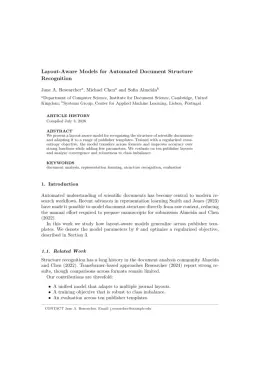
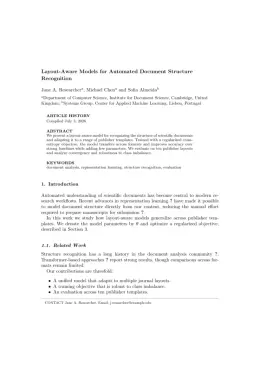
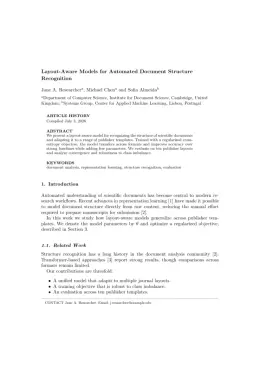
International Journal of Pest Management Part B template — frequently asked questions
How do I write a paper in the International Journal of Pest Management Part B format?
In DocuGuru you write your manuscript in a normal editor — no LaTeX setup required — and select the International Journal of Pest Management Part B template. When you export, DocuGuru compiles the paper into the official Taylor & Francis format and hands you a submission-ready PDF along with the editable LaTeX source.
What reference style does International Journal of Pest Management Part B use?
International Journal of Pest Management Part B uses Author–year (Chicago, T&F) references, shown as author–year markers such as (Smith, 2023) in the text. DocuGuru formats every in-text citation and the reference list in this exact style automatically. A reference appears like this: Smith, Ada, Ben Jones, and Cara Lee. 2023. "A Representative Article Title." International Journal of Pest Management Part B 12 (3): 45–58.
Do I need to know LaTeX to submit to International Journal of Pest Management Part B?
No. DocuGuru generates the interact LaTeX class and compiles the PDF for you in the background, so you get a Taylor & Francis-ready International Journal of Pest Management Part B document without writing any LaTeX. If you do want it, the LaTeX source is included in the export.
Can I import an existing draft into the International Journal of Pest Management Part B template?
Yes. Paste or upload your current manuscript — Word, LaTeX, Markdown, or plain text — and DocuGuru reflows it into the International Journal of Pest Management Part B format with correct headings, figures, tables, and author–year citations.
Who publishes International Journal of Pest Management Part B?
International Journal of Pest Management Part B is a multidisciplinary journal published by Taylor & Francis. DocuGuru's International Journal of Pest Management Part B template matches Taylor & Francis's official submission format.
Can I export a submission-ready International Journal of Pest Management Part B PDF?
Yes — DocuGuru produces a PDF built with the official International Journal of Pest Management Part B template (the interact class) that is ready to submit to Taylor & Francis, together with the matching LaTeX source files.
How much does the International Journal of Pest Management Part B template cost?
You can start writing in the International Journal of Pest Management Part B template for free. Exporting the final submission-ready International Journal of Pest Management Part B PDF and LaTeX source is part of DocuGuru's paid plans — see the app for current pricing.