Taylor & Francis

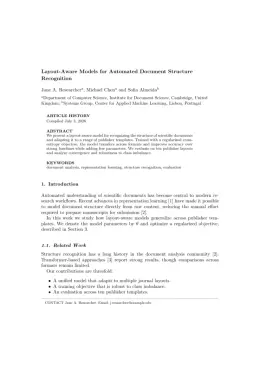
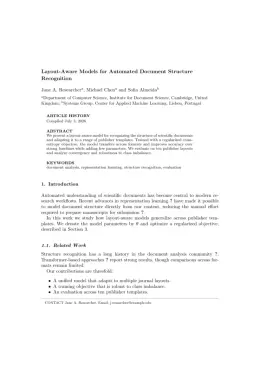
International Geology Review Template

Write in a clean editor, then format for International Geology Review in one click — DocuGuru applies the official Taylor & Francis template with author–year references and exports a submission-ready PDF plus the editable LaTeX source. Free to start.

About the International Geology Review format

International Geology Review is a peer-reviewed journal published by Taylor & Francis, covering Geological and Geochemical Analysis, Geochemistry and Geologic Mapping, Geological Studies and Exploration.

PublisherTaylor & Francis
Reference styleAuthor–year (Chicago, T&F)
Author–year — (Smith, 2023) in the text
Smith, Ada, Ben Jones, and Cara Lee. 2023. "A Representative Article Title." International Geology Review 12 (3): 45–58.

Formats any DOI in International Geology Review style. No sign-up.

Publishes research inGeological and Geochemical Analysis Geochemistry and Geologic Mapping Geological Studies and Exploration earthquake and tectonic studies High-pressure geophysics and materials
ISSN0020-6814
Citation impact (2-yr)1.85
h-index117
i10-index2,175
Total citations100,761
Top institutions publishing hereGeological Institute
Journal websitewww.tandfonline.com
You getA submission-ready PDF and the editable LaTeX source — ready to submit.

Papers published in International Geology Review per year

138
2014
112
2015
139
2016
140
2017
105
2018
144
2019
137
2020
125
2021
141
2022
143
2023
150
2024
115
2025

Citation impact of International Geology Review by publication year

4.8K
2014
4K
2015
3.4K
2016
4.4K
2017
2.3K
2018
2.5K
2019
2K
2020
1.3K
2021
991
2022
810
2023
472
2024
113
2025

Citations each year’s papers have accumulated so far — the most recent years are still building up.

Most-cited papers in International Geology Review

Tectonics of the Longmen Shan and Adjacent Regions, Central China

B. C. Burchfiel, Chen Zhiliang, Liu Yupinc et al. · 1 Aug 1995

The Longmen Shan region includes, from west to east, the northeastern part of the Tibetan Plateau, the Sichuan Basin, and the eastern part of the eastern Sichuan fold-and-thrust belt. In the northeast, it merges with the Micang Shan, a part of the Qinling Mountains. The Longmen Shan region can be divided into two major tectonic…

Pacific-North America Plate Tectonics of the Neogene Southwestern United States: An Update

Tanya Atwater, Joann M. Stock · 1 May 1998

We use updated rotations within the Pacific-Antarctica-Africa-North America plate circuit to calculate Pacific-North America plate reconstructions for times since chron 13 (33 Ma). The direction of motion of the Pacific plate relative to stable North America was fairly steady between chrons 13 and 4, and then changed and moved in a more northerly direction from…

Blueschists and Eclogites of the World and Their Exhumation

Shigenori Maruyama, J. G. Liou, Masaru Terabayashi · 1 Jun 1996

High-P/T metamorphic belts were classified into types A and B according to their protoliths. The A-type (collision-type) blueschists possess passive-margin protoliths characterized by platform-type carbonates, bimodal volcanics, and peraluminous sediments. B-type (Cordilleran-type) blueschists consist of active continental-margin protoliths in an accretionary complex characterized by bedded chert, MORB and ocean-island basalts, reef limestones, and graywackes. The…

Metamorphic Conditions in Orogenic Belts: A Record of Secular Change

Michael Brown · 1 Mar 2007

In general, Archean rocks exhibit rather ordinary moderate-P-high-T facies series metamorphism; neither blueschists nor any record of deep continental subduction and return are documented. However, the abundance and scale of ultrahigh-temperature (UHT) metamorphic belts from the Neoarchean to the Cambrian imply a significant change in geodynamics during the Neoarchean Era, after which transient sites of…

Thermal Evolution of Archean Basement Rocks from the Eastern Part of the North China Craton and Its Bearing on Tectonic Setting

Guochun Zhao, Simon A. Wilde, Peter A. Cawood et al. · 1 Aug 1998

The basement rocks in the eastern zone of the North China craton are composed predominantly of pretectonic tonalitic-trondhjemitic-granodioritic gneisses and syntectonic granitoids, with rafts of supracrustal rocks consisting of ultramafic to felsic volcanic and sedimentary rocks, metamorphosed over a range of conditions from greenschist to granulite facies. Most mafic granulites, amphibolites, and some pelitic gneisses…

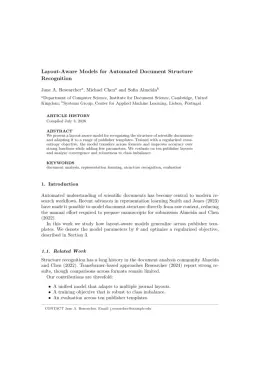
International Geology Review template — frequently asked questions

How do I write a paper in the International Geology Review format?
In DocuGuru you write your manuscript in a normal editor — no LaTeX setup required — and select the International Geology Review template. When you export, DocuGuru compiles the paper into the official Taylor & Francis format and hands you a submission-ready PDF along with the editable LaTeX source.
What reference style does International Geology Review use?
International Geology Review uses Author–year (Chicago, T&F) references, shown as author–year markers such as (Smith, 2023) in the text. DocuGuru formats every in-text citation and the reference list in this exact style automatically. A reference appears like this: Smith, Ada, Ben Jones, and Cara Lee. 2023. "A Representative Article Title." International Geology Review 12 (3): 45–58.
Do I need to know LaTeX to submit to International Geology Review?
No. DocuGuru generates the interact LaTeX class and compiles the PDF for you in the background, so you get a Taylor & Francis-ready International Geology Review document without writing any LaTeX. If you do want it, the LaTeX source is included in the export.
Can I import an existing draft into the International Geology Review template?
Yes. Paste or upload your current manuscript — Word, LaTeX, Markdown, or plain text — and DocuGuru reflows it into the International Geology Review format with correct headings, figures, tables, and author–year citations.
Who publishes International Geology Review?
International Geology Review is a multidisciplinary journal published by Taylor & Francis. DocuGuru's International Geology Review template matches Taylor & Francis's official submission format.
Can I export a submission-ready International Geology Review PDF?
Yes — DocuGuru produces a PDF built with the official International Geology Review template (the interact class) that is ready to submit to Taylor & Francis, together with the matching LaTeX source files.
How much does the International Geology Review template cost?
You can start writing in the International Geology Review template for free. Exporting the final submission-ready International Geology Review PDF and LaTeX source is part of DocuGuru's paid plans — see the app for current pricing.
Use the International Geology Review template