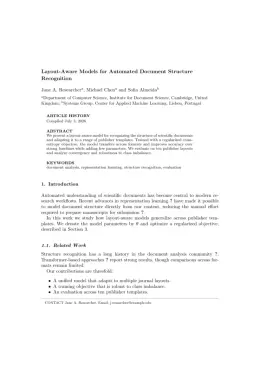
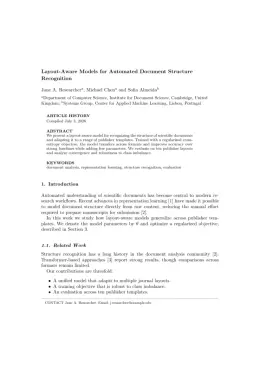
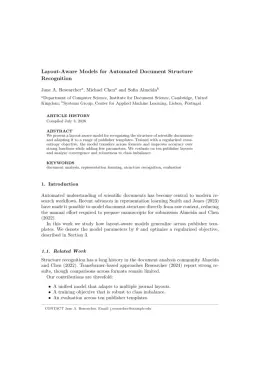
About the Intelligent Buildings International format
Intelligent Buildings International is a peer-reviewed journal published by Taylor & Francis, covering Building Energy and Comfort Optimization, Facilities and Workplace Management, Sustainable Building Design and Assessment.
| Publisher | Taylor & Francis |
|---|
| Reference style | Author–year (Chicago, T&F) Author–year — (Smith, 2023) in the text
Smith, Ada, Ben Jones, and Cara Lee. 2023. "A Representative Article Title." Intelligent Buildings International 12 (3): 45–58.
Formats any DOI in Intelligent Buildings International style. No sign-up.
|
|---|
| Publishes research in | Building Energy and Comfort Optimization Facilities and Workplace Management Sustainable Building Design and Assessment Urban Green Space and Health BIM and Construction Integration |
|---|
| ISSN | 1750-8975 |
|---|
| Citation impact (2-yr) | 1.14 |
|---|
| h-index | 39 |
|---|
| i10-index | 172 |
|---|
| Total citations | 7,730 |
|---|
| Top institutions publishing here | University of Reading |
|---|
| Journal website | www.tandfonline.com |
|---|
| You get | A submission-ready PDF and the editable LaTeX source — ready to submit. |
|---|
Papers published in Intelligent Buildings International per year
Citation impact of Intelligent Buildings International by publication year
Citations each year’s papers have accumulated so far — the most recent years are still building up.
Most-cited papers in Intelligent Buildings International
Intelligent cities: Variable geometries of spatial intelligence
Nicos Komninos · 1 Jul 2011
This article discusses the spatial intelligence of cities, the use of information communication technologies (ICTs) and institutional frameworks that support innovation ecosystems of cities and increase the problem-solving capability of communities and cities. It is based on three case studies on Bletchley Park, Cyberport Hong Kong and Smart Amsterdam, which highlight different architectures of spatial…
From intelligent to smart cities
Mark Deakin, Husam AlWaer · 1 Jul 2011
Taking Hollands' previous statement on the transition from intelligent to smart cities as its point of departure (‘Will the real smart city stand up?’ City 12(3), 302–320), this article reflects upon the anxieties currently surrounding such developments. In particular, it considers the suggestion that such developments have more to do with cities meeting the corporate…
The smart city: A nexus for open innovation?
Krassimira Paskaleva · 1 Jul 2011
This article critically reviews current European trends on smart cities in the context of open innovation. It draws from analyses of key European Union (EU) programmes, four international projects and related activities. These initiatives are framed by the EU's strategic policies on Competitiveness and Innovation, Smart Cities, the Future Internet and Living Labs with the…
What do we know about indoor air quality in school classrooms? A critical review of the literature
Lia Chatzidiakou, Dejan Mumovic, Alex Summerfield · 1 Oct 2012
The increasing interest in indoor environmental quality of educational buildings has been underpinned by the rising incidence of asthma and respiratory disease among children, who spend a substantial amount of their lives on the school premises. The susceptibility of children to respiratory disease compared with adults has led to the formulation of regulatory frameworks for…
Physical characteristics of the indoor environment that affect health and wellbeing in healthcare facilities: a review
Heidi Salonen, Marjaana Lahtinen, Sanna Lappalainen et al. · 1 Jan 2013
Understanding the physical characteristics of the indoor environment that affect human health and wellbeing is the key requirement underpinning the beneficial design of a healthcare facility (HCF). We reviewed and summarized physical factors of the indoor environment reported to affect human health and wellbeing in HCFs. Altogether, 214 publications were selected for this review. According…