Taylor & Francis

Infection Ecology & Epidemiology Template

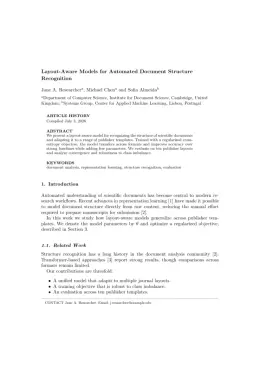
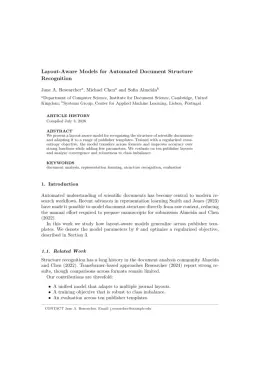
Write in a clean editor, then format for Infection Ecology & Epidemiology in one click — DocuGuru applies the official Taylor & Francis template with author–year references and exports a submission-ready PDF plus the editable LaTeX source. Free to start.

About the Infection Ecology & Epidemiology format

Infection Ecology & Epidemiology is a peer-reviewed journal published by Taylor & Francis, covering Viral Infections and Vectors, Zoonotic diseases and public health, Animal Disease Management and Epidemiology.

PublisherTaylor & Francis
Reference styleAuthor–year (Chicago, T&F)
Author–year — (Smith, 2023) in the text
Smith, Ada, Ben Jones, and Cara Lee. 2023. "A Representative Article Title." Infection Ecology & Epidemiology 12 (3): 45–58.

Formats any DOI in Infection Ecology & Epidemiology style. No sign-up.

Publishes research inViral Infections and Vectors Zoonotic diseases and public health Animal Disease Management and Epidemiology Mosquito-borne diseases and control Vector-borne infectious diseases
ISSN2000-8686
Citation impact (2-yr)7.46
h-index47
i10-index169
Total citations8,914
Article processing charge$1,704
Top institutions publishing hereUppsala University
Journal websitewww.tandfonline.com
You getA submission-ready PDF and the editable LaTeX source — ready to submit.

Papers published in Infection Ecology & Epidemiology per year

22
2014
42
2015
47
2016
18
2017
26
2018
17
2019
26
2020
10
2021
3
2022
13
2023
9
2024
4
2025

Citation impact of Infection Ecology & Epidemiology by publication year

567
2014
2.9K
2015
1.2K
2016
406
2017
725
2018
425
2019
677
2020
137
2021
20
2022
42
2023
90
2024
4
2025

Citations each year’s papers have accumulated so far — the most recent years are still building up.

Most-cited papers in Infection Ecology & Epidemiology

How urbanization affects the epidemiology of emerging infectious diseases

Carl-Johan Neiderud · 1 Jan 2015

The world is becoming more urban every day, and the process has been ongoing since the industrial revolution in the 18th century. The United Nations now estimates that 3.9 billion people live in urban centres. The rapid influx of residents is however not universal and the developed countries are already urban, but the big rise…

Dengue viruses – an overview

Anne Tuiskunen Bäck, Åke Lundkvist · 1 Jan 2013

Dengue viruses (DENVs) cause the most common arthropod-borne viral disease in man with 50-100 million infections per year. Because of the lack of a vaccine and antiviral drugs, the sole measure of control is limiting the Aedes mosquito vectors. DENV infection can be asymptomatic or a self-limited, acute febrile disease ranging in severity. The classical…

The consequences of human actions on risks for infectious diseases: a review

Johanna F. Lindahl, Delia Grace · 1 Jan 2015

The human population is growing, requiring more space for food production, and needing more animals to feed it. Emerging infectious diseases are increasing, causing losses in both human and animal lives, as well as large costs to society. Many factors are contributing to disease emergence, including climate change, globalization and urbanization, and most of these…

Environmental dissemination of antibiotic resistance genes and correlation to anthropogenic contamination with antibiotics

Björn Berglund · 1 Jan 2015

Antibiotic resistance is a growing problem which threatens modern healthcare globally. Resistance has traditionally been viewed as a clinical problem, but recently non-clinical environments have been highlighted as an important factor in the dissemination of antibiotic resistance genes (ARGs). Horizontal gene transfer (HGT) events are likely to be common in aquatic environments; integrons in particular…

The concept of health in One Health and some practical implications for research and education: what is One Health?

Henrik Lerner, Charlotte Berg · 1 Jan 2015

From a strict biological point of view, humans are just one species among other species, albeit one with very special capacities, characteristics, and skills. Among scientists, it is generally acknowledged that we share many features with other animal species, which are certainly relevant when the concepts of health and disease are discussed. The term 'One…

Infection Ecology & Epidemiology template — frequently asked questions

How do I write a paper in the Infection Ecology & Epidemiology format?
In DocuGuru you write your manuscript in a normal editor — no LaTeX setup required — and select the Infection Ecology & Epidemiology template. When you export, DocuGuru compiles the paper into the official Taylor & Francis format and hands you a submission-ready PDF along with the editable LaTeX source.
What reference style does Infection Ecology & Epidemiology use?
Infection Ecology & Epidemiology uses Author–year (Chicago, T&F) references, shown as author–year markers such as (Smith, 2023) in the text. DocuGuru formats every in-text citation and the reference list in this exact style automatically. A reference appears like this: Smith, Ada, Ben Jones, and Cara Lee. 2023. "A Representative Article Title." Infection Ecology & Epidemiology 12 (3): 45–58.
Do I need to know LaTeX to submit to Infection Ecology & Epidemiology?
No. DocuGuru generates the interact LaTeX class and compiles the PDF for you in the background, so you get a Taylor & Francis-ready Infection Ecology & Epidemiology document without writing any LaTeX. If you do want it, the LaTeX source is included in the export.
Can I import an existing draft into the Infection Ecology & Epidemiology template?
Yes. Paste or upload your current manuscript — Word, LaTeX, Markdown, or plain text — and DocuGuru reflows it into the Infection Ecology & Epidemiology format with correct headings, figures, tables, and author–year citations.
Who publishes Infection Ecology & Epidemiology?
Infection Ecology & Epidemiology is a multidisciplinary journal published by Taylor & Francis. DocuGuru's Infection Ecology & Epidemiology template matches Taylor & Francis's official submission format.
Can I export a submission-ready Infection Ecology & Epidemiology PDF?
Yes — DocuGuru produces a PDF built with the official Infection Ecology & Epidemiology template (the interact class) that is ready to submit to Taylor & Francis, together with the matching LaTeX source files.
How much does the Infection Ecology & Epidemiology template cost?
You can start writing in the Infection Ecology & Epidemiology template for free. Exporting the final submission-ready Infection Ecology & Epidemiology PDF and LaTeX source is part of DocuGuru's paid plans — see the app for current pricing.

Use the Infection Ecology & Epidemiology template