Taylor & Francis

Hydrological Sciences Bulletin Template

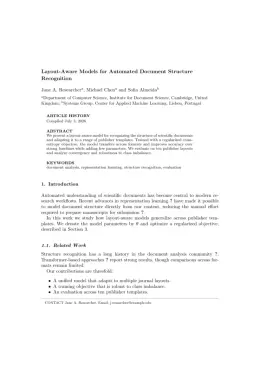
Write in a clean editor, then format for Hydrological Sciences Bulletin in one click — DocuGuru applies the official Taylor & Francis template with author–year references and exports a submission-ready PDF plus the editable LaTeX source. Free to start.

About the Hydrological Sciences Bulletin format

Hydrological Sciences Bulletin is a peer-reviewed journal published by Taylor & Francis, covering Hydrology and Watershed Management Studies, Soil erosion and sediment transport, Hydrology and Drought Analysis.

PublisherTaylor & Francis
Reference styleAuthor–year (Chicago, T&F)
Author–year — (Smith, 2023) in the text
Smith, Ada, Ben Jones, and Cara Lee. 2023. "A Representative Article Title." Hydrological Sciences Bulletin 12 (3): 45–58.

Formats any DOI in Hydrological Sciences Bulletin style. No sign-up.

Publishes research inHydrology and Watershed Management Studies Soil erosion and sediment transport Hydrology and Drought Analysis Human auditory perception and evaluation Water resources management and optimization
ISSN0303-6936
h-index33
i10-index98
Total citations10,676
Top institutions publishing hereUnited States Geological Survey
Journal websitewww.tandfonline.com
You getA submission-ready PDF and the editable LaTeX source — ready to submit.

Papers published in Hydrological Sciences Bulletin per year

68
1972
67
1973
65
1974
27
1975
95
1976
79
1977
65
1978
67
1979
67
1980
60
1981

Citation impact of Hydrological Sciences Bulletin by publication year

289
1972
219
1973
318
1974
144
1975
458
1976
531
1977
272
1978
7.1K
1979
506
1980
807
1981

Citations each year’s papers have accumulated so far — the most recent years are still building up.

Most-cited papers in Hydrological Sciences Bulletin

A physically based, variable contributing area model of basin hydrology / Un modèle à base physique de zone d'appel variable de l'hydrologie du bassin versant

Keith Beven, M. J. Kirkby · 1 Mar 1979

Abstract A hydrological forecasting model is presented that attempts to combine the important distributed effects of channel network topology and dynamic contributing areas with the advantages of simple lumped parameter basin models. Quick response flow is predicted from a storage/contributing area relationship derived analytically from the topographic structure of a unit within a basin. Average…

6,682 citations Cite SaveGo to paper →
Automatic calibration of the tank model / L'étalonnage automatique d'un modèle à cisterne

M. Sugawara · 1 Sep 1979

Abstract The automatic calibration is done not by a hill-top climbing method but by a trial and error method carried out automatically by a computer program. The feedback procedure is made by comparing some criteria obtained from the observed hydrograph and the calculated hydrograph output from the working tank model. The two criteria are discharge…

The Lagoon of Venice: natural environmental trend and man-induced modification / La Lagune de Venise: l'évolution naturelle et les modifications humaines

Paolo Gatto, Laura Carbognin · 1 Dec 1981

ABSTRACT This paper describes factors which have modified the original equilibrium of the Venetian Lagoon ecosystem. Human intervention started in 1400 AD. During the last two centuries man's activity upset the hydraulic and physical-biological balance of the lagoon by digging canals, modifying port entrances, filling-in marsh areas and more recently withdrawing groundwater resources. This last…

Satellite remote sensing of water turbidity / Sonde de télémesure par satellite de la turbidité de l'eau

Gerald K. Moore · 1 Dec 1980

Abstract Remote sensing instruments obtain an optical measure of water colour and turbidity. Colour increases the absorption of light in water and decreases the remotely sensed signal; turbidity increases the backscatter of light. For low concentrations of suspended materials, spectral reflectance is determined mostly by the absorptance characteristics of water; for higher concentrations, the absorptance…

Hydrological Sciences Bulletin template — frequently asked questions

How do I write a paper in the Hydrological Sciences Bulletin format?
In DocuGuru you write your manuscript in a normal editor — no LaTeX setup required — and select the Hydrological Sciences Bulletin template. When you export, DocuGuru compiles the paper into the official Taylor & Francis format and hands you a submission-ready PDF along with the editable LaTeX source.
What reference style does Hydrological Sciences Bulletin use?
Hydrological Sciences Bulletin uses Author–year (Chicago, T&F) references, shown as author–year markers such as (Smith, 2023) in the text. DocuGuru formats every in-text citation and the reference list in this exact style automatically. A reference appears like this: Smith, Ada, Ben Jones, and Cara Lee. 2023. "A Representative Article Title." Hydrological Sciences Bulletin 12 (3): 45–58.
Do I need to know LaTeX to submit to Hydrological Sciences Bulletin?
No. DocuGuru generates the interact LaTeX class and compiles the PDF for you in the background, so you get a Taylor & Francis-ready Hydrological Sciences Bulletin document without writing any LaTeX. If you do want it, the LaTeX source is included in the export.
Can I import an existing draft into the Hydrological Sciences Bulletin template?
Yes. Paste or upload your current manuscript — Word, LaTeX, Markdown, or plain text — and DocuGuru reflows it into the Hydrological Sciences Bulletin format with correct headings, figures, tables, and author–year citations.
Who publishes Hydrological Sciences Bulletin?
Hydrological Sciences Bulletin is a multidisciplinary journal published by Taylor & Francis. DocuGuru's Hydrological Sciences Bulletin template matches Taylor & Francis's official submission format.
Can I export a submission-ready Hydrological Sciences Bulletin PDF?
Yes — DocuGuru produces a PDF built with the official Hydrological Sciences Bulletin template (the interact class) that is ready to submit to Taylor & Francis, together with the matching LaTeX source files.
How much does the Hydrological Sciences Bulletin template cost?
You can start writing in the Hydrological Sciences Bulletin template for free. Exporting the final submission-ready Hydrological Sciences Bulletin PDF and LaTeX source is part of DocuGuru's paid plans — see the app for current pricing.

Use the Hydrological Sciences Bulletin template