Taylor & Francis

Higher Education Research & Development Template

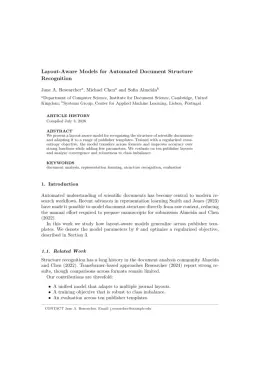
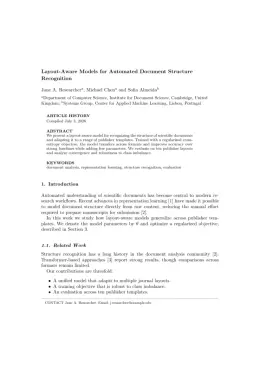
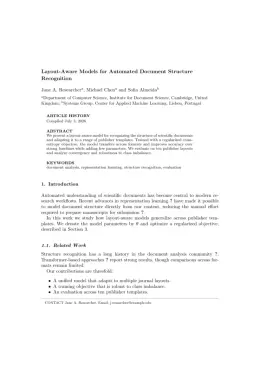
Write in a clean editor, then format for Higher Education Research & Development in one click — DocuGuru applies the official Taylor & Francis template with author–year references and exports a submission-ready PDF plus the editable LaTeX source. Free to start.

About the Higher Education Research & Development format

Higher Education Research & Development is a peer-reviewed journal published by Taylor & Francis, covering Evaluation of Teaching Practices, Higher Education Practises and Engagement, Higher Education Governance and Development.

PublisherTaylor & Francis
Reference styleAuthor–year (Chicago, T&F)
Author–year — (Smith, 2023) in the text
Smith, Ada, Ben Jones, and Cara Lee. 2023. "A Representative Article Title." Higher Education Research & Development 12 (3): 45–58.

Formats any DOI in Higher Education Research & Development style. No sign-up.

Publishes research inEvaluation of Teaching Practices Higher Education Practises and Engagement Higher Education Governance and Development Higher Education and Employability Reflective Practices in Education
ISSN0729-4360
Citation impact (2-yr)3.92
h-index143
i10-index1,600
Total citations105,047
Top institutions publishing hereThe University of Sydney
Journal websitewww.tandfonline.com
You getA submission-ready PDF and the editable LaTeX source — ready to submit.

Papers published in Higher Education Research & Development per year

112
2014
99
2015
144
2016
102
2017
131
2018
126
2019
172
2020
144
2021
100
2022
107
2023
109
2024
169
2025

Citation impact of Higher Education Research & Development by publication year

5.9K
2014
3K
2015
5.8K
2016
5.8K
2017
4.9K
2018
5K
2019
5.4K
2020
3K
2021
1.7K
2022
1.2K
2023
1K
2024
408
2025

Citations each year’s papers have accumulated so far — the most recent years are still building up.

Most-cited papers in Higher Education Research & Development

Motivation and cognitive load in the flipped classroom: definition, rationale and a call for research

Lakmal Abeysekera, Phillip Dawson · 14 Aug 2014

Flipped classroom approaches remove the traditional transmissive lecture and replace it with active in-class tasks and pre-/post-class work. Despite the popularity of these approaches in the media, Google search, and casual hallway chats, there is very little evidence of effectiveness or consistency in understanding what a flipped classroom actually is. Although the flipped terminology is…

1,830 citations Cite SaveGo to paper →
The benefits of publishing systematic quantitative literature reviews for PhD candidates and other early-career researchers

Catherine Marina Pickering, Jason Byrne · 11 Nov 2013

Universities increasingly expect students to publish during a PhD candidature because it benefits the candidate, supervisor, institution, and wider community. Here, we describe a method successfully used by early-career researchers including PhD candidates to undertake and publish literature reviews – a challenge for researchers new to a field. Our method allows researchers new to a…

1,314 citations Cite SaveGo to paper →
What the Student Does: teaching for enhanced learning

John Biggs · 1 Apr 1999

Abstract Many teachers see major difficulties in maintaining academic standards in today's larger and more diversified classes. The problem becomes more tractable if learning outcomes are seen as more a function of students’ activities than of their fixed characteristics. The teacher's job is then to organise the teaching/learning context so that all students are more…

1,280 citations Cite SaveGo to paper →
Student engagement in the educational interface: understanding the mechanisms of student success

Ella Kahu, Karen Nelson · 3 Jul 2017

Student success and retention continue to be of concern for higher education institutions. Wider participation, combined with lower completion rates for non-traditional students, highlights the need for new ways of understanding the student experience to ground policy and practice. This article provides this insight by drawing together a number of key constructs to refine a…

Variation and commonality in phenomenographic research methods

Gerlese S. Åkerlind · 6 Oct 2005

This paper focuses on the data analysis stage of phenomenographic research, elucidating what is involved in terms of both commonality and variation in accepted practice. The analysis stage of phenomenographic research is often not well understood. This paper helps to clarify the process, initially by collecting together in one location the more concrete of the…

Higher Education Research & Development template — frequently asked questions

How do I write a paper in the Higher Education Research & Development format?
In DocuGuru you write your manuscript in a normal editor — no LaTeX setup required — and select the Higher Education Research & Development template. When you export, DocuGuru compiles the paper into the official Taylor & Francis format and hands you a submission-ready PDF along with the editable LaTeX source.
What reference style does Higher Education Research & Development use?
Higher Education Research & Development uses Author–year (Chicago, T&F) references, shown as author–year markers such as (Smith, 2023) in the text. DocuGuru formats every in-text citation and the reference list in this exact style automatically. A reference appears like this: Smith, Ada, Ben Jones, and Cara Lee. 2023. "A Representative Article Title." Higher Education Research & Development 12 (3): 45–58.
Do I need to know LaTeX to submit to Higher Education Research & Development?
No. DocuGuru generates the interact LaTeX class and compiles the PDF for you in the background, so you get a Taylor & Francis-ready Higher Education Research & Development document without writing any LaTeX. If you do want it, the LaTeX source is included in the export.
Can I import an existing draft into the Higher Education Research & Development template?
Yes. Paste or upload your current manuscript — Word, LaTeX, Markdown, or plain text — and DocuGuru reflows it into the Higher Education Research & Development format with correct headings, figures, tables, and author–year citations.
Who publishes Higher Education Research & Development?
Higher Education Research & Development is a multidisciplinary journal published by Taylor & Francis. DocuGuru's Higher Education Research & Development template matches Taylor & Francis's official submission format.
Can I export a submission-ready Higher Education Research & Development PDF?
Yes — DocuGuru produces a PDF built with the official Higher Education Research & Development template (the interact class) that is ready to submit to Taylor & Francis, together with the matching LaTeX source files.
How much does the Higher Education Research & Development template cost?
You can start writing in the Higher Education Research & Development template for free. Exporting the final submission-ready Higher Education Research & Development PDF and LaTeX source is part of DocuGuru's paid plans — see the app for current pricing.

Use the Higher Education Research & Development template