Taylor & Francis

Green Chemistry Letters and Reviews Template

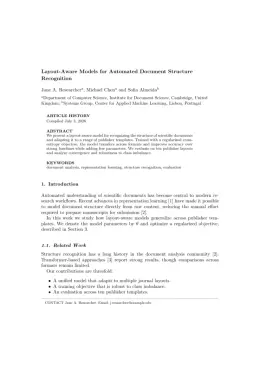
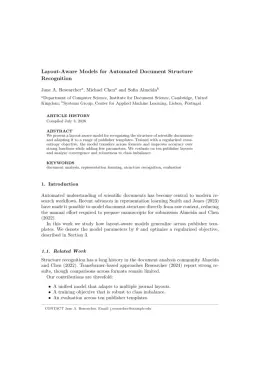
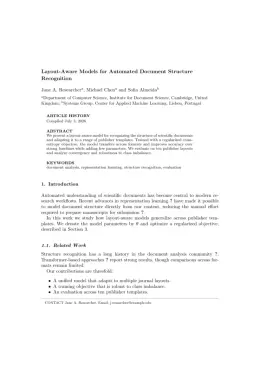
Write in a clean editor, then format for Green Chemistry Letters and Reviews in one click — DocuGuru applies the official Taylor & Francis template with author–year references and exports a submission-ready PDF plus the editable LaTeX source. Free to start.

About the Green Chemistry Letters and Reviews format

Green Chemistry Letters and Reviews is a peer-reviewed journal published by Taylor & Francis, covering Multicomponent Synthesis of Heterocycles, Chemical Synthesis and Reactions, Synthesis and biological activity.

PublisherTaylor & Francis
Reference styleAuthor–year (Chicago, T&F)
Author–year — (Smith, 2023) in the text
Smith, Ada, Ben Jones, and Cara Lee. 2023. "A Representative Article Title." Green Chemistry Letters and Reviews 12 (3): 45–58.

Formats any DOI in Green Chemistry Letters and Reviews style. No sign-up.

Publishes research inMulticomponent Synthesis of Heterocycles Chemical Synthesis and Reactions Synthesis and biological activity Nanoparticles: synthesis and applications Chemistry and Chemical Engineering
ISSN1751-7192
Citation impact (2-yr)9.62
h-index68
i10-index601
Total citations25,502
Article processing charge$1,533
Open accessYes
Top institutions publishing hereKing Saud University
Journal websitewww.tandfonline.com
You getA submission-ready PDF and the editable LaTeX source — ready to submit.

Papers published in Green Chemistry Letters and Reviews per year

59
2014
21
2015
34
2016
52
2017
62
2018
43
2019
42
2020
59
2021
72
2022
50
2023
84
2024
84
2025

Citation impact of Green Chemistry Letters and Reviews by publication year

1.2K
2014
1.4K
2015
880
2016
1.8K
2017
2.8K
2018
2.2K
2019
2.4K
2020
1.6K
2021
1.8K
2022
775
2023
1.4K
2024
479
2025

Citations each year’s papers have accumulated so far — the most recent years are still building up.

Most-cited papers in Green Chemistry Letters and Reviews

Detail review on chemical, physical and green synthesis, classification, characterizations and applications of nanoparticles

Irfan Ijaz, Ezaz Gilani, Ammara Nazir et al. · 2 Jul 2020

Nanotechnology is an emerging field of science. The base of nanotechnology is nanoparticles. The size of nanoparticles ranges from 1 to 100 nm. The nanoparticles are classified into different classes such as inorganic nanoparticles, organic nanoparticles, ceramic nanoparticles and carbon base nanoparticles. The inorganic nanoparticles are further classified into metal nanoparticles and metal oxide nanoparticles.similarly…

Green synthesis of zinc oxide nanoparticles: a comparison

Shabnam Fakhari, Mina Jamzad, Hassan Kabiri Fard · 2 Jan 2019

Green synthesis of nanoparticles by biological systems especially plant extracts has become an emerging field in nanotechnology. In this study, zinc oxide nanoparticles were synthesized using Laurus nobilis L. leaves aqueous extract and two different zinc salts (zinc acetate and zinc nitrate) as precursors. The synthesized nanoparticles were characterized by Ultraviolet–Visible spectroscopy (UV–Vis), Fourier Transform…

Modification strategies of TiO<sub>2</sub> for potential applications in photocatalysis: a critical review

Muhammad Humayun, Fazal Raziq, Abbas Khan et al. · 28 Feb 2018

TiO2 has received tremendous attention owing to its potential applications in the field of photocatalysis for solar fuel production and environmental remediation. This review mainly describes various modification strategies and potential applications of TiO2 in efficient photocatalysis. In past few years, various strategies have been developed to improve the photocatalytic performance of TiO2, including noble…

Green synthesis of Co<sub>3</sub>O<sub>4</sub>nanoparticles via<i>Aspalathus linearis</i>: Physical properties

Abdoulaye Diallo, A.C. Beye, T. B. Doyle et al. · 2 Oct 2015

This study reports on the bio-synthesis and the main physical properties of p-type Co3O4 nanoparticles for the first time by a completely green chemistry process using Aspalathus linearis's natural extract as an effective chelating agent. Their surface/interface and optical properties are reported. In addition to the X-ray diffraction investigations, the Raman, and infrared as well…

Bacterial polyhydroxyalkanoates-eco-friendly next generation plastic: Production, biocompatibility, biodegradation, physical properties and applications

Muhammadi Muhammadi, Shabina, Muhammad Afzal et al. · 2 Oct 2015

Polyhydroxyalkanoates (PHAs) are intracellular aliphatic polyesters synthesized as energy reserves, in the form of water-insoluble, nano-sized discrete and optically dense granules in cytoplasm by a diverse bacteria and some archae under conditions of limiting nutrients in the presence of excess carbon source. Bacteria synthesize different PHAs from coenzyme A thioesters of respective hydroxyalkanoic acid, and…

Green Chemistry Letters and Reviews template — frequently asked questions

How do I write a paper in the Green Chemistry Letters and Reviews format?
In DocuGuru you write your manuscript in a normal editor — no LaTeX setup required — and select the Green Chemistry Letters and Reviews template. When you export, DocuGuru compiles the paper into the official Taylor & Francis format and hands you a submission-ready PDF along with the editable LaTeX source.
What reference style does Green Chemistry Letters and Reviews use?
Green Chemistry Letters and Reviews uses Author–year (Chicago, T&F) references, shown as author–year markers such as (Smith, 2023) in the text. DocuGuru formats every in-text citation and the reference list in this exact style automatically. A reference appears like this: Smith, Ada, Ben Jones, and Cara Lee. 2023. "A Representative Article Title." Green Chemistry Letters and Reviews 12 (3): 45–58.
Do I need to know LaTeX to submit to Green Chemistry Letters and Reviews?
No. DocuGuru generates the interact LaTeX class and compiles the PDF for you in the background, so you get a Taylor & Francis-ready Green Chemistry Letters and Reviews document without writing any LaTeX. If you do want it, the LaTeX source is included in the export.
Can I import an existing draft into the Green Chemistry Letters and Reviews template?
Yes. Paste or upload your current manuscript — Word, LaTeX, Markdown, or plain text — and DocuGuru reflows it into the Green Chemistry Letters and Reviews format with correct headings, figures, tables, and author–year citations.
Who publishes Green Chemistry Letters and Reviews?
Green Chemistry Letters and Reviews is a multidisciplinary journal published by Taylor & Francis. DocuGuru's Green Chemistry Letters and Reviews template matches Taylor & Francis's official submission format.
Can I export a submission-ready Green Chemistry Letters and Reviews PDF?
Yes — DocuGuru produces a PDF built with the official Green Chemistry Letters and Reviews template (the interact class) that is ready to submit to Taylor & Francis, together with the matching LaTeX source files.
How much does the Green Chemistry Letters and Reviews template cost?
You can start writing in the Green Chemistry Letters and Reviews template for free. Exporting the final submission-ready Green Chemistry Letters and Reviews PDF and LaTeX source is part of DocuGuru's paid plans — see the app for current pricing.

Use the Green Chemistry Letters and Reviews template