Taylor & Francis

GFF Template

Write in a clean editor, then format for GFF in one click — DocuGuru applies the official Taylor & Francis template with author–year references and exports a submission-ready PDF plus the editable LaTeX source. Free to start.

About the GFF format

GFF is a peer-reviewed journal published by Taylor & Francis, covering Paleontology and Stratigraphy of Fossils, Geology and Paleoclimatology Research, Geological and Geochemical Analysis.

PublisherTaylor & Francis
Reference styleAuthor–year (Chicago, T&F)
Author–year — (Smith, 2023) in the text
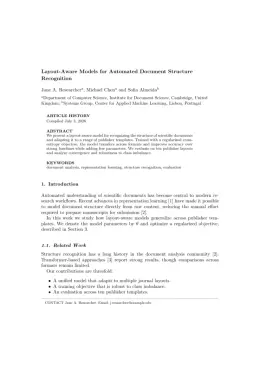
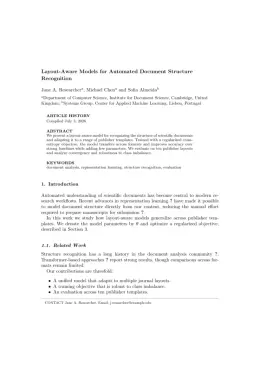
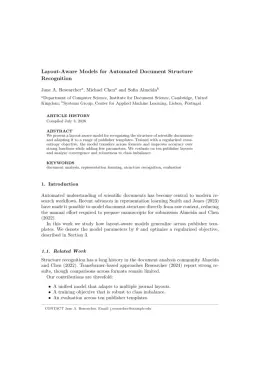
Smith, Ada, Ben Jones, and Cara Lee. 2023. "A Representative Article Title." GFF 12 (3): 45–58.

Formats any DOI in GFF style. No sign-up.

Publishes research inPaleontology and Stratigraphy of Fossils Geology and Paleoclimatology Research Geological and Geochemical Analysis Geochemistry and Geologic Mapping High-pressure geophysics and materials
ISSN1103-5897
Citation impact (2-yr)0.46
h-index50
i10-index521
Total citations16,805
Top institutions publishing hereLund University
Journal websitewww.tandfonline.com
You getA submission-ready PDF and the editable LaTeX source — ready to submit.

Papers published in GFF per year

43
2013
86
2014
45
2015
39
2016
19
2017
29
2018
31
2019
23
2020
26
2021
20
2022
10
2023
12
2024

Citation impact of GFF by publication year

722
2013
1.1K
2014
849
2015
631
2016
166
2017
390
2018
288
2019
200
2020
171
2021
72
2022
18
2023
4
2024

Citations each year’s papers have accumulated so far — the most recent years are still building up.

Most-cited papers in GFF

Paleozoic orogens in New England, USA

Peter Robinson, Robert D. Tucker, Dwight C. Bradley et al. · 1 Jun 1998

Abstract Stratigraphy and isotope geochronology in the crystalline core of the Appalachians suggest revised interpretations of the extent, nature and timing of Paleozoic orogens in New England. Five major episodes of magmatism, deformation, and high-grade regional metamorphism are recognized: Taconian (455-442 Ma), Acadian (423-385 Ma), Neo-Acadian (366-350 Ma), Late Pennsylvanian (300-290 Ma) and Alleghanian (280-260…

Relationship of Silurian sea-level fluctuations to oceanic episodes and events

Markes E. Johnson · 1 Jun 2006

Abstract Eight distinct highstands in sea level emerged from the author's study of the Silurian System on a continent-to-continent basis during the 1980s and 1990s. Some emendations are needed to accommodate other trends recognized since that time, but the overall pattern is strong. Five major highstands and one minor highstand fit the Lower Silurian (Llandovery…

Growth-related 1.85–1.55 Ga magmatism in the Baltic Shield; a review addressing the tectonic characteristics of Svecofennian, TIB 1-related, and Gothian events

Karl‐Inge Åhäll, Sven Åke Larson · 1 Jun 2000

Abstract During the late Palaeoproterozoic, western Baltica was characterised by convergent-margin tectonics that resulted in the formation of N–S trending crustal units: the Transscandinavian Igneous Belt (TIB) and the westward younging Gothian growth zones. Together, these occupy a 200–300 km wide belt between Svecofennian (c. 1.9 Ga) crust in the east and the Skagerrak Sea/Oslo…

Palaeozoic palaeogeography: A North Atlantic viewpoint

Trond H. Torsvik · 1 Jun 1998

Abstract Palaeozoic palaeogeography, highlighting the North Atlantic Caledonian evolution and the destruction of the Iapetus Ocean and the Tornquist Sea, is recapitulated with reconstruction maps from Early Ordovician to Mid-Devonian times. In the Early Ordovician (Trem-adoc-Arenig), Laurentia, Siberia, and the North China Block were positioned in equatorial latitudes, Baltica was located at intermediate southerly latitudes,…

Nomenclature, stratigraphy, chemical fingerprinting, and areal distribution of some Middle Ordovician K‐bentonites in Baltoscandia

Stig M. Bergström, Warren D. Huff, Dennis R. Kolata et al. · 1 Mar 1995

Abstract Based on biostratigraphic position, chemical fingerprinting, and lithic characteristics such as relative thickness, several of the numerous K‐bentonite beds, or complexes of beds, in the Middle Ordovician of Baltoscandia are shown to be traceable over large areas. Because the type of volcanic eruptions that produced such widespread ash beds lasts only a short time…

GFF template — frequently asked questions

How do I write a paper in the GFF format?
In DocuGuru you write your manuscript in a normal editor — no LaTeX setup required — and select the GFF template. When you export, DocuGuru compiles the paper into the official Taylor & Francis format and hands you a submission-ready PDF along with the editable LaTeX source.
What reference style does GFF use?
GFF uses Author–year (Chicago, T&F) references, shown as author–year markers such as (Smith, 2023) in the text. DocuGuru formats every in-text citation and the reference list in this exact style automatically. A reference appears like this: Smith, Ada, Ben Jones, and Cara Lee. 2023. "A Representative Article Title." GFF 12 (3): 45–58.
Do I need to know LaTeX to submit to GFF?
No. DocuGuru generates the interact LaTeX class and compiles the PDF for you in the background, so you get a Taylor & Francis-ready GFF document without writing any LaTeX. If you do want it, the LaTeX source is included in the export.
Can I import an existing draft into the GFF template?
Yes. Paste or upload your current manuscript — Word, LaTeX, Markdown, or plain text — and DocuGuru reflows it into the GFF format with correct headings, figures, tables, and author–year citations.
Who publishes GFF?
GFF is a multidisciplinary journal published by Taylor & Francis. DocuGuru's GFF template matches Taylor & Francis's official submission format.
Can I export a submission-ready GFF PDF?
Yes — DocuGuru produces a PDF built with the official GFF template (the interact class) that is ready to submit to Taylor & Francis, together with the matching LaTeX source files.
How much does the GFF template cost?
You can start writing in the GFF template for free. Exporting the final submission-ready GFF PDF and LaTeX source is part of DocuGuru's paid plans — see the app for current pricing.
Use the GFF template